Views: 0 Author: Site Editor Publish Time: 2026-03-20 Origin: Site


Corrosion resistance is a key factor in determining the service life and reliability of metal parts, protective coatings, and industrial products. Components used in automotive, marine, electronics, and other demanding applications may face continuous exposure to salt, moisture, and aggressive environmental conditions. To predict product durability and identify potential corrosion risks, manufacturers use Salt Spray Corrosion Test Chambers to simulate corrosive environments and perform accelerated corrosion evaluation under controlled laboratory conditions.
In real industrial use, reliability and stability of testing equipment are just as important as the test results themselves. On January 13, 2026, a customer from Ukraine shared positive feedback about the LIB Salt Spray Corrosion Test Chamber: “The chamber is working properly, and its performance is stable.” As a Product Engineer responsible for testing equipment, the customer confirmed that the system operates reliably during routine corrosion testing, demonstrating the consistent performance required in professional laboratories.
Original feedback email:

This article explains what a Salt Spray Corrosion Test Chamber is, why it is essential for modern material testing, how it works, and what types of corrosion evaluation it supports across industries such as automotive, aerospace, electronics, and construction hardware.
The main advantage of a Salt Spray Corrosion Test Chamber is speed. In natural environments, corrosion may take months or years to develop. A Salt Spray Corrosion Test Chamber compresses this process into a much shorter time by continuously exposing specimens to aggressive salt fog under controlled laboratory conditions.
This makes a Salt Spray Corrosion Test Chamber valuable for: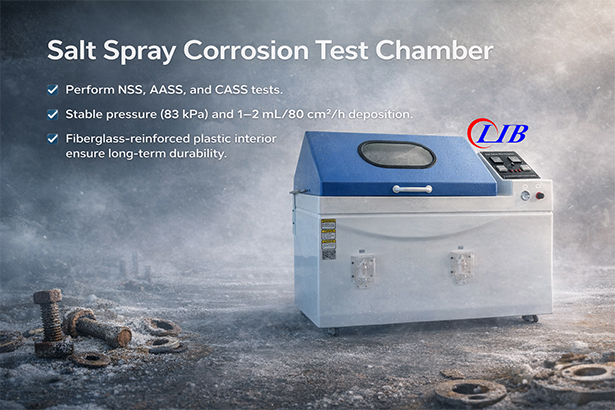
Comparing anti-corrosion coatings
Evaluating plating quality
Testing paint and powder coating systems
Checking fastener durability
Verifying product consistency from batch to batch
Supporting R&D for new materials and surface treatments
A Salt Spray Corrosion Test Chamber is also important because corrosion is rarely just a cosmetic issue. Rust, blistering, pitting, underfilm attack, and coating delamination can all lead to serious functional failures. In sectors such as transportation, industrial equipment, offshore engineering, and electrical systems, the ability of a Salt Spray Corrosion Test Chamber to reveal weak points early can reduce risk and save substantial cost.
A Salt Spray Corrosion Test Chamber is widely used for:
1. Automotive body parts and underbody components
2. Fasteners, brackets, hinges, and clips
3. Marine metal hardware
4. Electrical cabinets and enclosures
5. Rail and transportation components
6. Construction connectors and fixtures
7. Surface-treated industrial parts
8. Coated consumer products
In all of these areas, the Salt Spray Corrosion Test Chamber helps manufacturers predict how materials and coatings will behave under chloride-rich exposure. Whether the goal is a simple Salt Spray Corrosion Test or a more advanced Cyclic Corrosion Test, the chamber is an essential tool for corrosion evaluation.
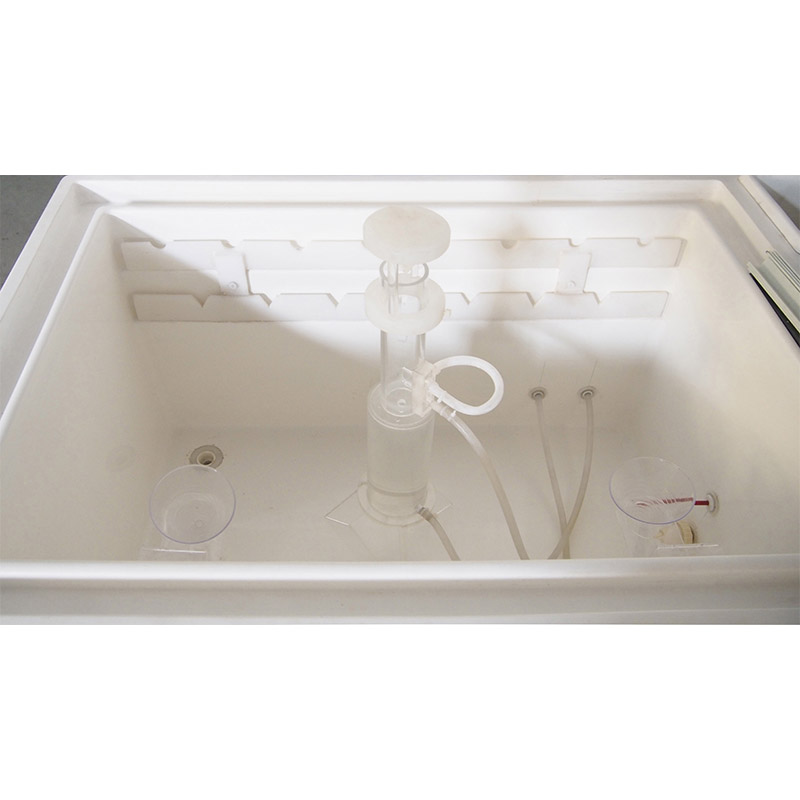
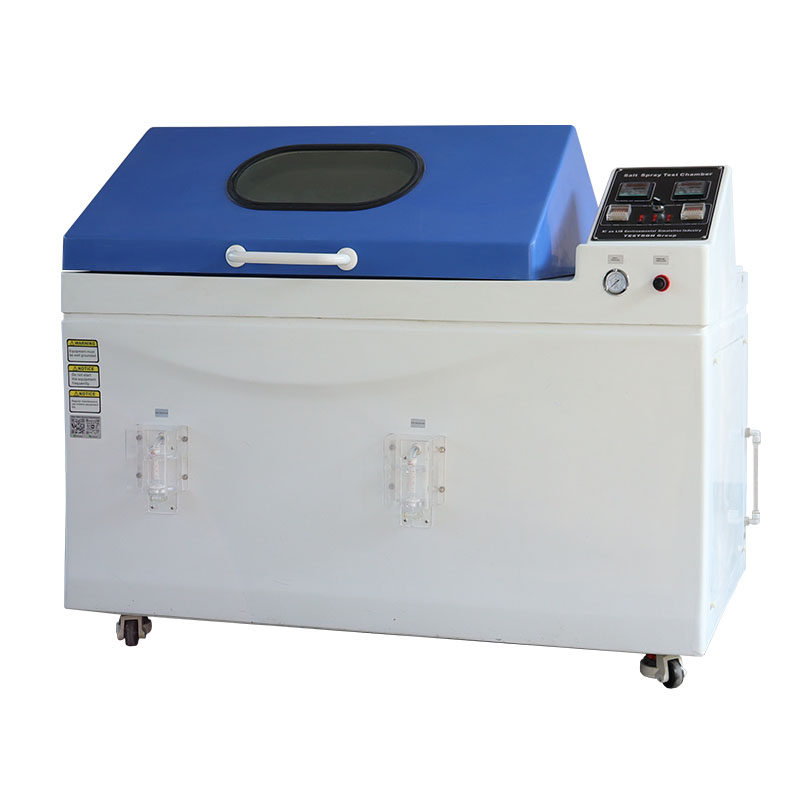
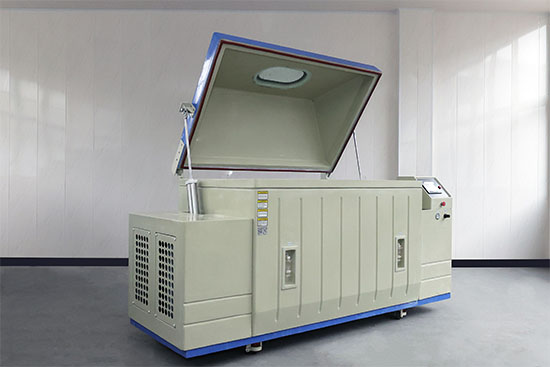
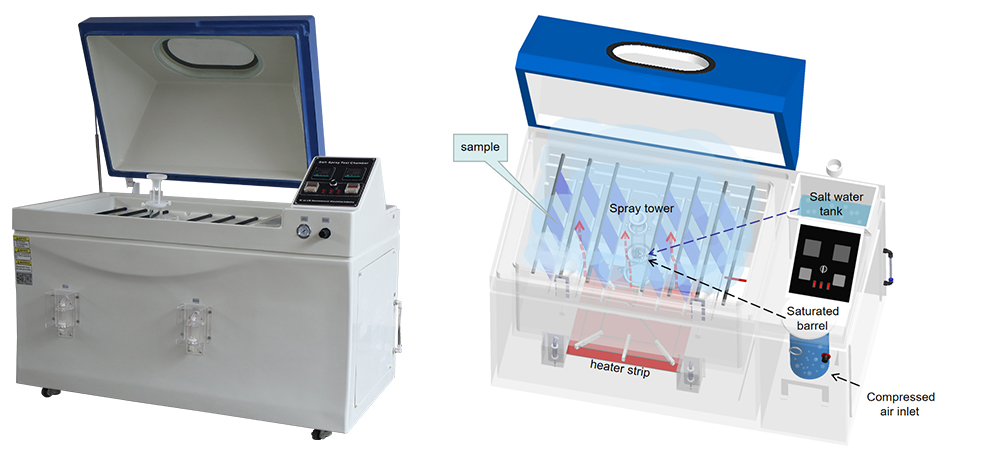
A Salt Spray Corrosion Test Chamber operates by converting a prepared salt solution, usually sodium chloride in purified water, into a fine mist. This mist is sprayed into an enclosed chamber where test specimens are mounted at standard angles. The Salt Spray Corrosion Test Chamber maintains controlled temperature and exposure conditions so the corrosion process can proceed in a repeatable way.
Robust Workroom | Salt Fog Deposition | 1~2ml / 80cm2 · h | ||
Spray Type | Continuous / Periodic | |||
Heating Element | Nichrome heater | |||
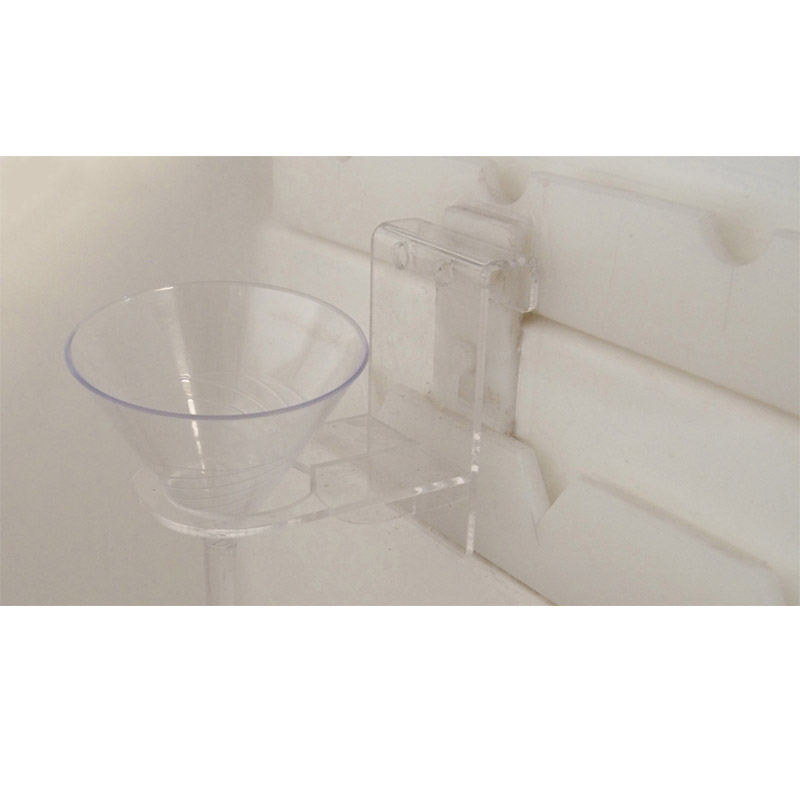
Salt Fog Collected | Fog collector and fog measure cylinder | |||
Salt Fog collector | Controller | PID controller | ||
Material | Glass fiber reinforced plastics | |||
Standard Configuration | 8 round | |||
The typical working process of a Salt Spray Corrosion Test Chamber includes:
Preparing the salt solution according to the test method
Loading the samples into the chamber
Setting temperature, spray mode, and duration
Atomizing the solution into salt fog
Maintaining stable chamber conditions during the test
Inspecting samples at defined intervals or at the end of exposure
A Salt Spray Corrosion Test Chamber may run continuously or in programmed intervals, depending on the type of corrosion test being performed. Basic models focus on continuous salt fog, while more advanced systems support drying, humidity, and cyclic environmental changes.
》》》For more technical information and details about our Salt Spray Corrosion Test Chamber, please feel free to contact LIB Indsutry.
A Salt Spray Corrosion Test Chamber can be used for several corrosion methods, depending on the product standard and validation goal. The table below shows the most common types.
Test Type | Purpose | Typical Application |
|---|---|---|
Neutral Salt Spray | Baseline corrosion resistance evaluation | General metal coatings and plated parts |
Acidified Salt Spray | More aggressive corrosion environment | Decorative coatings and special finishes |
Copper-Accelerated Salt Spray | Accelerated evaluation of metallic coatings | Decorative plating systems |
Salt Spray Corrosion Test | Standardized salt fog exposure | Quality control and coating comparison |
Cyclic Corrosion Test | Alternate salt spray, humidity, drying, and temperature stages | Automotive and outdoor equipment |
Salt Fog and SO2 Test | Combined salt fog and sulfur dioxide exposure | Industrial and polluted atmospheric simulation |
Fastener Salt Corrosion Rating Test | Comparative corrosion performance for fasteners | Bolts, screws, nuts, clips, and assemblies |
Filiform Corrosion Salt Test | Underfilm corrosion analysis | Painted or coated substrates |
This shows that a Salt Spray Corrosion Test Chamber is not limited to one simple procedure. The real value of a Salt Spray Corrosion Test Chamber depends on whether it can support the test methods required by the target industry and product specification.
A basic Salt Spray Corrosion Test Chamber generally performs continuous salt fog testing. This is useful for standard corrosion screening and coating comparison. However, many real-world environments are not continuously wet with salt fog. Products in service are exposed to cycles of wetting, drying, humidity, and temperature fluctuation.
That is why the Cyclic Corrosion Test has become increasingly important. A Cyclic Corrosion Test uses repeated environmental changes to better simulate field exposure. In many applications, a Cyclic Corrosion Test provides a more realistic representation of actual service conditions than a simple continuous salt fog test.
The comparison below helps explain the difference:
Feature |
|
|
|---|---|---|
Environment | Continuous salt fog | Alternating salt, humidity, drying, temperature |
Complexity | Lower | Higher |
Test realism | Moderate | Higher |
Typical use | General coating screening | Automotive, transportation, outdoor products |
Chamber requirement | Standard Salt Spray Corrosion Test Chamber | Advanced programmable Salt Spray Corrosion Test Chamber |
A modern Salt Spray Corrosion Test Chamber that supports cyclic testing is often preferred by manufacturers seeking stronger correlation with field performance.
Choosing a Salt Spray Corrosion Test Chamber requires more than checking size and price. The right chamber should match your test standards, sample dimensions, throughput, and technical requirements.
Here is a practical selection checklist:
Chamber capacity: Make sure the Salt Spray Corrosion Test Chamber can accommodate your sample volume and specimen dimensions.
Test methods: Confirm whether the Salt Spray Corrosion Test Chamber supports only standard salt fog or also Cyclic Corrosion Test, Salt Fog and SO2 Test, and other advanced methods.
Control precision: Stable temperature, spray uniformity, and salt deposition are critical for reliable results.
Programming capability: A programmable Salt Spray Corrosion Test Chamber is better for complex test profiles.
Material durability: The chamber itself should resist long-term corrosion from aggressive salt exposure.
Maintenance and cleaning: Easy maintenance improves uptime and data reliability.
Safety systems: Over-temperature protection, low-water protection, and other safeguards are important.
Data recording: A modern Salt Spray Corrosion Test Chamber should support test data logging for traceability and reporting.
For buyers comparing suppliers, it is useful to create a simple comparison table like the one below:
Selection Factor | Why It Matters |
|---|---|
Chamber volume | Determines sample capacity |
Spray mode | Affects test flexibility |
Temperature control | Influences repeatability |
Cyclic capability | Improves real-world simulation |
SO2 compatibility | Supports polluted atmosphere testing |
Data logging | Helps with compliance and reporting |
Safety features | Protects equipment and operators |
The main purpose of a Salt Spray Corrosion Test Chamber is to accelerate corrosion in a controlled laboratory environment so materials, coatings, and finished products can be evaluated much faster than in natural outdoor exposure.
A Salt Spray Corrosion Test Chamber specifically generates a salt fog environment for corrosion testing. A general corrosion chamber may simulate humidity, gas exposure, condensation, or temperature changes without necessarily using salt spray.
A Fastener Salt Corrosion Rating Test should be used when comparing bolts, screws, nuts, washers, or other hardware with different coating systems. It helps determine relative corrosion resistance under controlled salt exposure.
A Cyclic Corrosion Test is often considered more realistic because it includes wetting, drying, humidity, and temperature changes that better reflect real service environments. A basic Salt Spray Corrosion Test Chamber running continuous fog is useful, but cyclic methods may provide stronger field correlation.
A Salt Fog and SO2 Test is used to simulate corrosive conditions that combine salt exposure with sulfur dioxide. This is important for products used in industrial or polluted atmospheric environments.
Customization options are available to meet specific testing requirements. LIB provides a 3-year warranty along with lifetime technical support. If any issue occurs due to equipment defects during the warranty period and cannot be repaired, the unit will be replaced at no cost. Our 24/7 English-speaking service team ensures timely assistance, and most orders are delivered within 7–15 days.

Contact LIB Industry today to learn more about our Salt Spray Corrosion Test Chambers, technical specifications, and customized solutions for your testing requirements.