


As product performance expectations continue to rise, verifying durability under challenging environmental conditions has become a key part of quality assurance. Salt spray chambers enable accelerated corrosion testing by simulating salt-rich atmospheres, providing valuable data on the protective performance of materials and surface treatments. Through reliable testing results, manufacturers can improve product designs, reduce failure risks, and develop products with greater longevity and reliability.
Salt spray chambers are essential tools used to simulate and evaluate the corrosion resistance of materials, coatings, and products exposed to harsh environments. By creating a controlled saline atmosphere, these chambers accelerate the corrosion process, allowing manufacturers to assess the durability and longevity of their products.
Unsung Protector: How It Saves Your Gadgets
Component Testing: Manufacturers use salt spray chambers to test the corrosion resistance of metals, plastics, and
coatings used in gadgets. This helps identify weak points and improve their durability.
Material Selection: Based on salt spray test results, manufacturers can choose materials better suited to withstand harsh environments, such as those found in coastal areas or humid climates.
Quality Control: Salt spray testing helps maintain consistent product quality by identifying potential issues early in the production process.
Ultimately, this translates to more reliable and longer-lasting gadgets for consumers.
Why Every Industry Trusts Salt Spray Chambers
Salt spray chambers have earned a reputation as an indispensable tool for quality control and product development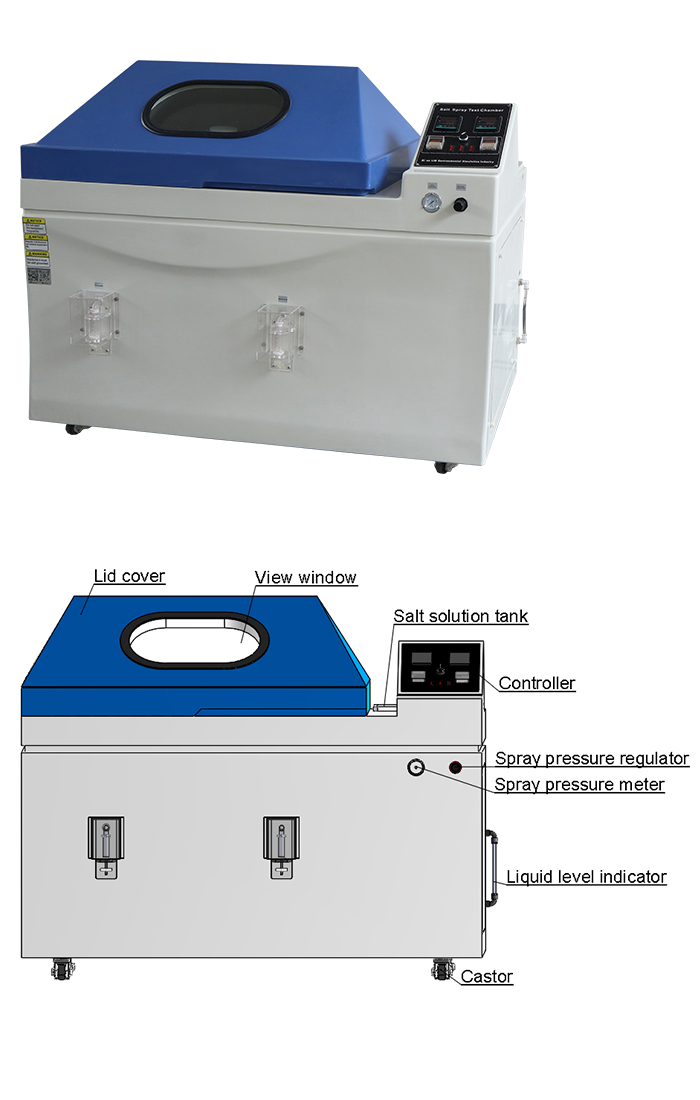 across a vast array of industries. This trust is rooted in several key factors:
1. Accelerated Corrosion Simulation:
● Time Efficiency: Salt spray chambers drastically accelerate the corrosion process, providing results in days or weeks instead of years of natural exposure.
● Predictive Analysis: By simulating harsh environments, industries can anticipate potential corrosion issues and take corrective measures early in the product lifecycle.
2. Standardized Testing:
● Reliable Comparisons: Salt spray testing adheres to established standards (like ASTM B117, ISO 9227), ensuring consistent test conditions and comparable results across different manufacturers and laboratories.
● Global Acceptance: These standardized methods are recognized worldwide, facilitating trade and regulatory compliance.
3. Cost-Effectiveness:
● Early Issue Detection: Identifying corrosion vulnerabilities early in the product development phase prevents costly recalls and field failures.
● Optimized Material Selection: Salt spray testing helps select the most suitable materials, reducing material costs and improving product performance.
4. Versatility:
● Diverse Applications: Salt spray chambers can evaluate a wide range of materials, coatings, and finished products, making them adaptable to various industries.
● Customizable Conditions: Chambers can be adjusted to simulate specific environmental challenges, providing tailored testing for unique product requirements.
5. Data-Driven Decision Making:
● Quantitative Results: Salt spray testing generates measurable data on corrosion rates, failure modes, and material performance.
● Informed Product Development: This data empowers engineers and designers to make data-driven decisions for product improvement.
6. Regulatory Compliance:
● Industry Standards: Many industries have specific corrosion resistance requirements mandated by regulatory bodies. Salt spray testing is often a crucial component of demonstrating compliance.
● Consumer Confidence: Products that undergo salt spray testing and meet regulatory standards build consumer trust and confidence.
In essence, salt spray chambers offer a reliable, efficient, and versatile method to assess product durability and longevity. This combination of benefits has made them a cornerstone of quality assurance and product development in countless industries worldwide.
Automotive's Secret Weapon
Salt spray chambers are crucial for the automotive industry. They simulate harsh conditions to test how well car parts like body panels, undercarriage, and electronics resist rust and corrosion. This helps carmakers make vehicles last longer and perform better in tough environments.

The Marine Industry's Best Friend
Salt spray chambers are indispensable to the marine industry. By simulating the corrosive effects of saltwater environments, manufacturers can rigorously test the durability of boats, marine equipment, and components. This accelerated testing helps identify weaknesses, leading to the development of more resilient products capable of withstanding the harsh conditions of the sea. From hulls and engines to electronics and hardware, salt spray chambers play a pivotal role in ensuring the longevity and reliability of marine vessels and equipment.
Safeguarding Aerospace Innovations
The aerospace industry relies heavily on salt spray chambers to ensure the reliability and safety of aircraft components. By subjecting materials and coatings to accelerated corrosion in a controlled environment, manufacturers can identify vulnerabilities, optimize designs, and develop corrosion-resistant solutions. This rigorous testing is crucial for safeguarding aircraft from the harsh conditions encountered during flight, such as exposure to salt, humidity, and pollutants.
Choosing Your Perfect Salt Spray Chamber
Selecting the right salt spray chamber is crucial for accurate and reliable corrosion testing. Here are key factors to consider:
1. Chamber Capacity:
● Determine the size of your test specimens.
● Consider future testing needs and potential increases in sample size.
2. Temperature and Humidity Control:
● Ensure precise control for accurate simulation of desired conditions.
● Look for chambers with advanced control systems.
3. Salt Solution Delivery:
● Evaluate the method of salt solution atomization (e.g., nozzle, atomizer).
● Consider the consistency and uniformity of salt spray distribution.
4. Construction Materials:
● Choose corrosion-resistant materials (e.g., stainless steel, fiberglass) for chamber components.
● Verify material compatibility with salt solutions and test specimens.
5. Automation and Data Logging:
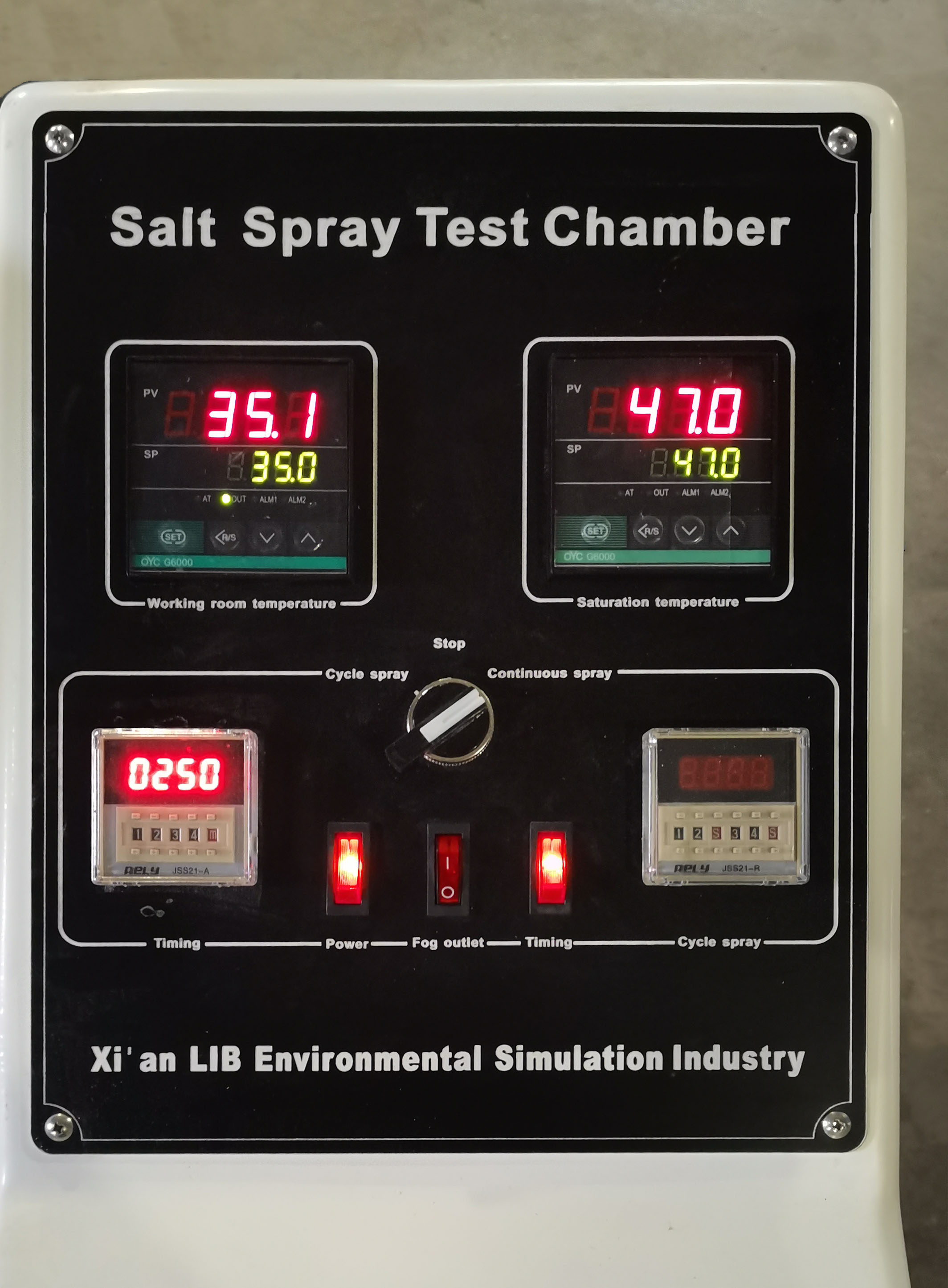 ● Assess the level of automation desired (e.g., temperature control, data recording).
● Consider features like programmable controllers and data analysis software.
6. Compliance and Standards:
● Verify chamber adherence to relevant industry standards (e.g., ASTM B117, ISO 9227).
● Ensure compliance with regulatory requirements.
7. Maintenance and Support:
● Consider the chamber's maintenance needs and the supplier's support services.
● Look for warranties, spare parts availability, and technical assistance.
8. Budget:
● Balance desired features and capabilities with available budget.
● Explore options for leasing or renting if purchasing outright is not feasible.
By carefully evaluating these factors and consulting with experts, you can select a salt spray chamber that meets your specific testing requirements and delivers reliable results.
| Model | S-150 | S-250 | S-750 | S-010 | S-016 | S-020 |
| Internal dimensions (mm) | 460*600*400 | 640*1000*500 | 750*1100*500 | 1000*1300*600 | 1000*1600*800 | 1000*2000*800 |
| Overall dimensions (mm) | 630*1100*1000 | 810*1570*1270 | 950*1700*1300 | 1300*1860*1600 | 1300*2160*1270 | 1300*2700*1900 |
| Interior Volume (L) | 110 | 320 | 410 | 780 | 1280 | 1600 |
| Temperature Range | Ambient ~ +60 ℃ | |||||
| Temperature Fluctuation | ± 0.5 ℃ | |||||
| Temperature Deviation | ± 2.0 ℃ | |||||
| Humidity Range | 95% ~ 98% RH | |||||
| Salt Fog Deposition | 1~2ml / 80cm2 · h | |||||
Features That Matter Most
Precise Temperature and Humidity Control: Accurate simulation of environmental conditions is essential for reliable testing.
Consistent Salt Spray Distribution: Even distribution of salt solution ensures uniform corrosion exposure on test specimens.
Automation and Data Logging: Streamlines testing processes, improves efficiency, and enables data analysis.
Corrosion-Resistant Construction: Prevents contamination and ensures chamber longevity.
Compliance with Standards: Adherence to industry standards (e.g., ASTM B117, ISO 9227) ensures test validity and comparability.
Top Models You Need to Know About
The salt spray chamber market offers a wide range of models from various manufacturers. The following are some well-regarded options based on general reputation and features. It's essential to conduct thorough research and consider specific needs before making a purchase.
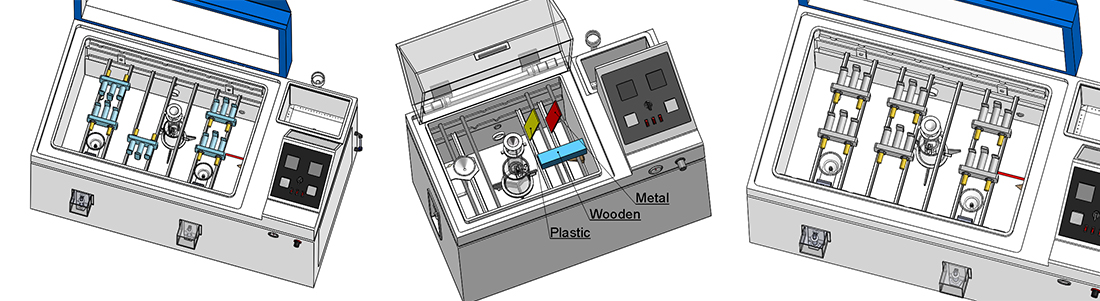
Key Factors to Consider Before Choosing a Model:
Chamber size and capacity: Based on test specimen dimensions.
Temperature and humidity control precision: Ensures accurate simulation.
Salt solution delivery method: Impacts spray uniformity.
Construction material: Affects chamber durability and corrosion resistance.
Automation and data logging capabilities: Enhances efficiency and data analysis.
Compliance with standards: Ensures test validity and comparability.
Popular Salt Spray Chamber Manufacturers and Models
While specific models can vary, these manufacturers are known for producing reliable salt spray chambers:
Atlas Material Testing Technology: Offers a range of chambers for different testing needs.
Q-Lab Corporation: Provides various models with customizable features.
Espec Corporation: Known for precision climate control chambers, including salt spray models.
Huadong Testing Instrument: Offers a wide selection of salt spray chambers at different price points.
Choosing Your Machine
Understanding your specific testing needs is paramount before selecting a salt spray chamber. Here's a breakdown of essential factors:
1. Chamber Capacity:
● Test specimen size: Ensure the chamber can accommodate your largest samples.
● Batch size: Consider how many samples you'll test simultaneously.
2. Temperature and Humidity Control:
● Accuracy: Precise control for reliable test results.
● Range: Ensure it covers your required test conditions.
3. Salt Solution Delivery:
● Uniformity: Consistent salt spray distribution is crucial.
● Atomization: Choose a method that suits your testing needs (e.g., nozzle, atomizer).
4. Chamber Construction:
● Corrosion resistance: Stainless steel or fiberglass reinforced plastic (FRP) are common choices.
● Durability: Consider the chamber's lifespan and maintenance requirements.
5. Automation and Data Logging:
● Efficiency: Automated features save time and reduce human error.
● Data analysis: Choose a chamber with data logging capabilities for detailed analysis.
6. Compliance and Standards:
● Industry requirements: Ensure the chamber meets relevant standards (e.g., ASTM B117, ISO 9227).
● Regulatory compliance: Verify adherence to applicable regulations.
7. Maintenance and Support:
● Accessibility: Consider ease of maintenance and cleaning.
● Service: Look for manufacturers with good after-sales support.
8. Budget:
● Cost-benefit analysis: Balance features with your budget.
● Long-term costs: Factor in maintenance, consumables, and potential upgrades.
Remember:
● Consult with experts: Seek advice from industry professionals or experienced users.
● Compare models: Evaluate multiple options from different manufacturers.
● Consider future needs: Plan for potential increases in testing volume or complexity.
By carefully considering these factors, you can select a salt spray chamber that meets your specific requirements and delivers accurate, reliable results.
Smooth Operation: Tips and Tricks
Ensure optimal performance and accurate results by following these guidelines: prepare the chamber with proper installation, precise solution preparation, and even specimen placement; maintain consistent monitoring, regular cleaning, and filter replacements; adhere to standardized procedures and meticulously record data; and promptly troubleshoot issues like uneven salt spray distribution, temperature fluctuations, or humidity control problems. Preventive maintenance and safety precautions are also essential for a smoothly operating salt spray chamber.
Setting Up for Success
Proper installation is crucial for optimal performance and accurate test results. Here's a general guide:
Location and Environment
Level Surface: Install the chamber on a stable, level surface to ensure even salt spray distribution.
Ventilation: Adequate ventilation is essential to dissipate corrosive fumes.
Proximity: Avoid placing the chamber near heat sources, direct sunlight, or areas with high humidity.
Unpacking and Inspection
Carefully unpack: Handle the chamber and components with care to prevent damage.
Inspect for damage: Check for any signs of damage during shipping.
Complete components: Verify that all necessary parts are included.
Assembly and Connections
Follow instructions: Refer to the manufacturer's manual for specific assembly procedures.
Electrical connections: Ensure proper grounding and power supply connections.
Fluid connections: Connect water and compressed air lines securely.
Nozzle installation: Correctly install the atomizing nozzle for optimal salt spray distribution.
Initial Setup
Leveling: Use leveling feet or shims to ensure the chamber is perfectly level.
Water supply: Connect to a clean water source (distilled or deionized water).
Compressed air: Connect a clean, dry compressed air supply.
Salt solution preparation: Prepare the salt solution according to the desired test standard (e.g., ASTM B117, ISO 9227).
Calibration and Testing
Temperature and humidity sensors: Calibrate these instruments for accurate readings.
Salt spray distribution: Verify uniform salt spray coverage within the chamber.
Test run: Conduct a test run to check overall chamber performance.
Remember: Always refer to the specific user manual for your salt spray chamber model for detailed instructions and recommendations.
Daily Hacks for Optimal Performance
Consistent, reliable results depend on daily attention to your salt spray chamber. Here are some essential practices:
Pre-Test Routine
Inspect Chamber: Check for any signs of leaks, corrosion, or damage.
Solution Quality: Verify the salt solution concentration and purity.
Nozzle Check: Ensure the atomizing nozzle is clean and unobstructed.
Filter Inspection: Check the air filter for contamination.
During the Test
Monitor Parameters: Continuously monitor temperature, humidity, and salt spray distribution.
Data Recording: Record all relevant data, including test conditions and observations.
Visual Inspection: Regularly check test specimens for corrosion development.
Post-Test Procedures
Chamber Cleaning: Immediately clean the chamber and components to prevent salt buildup.
Specimen Removal: Carefully remove test specimens and prepare them for evaluation.
Solution Disposal: Properly dispose of the spent salt solution according to environmental regulations.
Additional Tips
Calibration: Regularly calibrate temperature, humidity, and salt concentration sensors.
Maintenance Log: Keep a detailed maintenance log for tracking chamber performance and history.
Operator Training: Ensure all operators are well-trained in chamber operation and maintenance.
By incorporating these daily practices into your routine, you can significantly enhance the performance and longevity of your salt spray chamber while ensuring accurate and reliable test results.
Avoiding Common Mistakes
By understanding and preventing common errors, you can significantly improve the accuracy and reliability of your test results. Here are some pitfalls to avoid:
Sample Preparation Errors
● Improper cleaning: Contaminants on the sample surface can affect corrosion behavior.
● Incorrect masking: Masking should not interfere with the test area or cause stress concentrations.
● Neglecting sample identification: Proper labeling is essential for tracking results.
Environmental Control Issues
● Temperature and humidity fluctuations: Inconsistent conditions lead to unreliable results.
● Insufficient air circulation: Poor airflow can cause salt solution droplets to accumulate.
● Contaminated environment: Dust or other particles can interfere with the test.
Operational Mistakes
● Incorrect salt solution preparation: Improper concentration or impurities affect corrosion rates.
● Nozzle clogging: Reduced salt spray distribution leads to inconsistent results.
● Neglecting chamber maintenance: Buildup of salt deposits can impact performance.
● Improper data recording: Incomplete or inaccurate data compromises analysis.
Interpretation Errors
● Ignoring test standards: Deviation from standards can invalidate results.
● Rushing evaluation: Insufficient observation time can lead to inaccurate conclusions.
● Overlooking influencing factors: External factors like sample orientation can affect corrosion patterns.
By being mindful of these common mistakes and taking steps to prevent them, you can enhance the reliability and validity of your salt spray chamber testing.
Ready to enhance your product testing and quality assurance? Contact LIB Industry today to explore our range of reliable salt spray chambers and find the perfect solution for your needs.


