


Food shelf life is influenced by a combination of physical, chemical, and microbiological factors, all of which are affected by storage temperature, humidity, packaging, and transportation conditions. Shelf life testing allows manufacturers to evaluate product stability over time, determine accurate expiration dates, and ensure food quality and safety throughout distribution and storage.
LIB Temperature and Humidity Test Chambers are widely trusted by food manufacturers and testing laboratories for shelf life evaluation. Customers value the chamber's precise temperature control, excellent uniformity, and stable long-term operation, which make it ideal for both real-time and accelerated shelf life testing. By simulating controlled storage environments, the chamber helps users obtain reliable data and confidently predict product performance in the market.
What is shelf life testing of food?
Shelf life is a product of physical, microbiological, and chemical processes, triggered by any one of a multitude of contributing factors. Product characteristics, including the quality and consistency of ingredients, the moisture content, and acidity levels, all play a part, as do external factors like storage, transport, and packaging materials.
Why is shelf life testing important?
Products should be inspected at suitable times and samples tested for stability of the critical physical and chemical characteristics. If you are selling your food product in a retail environment, your retailer will more than likely require a shelf life test. At some point, you should strongly consider getting shelf life testing to give your product a valid expiration date.
How do test the shelf life of food?
1. Divide the same batch of products into five groups; each group needs 8-10 samples; put them in five boxes;
2. Set the test chamber to 5°C, 30°C, 35°C, 40°C, and 45°C respectively.
3. The sample at 5°C serves as the control sample. 30°C, 35°C, 40°C, and 45°C are accelerated destruction tests.
4. Start the observation from the sample at 45°C. According to the situation, start from 10 days and take out a control every five days. When the product begins to deteriorate, this group will stop the test and record the number of days of the test as 15 days. The number of days at 40°C, 35°C, and 30°C is measured sequentially as approximately 30 days + 2 days, 60 days + 1, 120 days + 1 day.
5. Calculate q10=4 with 10°C as a gradient.As long as you know that q10=4, you can calculate the shelf life (20℃-25℃) of the products on the market by testing a high-temperature point in the future. Of course, in order to be more precise and rigorous, several different temperature points can be tested multiple times to verify q10.
6. The storage period of the product in the market (20℃-25℃)=15 days*4*4=240 days. (15 days is the number of days measured at 45°C, 45°C has two gradients relative to the market environment (20°C-25°C), so multiply it by two q10).
What equipment can perform the test?
LIB temperature and humidity test chamber is to simulate temperature and humidity conditions with accurate control. Various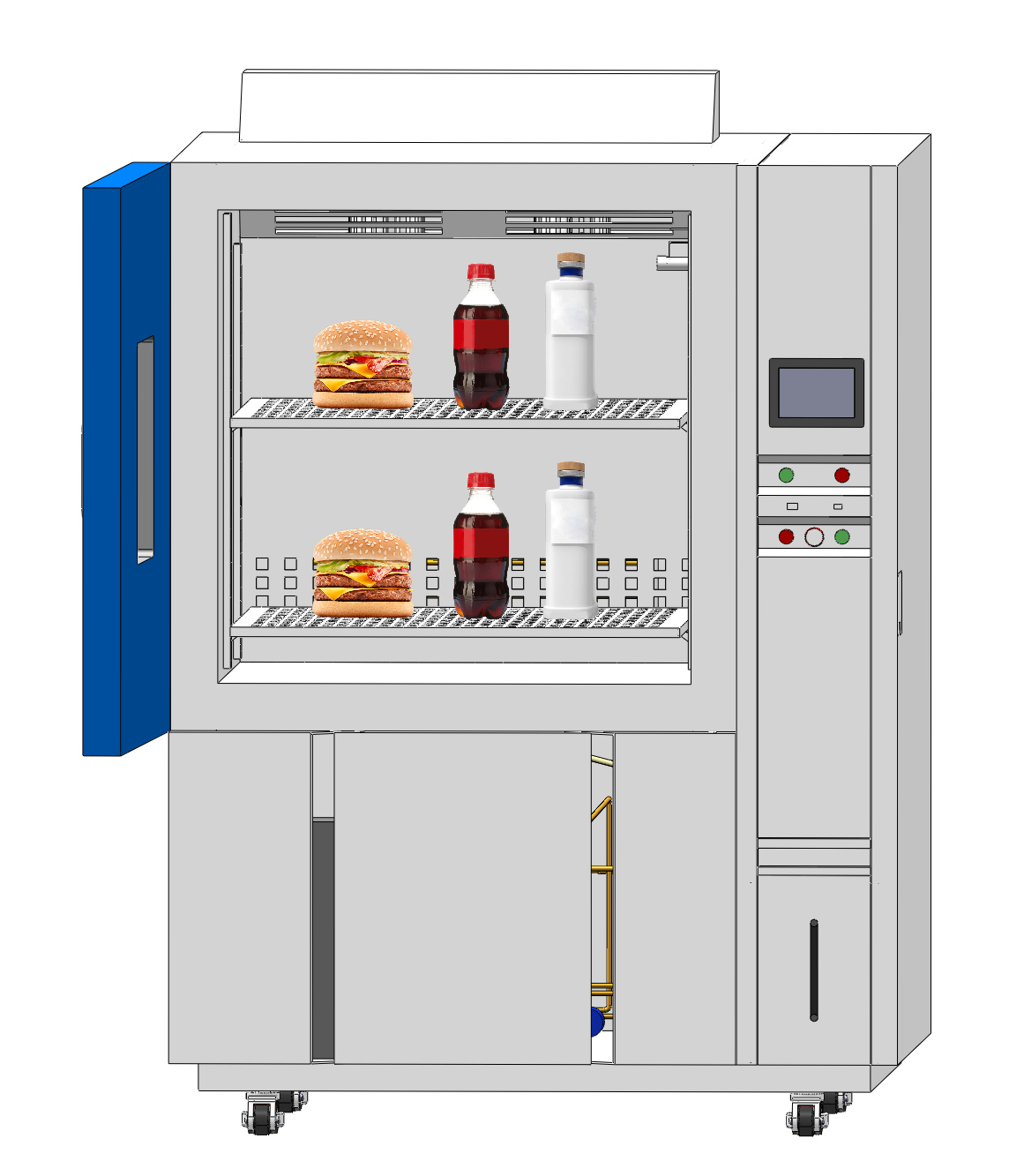 models and sizes are available to provide the exact test chamber for food shelf life testing.During shelf life testing, temperature is the most critical accelerating factor, while humidity plays a decisive role in moisture migration, texture change, and microbial growth. Precise control of both parameters is essential to ensure test repeatability and data reliability. Even small fluctuations can significantly affect test results and lead to incorrect shelf life predictions.
LIB temperature and humidity test chambers provide stable control across a wide temperature and humidity range, ensuring uniform conditions throughout the chamber. This allows multiple samples to be tested simultaneously under identical environments, improving efficiency and consistency in shelf life evaluation.
Food shelf life testing can be conducted using two main approaches: real-time testing under normal storage conditions and accelerated testing under elevated temperatures. Accelerated shelf life testing (ASLT) shortens evaluation time by increasing reaction rates, helping manufacturers quickly estimate product shelf life and make timely decisions during product development.
LIB test chambers support both methods. Users can easily switch between long-term stability testing and accelerated testing by adjusting temperature settings, enabling flexible testing strategies for different food categories and development stages.
Advantages of Using LIB Test Chambers for Shelf Life Testing
LIB temperature and humidity test chambers are designed to meet the practical needs of food testing laboratories and production facilities:
High-precision temperature and humidity control for reliable test data
Excellent uniformity to ensure consistent conditions for all samples
Stable long-term operation for extended shelf life studies
User-friendly control system for easy program setting and monitoring
Multiple chamber sizes to accommodate different sample volumes
These features help users reduce testing risks, improve data confidence, and speed up time-to-market.
Temperature & Humidity Chambers | 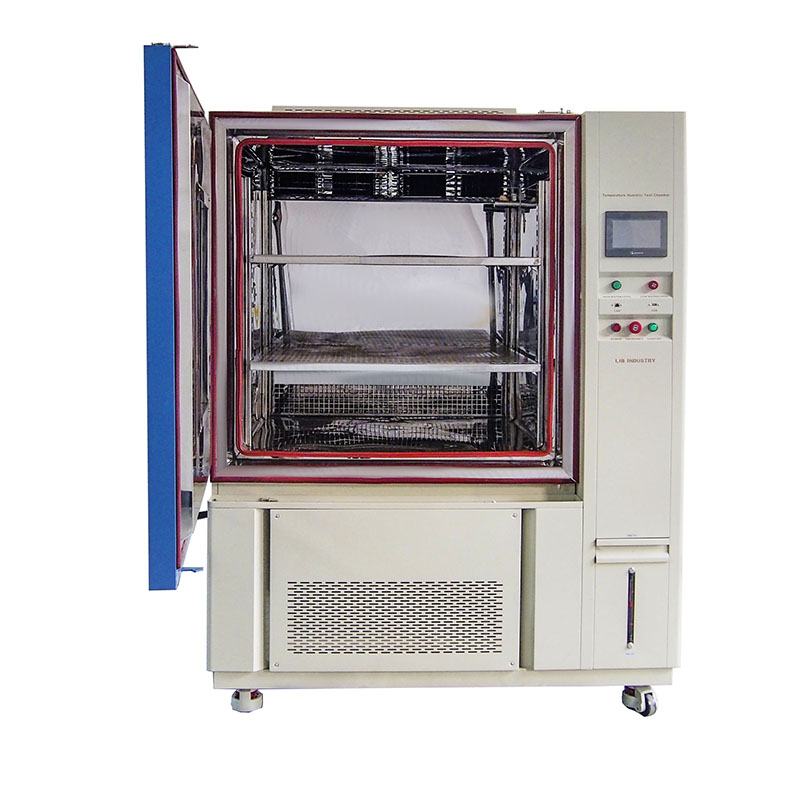 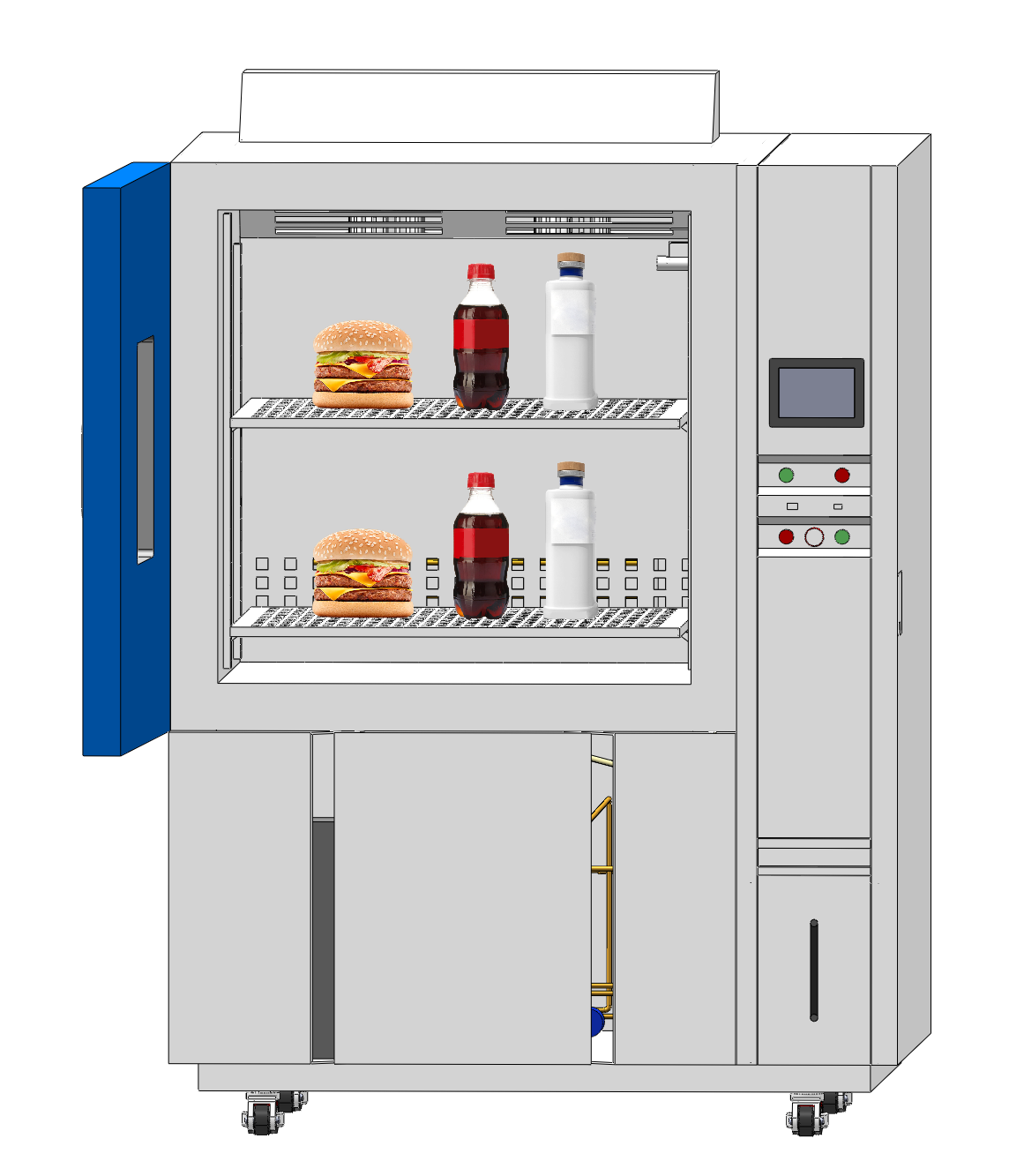 | ||||
Temperature range | -20℃ ~+150 ℃ | ||||
Low type | A: -40℃ B:-70℃ C -86℃ | ||||
Humidity Range | 20%-98%RH | ||||
Temperature deviation | ± 2.0 ℃ | ||||
Heating rate | 3 ℃ / min | ||||
Cooling rate | 1 ℃ / min | ||||
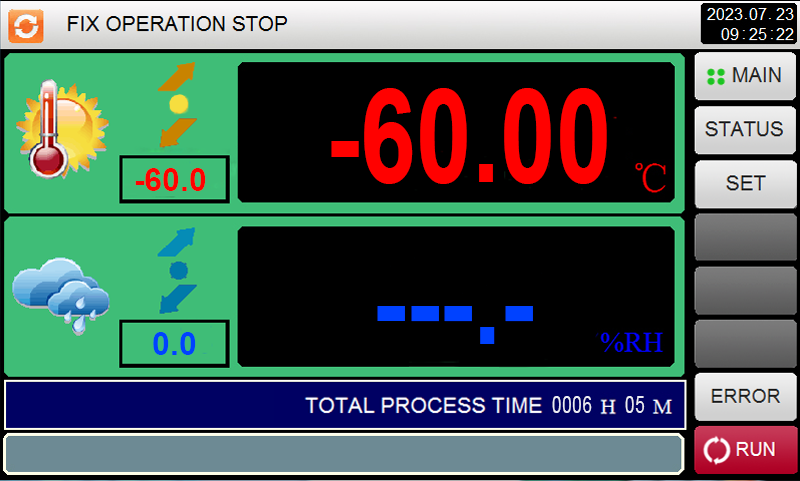
Controller | Programmable color LCD touch screen controller, Multi-language interface, Ethernet , USB | ||||
Refrigerant | R404A, R23 | ||||
Exterior material | Steel Plate with protective coating | ||||
Interior material | SUS304 stainless steel | ||||
Standard configuration | 1 Cable hole (Φ 50) with plug; 2 shelves | ||||
Timing Function | 0.1~999.9 (S,M,H) settable | ||||
|
| 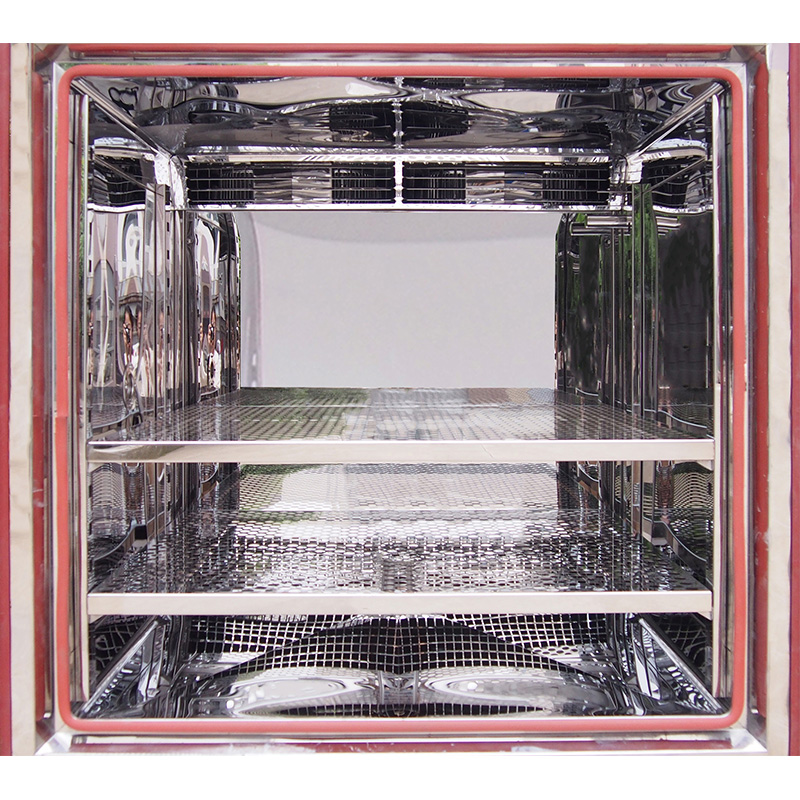 | 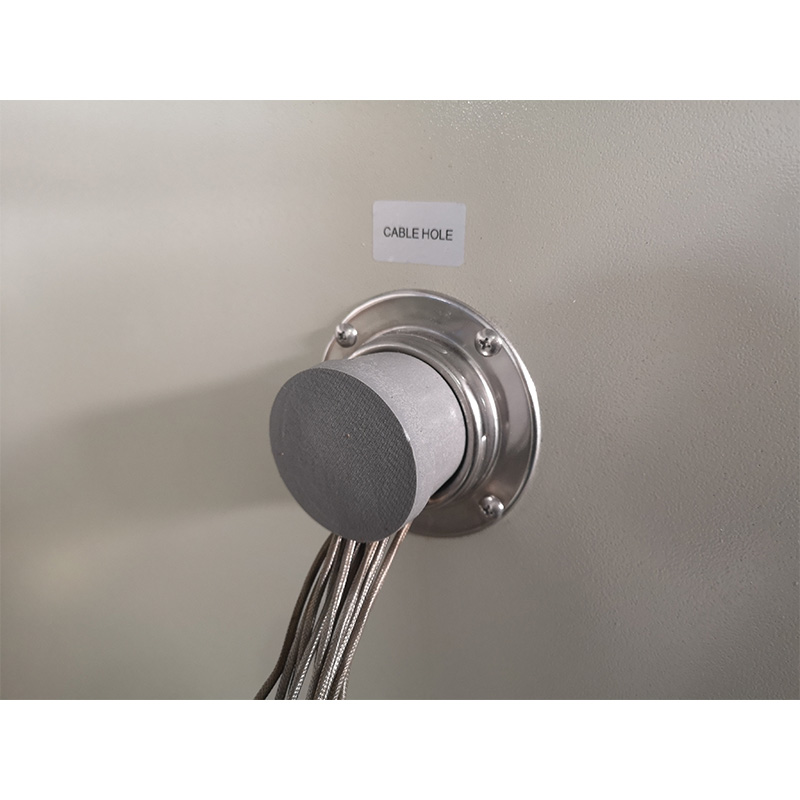 |
Touch screen controller Holds up to 120 test programs with 100 steps each, making it well suited for complex multi‑stage profiles such as temperature–humidity shock or soak cycles. | The compressor The compressor rapidly removes heat from the chamber interior, achieving a cooling rate around 1 °C / 5 °Cper minute. | Robust Anti-Corrosion Workroom The chamber's interior is built from SUS304 stainless steel, offering outstanding resistance to heat and corrosion for long-lasting performance. | Integrated Power Access hole Allows test specimens to stay powered during experiments, enabling performance evaluation under varying temperature and humidity. Standard 50 mm diameter; quantity and size customizable. |

Applications
LIB temperature and humidity test chambers are widely used in shelf life testing of:
Packaged foods and beverages
Dairy products
Baked goods and snacks
Frozen and refrigerated foods
Functional foods and nutritional products
They are suitable for food manufacturers, third-party testing laboratories, and research institutions.
Need a reliable solution for food shelf life testing?
Contact LIB Industry to find the right temperature and humidity test chamber for your application and testing requirements.


