Views: 0 Author: Site Editor Publish Time: 2026-06-05 Origin: Site


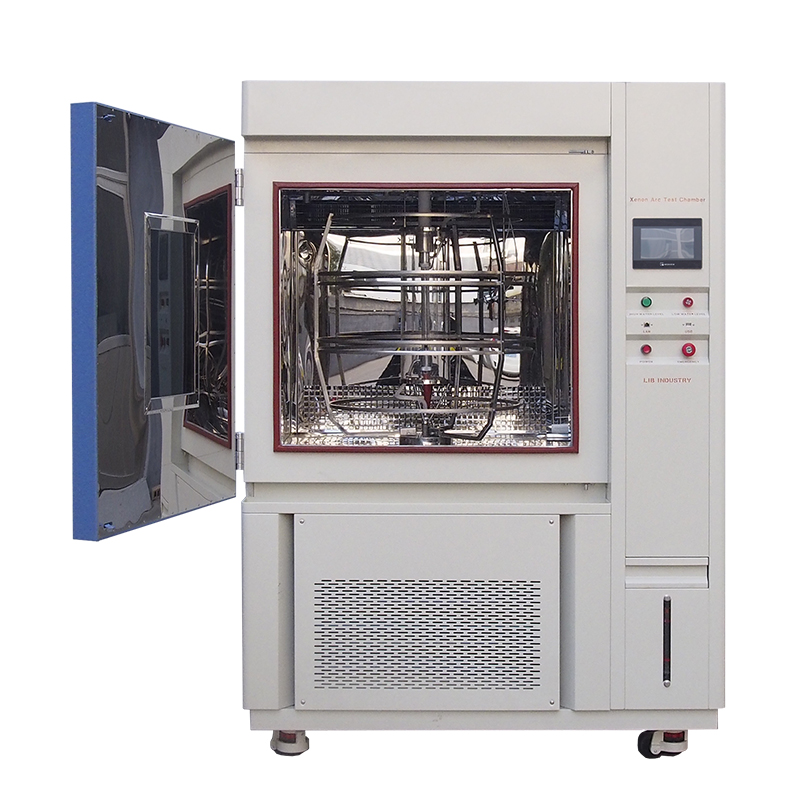
When a product fails in the real world, the stakes are undeniably high. Brand damage, expensive warranty claims, and severe compliance breaches often follow unexpected environmental degradation. A Xenon Test Chamber stands as the industry gold standard to address this critical risk. They accurately reproduce full-spectrum sunlight, moisture, and temperature fluctuations. Manufacturers rely on this precise environmental simulation to predict material lifespans before widespread distribution.
Identifying whether your specific material portfolio aligns with xenon arc testing capabilities remains a crucial first step. You must understand this technical alignment before committing to extensive testing timelines or capital equipment procurement. We will explore the core materials tested, analyze global compliance standards, and detail essential procurement criteria to guide your evaluation process effectively.
1. Xenon test chambers evaluate materials sensitive to full-spectrum sunlight, primarily focusing on colorfastness, photodegradation, and aesthetic longevity.
2. The primary materials tested include polymers, automotive textiles, architectural coatings, and packaging materials.
3. Procurement and testing protocols must align with stringent, material-specific global standards (e.g., ASTM G155, ISO 4892-2, SAE J2412).
4. Evaluating a chamber requires matching optical filters (e.g., Daylight, Window Glass) to the material's end-use environment.
Basic fluorescent UV testers provide valuable baseline data. However, they only simulate short-wave ultraviolet light. A modern Xenon Test Chamber goes significantly further. It actively reproduces ultraviolet, visible, and infrared light simultaneously. This comprehensive spectrum mimics natural sunlight perfectly. We need this complete spectral match to understand true environmental impact.
Why does full-spectrum reproduction matter for your engineering outcomes? Testing with a complete light spectrum prevents dangerous "false positives" during research and development. Materials might pass a basic UV test flawlessly in the lab. Yet, they could easily fail in the field because visible or infrared light specifically degrades their molecular structure. You avoid this common engineering blind spot by utilizing broad-spectrum irradiation from the very beginning.
We must define clear material failure parameters to measure laboratory success accurately. Quality assurance teams typically monitor these specific outcomes:
1. Delta E Color Shift: Quantifies visible fading or color changes over time using spectrophotometry.
2. Loss of Gloss: Identifies early surface degradation and microscopic pitting before structural failure occurs.
3. Chalking: Measures the formation of fine, loose powder on painted or coated surfaces.
4. Embrittlement: Tracks the critical loss of flexibility and overall structural integrity under stress.
Manufacturers frequently test exterior automotive trim, architectural siding, and outdoor furniture in these controlled environments. These applications endure relentless daily solar exposure. Therefore, testing focuses heavily on evaluating polymer chain scission. This chemical breakdown causes severe embrittlement and surface crazing. Teams utilize combined solar radiation and programmed water spray cycles. These cycles simulate the destructive combination of noon sunlight followed by afternoon rain showers. They reveal hidden weaknesses in polymer blends and composite matrices.
The textile industry relies heavily on xenon arc exposure. Common applications include automotive interiors, high-performance sportswear, military fabrics, and commercial awning materials. Testing focus centers strictly on colorfastness to light. Dyes and pigments react differently to specific photon energies. Sunlight causes rapid fading if formulations lack proper UV stabilizers. Furthermore, engineers monitor the loss of tensile strength. Prolonged exposure often weakens woven fibers, leading to unexpected tears in critical applications like parachutes or safety restraints.
Surface protection demands rigorous validation. Aerospace coatings, architectural paints, and consumer packaging inks undergo extensive evaluation here. Testing focuses on identifying blistering, chalking, and peeling under severe thermal shock. Prolonged irradiation breaks down the resin binders within paints. Once these binders degrade, gloss retention drops significantly. A xenon test chamber precisely replicates this slow degradation process. Formulators can adjust their recipes based on these specific failure timelines.
Regulated industries utilize these chambers for highly specific stability protocols. Applications span drug packaging (following ICH photostability guidelines), cosmetic emulsions, roofing membranes, and industrial rubber seals. The testing focus remains highly specialized. For pharmaceuticals, we monitor active ingredient degradation and packaging yellowing. For elastomers and rubbers, technicians look for surface cracking caused by continuous thermal and oxidative stress. Early detection of these failures prevents massive product recalls.
Evaluating a weathering chamber requires verifying its strict ability to meet specific industry protocols. A standardization mandate exists across global manufacturing. You cannot produce defensible data without adhering to recognized methods. Testing protocols dictate irradiance levels, temperature setpoints, and moisture cycles.
Understanding cross-industry benchmarks helps define your specific testing roadmap. We have summarized the most common standards below:
| Industry Category | Primary Standard | Core Application Focus |
|---|---|---|
| General Plastics | ASTM G155 / ISO 4892-2 | Standard practice for operating xenon arc light apparatus for non-metallic materials. |
| Automotive (Interiors) | SAE J2412 | Accelerated exposure of automotive interior trim components using controlled irradiance. |
| Automotive (Exteriors) | SAE J2527 | Performance-based standard for automotive exterior materials subjected to weathering. |
| Textiles | AATCC TM16.3 / ISO 105-B02 | Evaluating colorfastness to light under specified temperature and humidity conditions. |
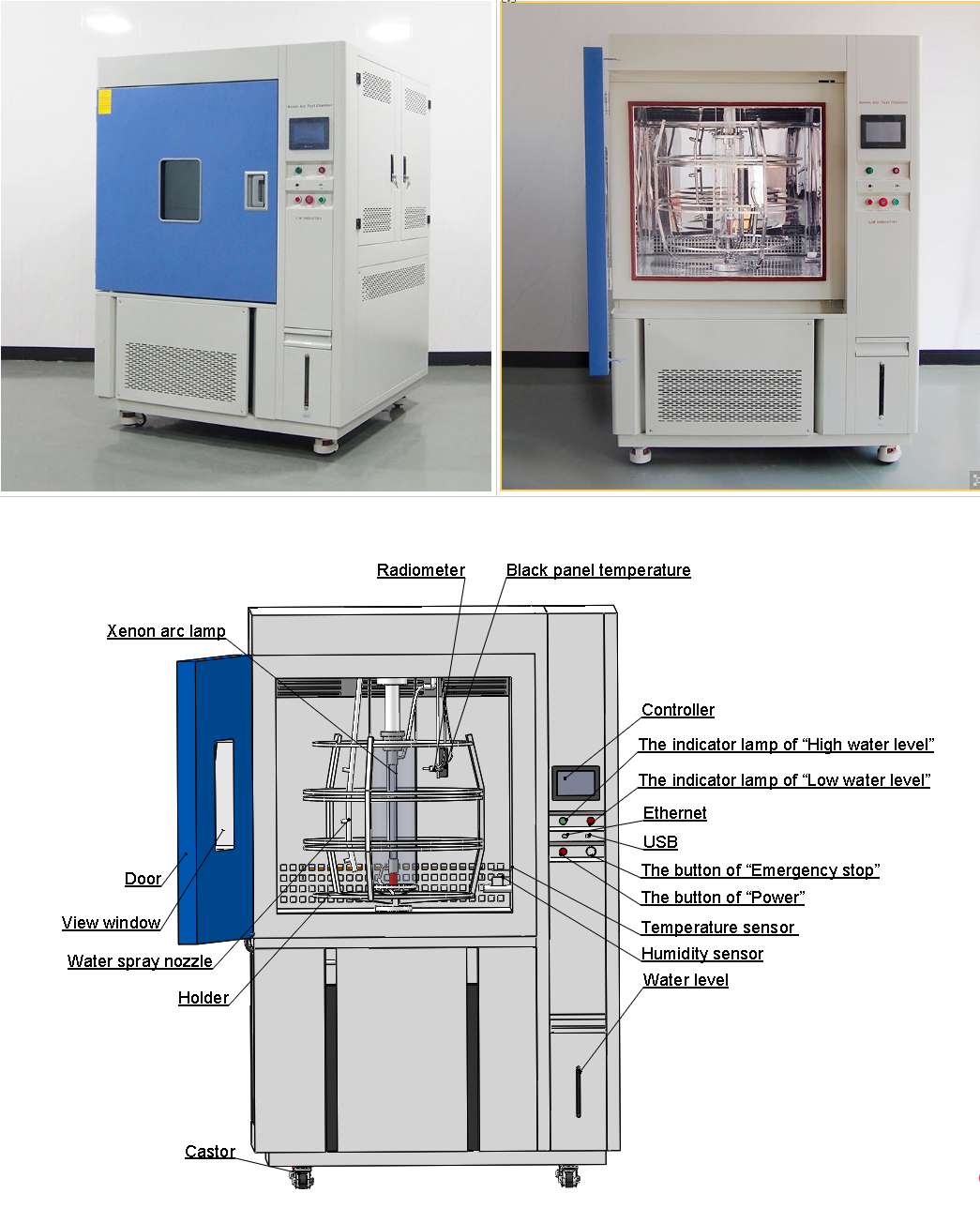
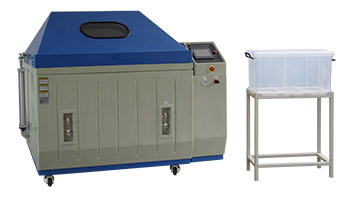
Model | XL-S-750 |
|
Internal Dimension (mm) | 950*950*850 mm | |
Overall Dimension (mm) | 1400*1400*1950 mm | |
Specimen Holder Size(mm) | 95*180 | |
Specimen Capacity | 42pcs | |
Chamber Type | Rotating Holder | |
Irradiation Source | 1 piece of 4500w water-cooled xenon arc lamp | |
Irradiance Range | 35~150 W/㎡ | |
Bandwidth Measurement | 300nm~400nm (340nm or 420nm) | |
Chamber Temperature Range | Ambient ~ 100 ℃ ±2℃ | |
Black Panel Temperature | BPT 35 ~ 85 ℃ ±2℃ | |
Humidity Range | 50% ~ 98% RH | |
Humidity Deviation | ± 5% RH | |
Water Spray Cycle | 1~9999H59M (Adjustable) | |
Controller | Programmable color LCD touch screen controller | |
Water supply system | Automatic water supply, Water purification system | |
Radiometer | UV Radiometer, Tolerance: ±5% | |
Cooling System | Mechanical compression refrigeration system | |
Safety Device | Over-temperature Protection; Over-current Protection; Water Shortage Protection; Earth leakage Protection; Phase Sequence Protection | |
Exterior Material | Steel plate with protective coating | |
Interior Material | SUS304 Stainless steel |
Maintaining audit readiness requires precise equipment control. Programmable parameters ensure defensible and reproducible data. Regulators and OEM supply chain auditors demand proof of consistency. Precise irradiance control guarantees the light intensity remains constant throughout a 2000-hour test. Additionally, monitoring the Black Standard Temperature (BST) ensures surface temperatures match field expectations. These controls provide the necessary documentation for strict regulatory approvals. This equipment is more useful and meaningful, which
Objective boundary setting demonstrates engineering credibility. We must clearly define the limitations of xenon arc technology. While incredibly versatile, it does not solve every environmental testing challenge. Knowing when to utilize alternative equipment prevents wasted time and resources.
First, we must distinguish between corrosion and weathering. Xenon chambers do not replace salt spray or cyclic corrosion chambers. You should never test bare metals for rust resistance using a xenon source. Xenon strictly evaluates the coatings, paints, or sealants applied over the metal, not the baseline metallic oxidation itself.
Second, we must compare Xenon versus Fluorescent UV (QUV) testing. Follow these practical rules for equipment selection:
1. Use Xenon for evaluating color fading, assessing aesthetic longevity, and testing materials exposed behind glass (like dashboard plastics).
2. Use Fluorescent UV strictly for measuring mechanical property loss caused primarily by short-wave UV.
3. Choose Fluorescent UV when your exclusive goal is assessing baseline polymer durability rather than comprehensive visible light degradation.
| Popular Environmental Aging Test Chamber for Coating and Paint Testing | |
|
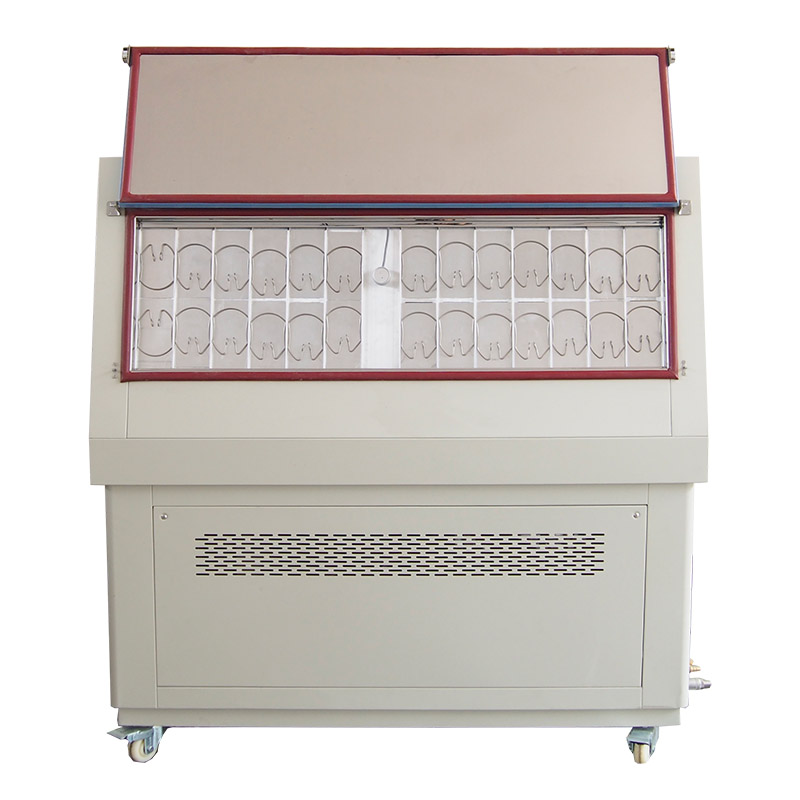
UVA UVB UVC Lamp UV Accelerated Weathering Tester |
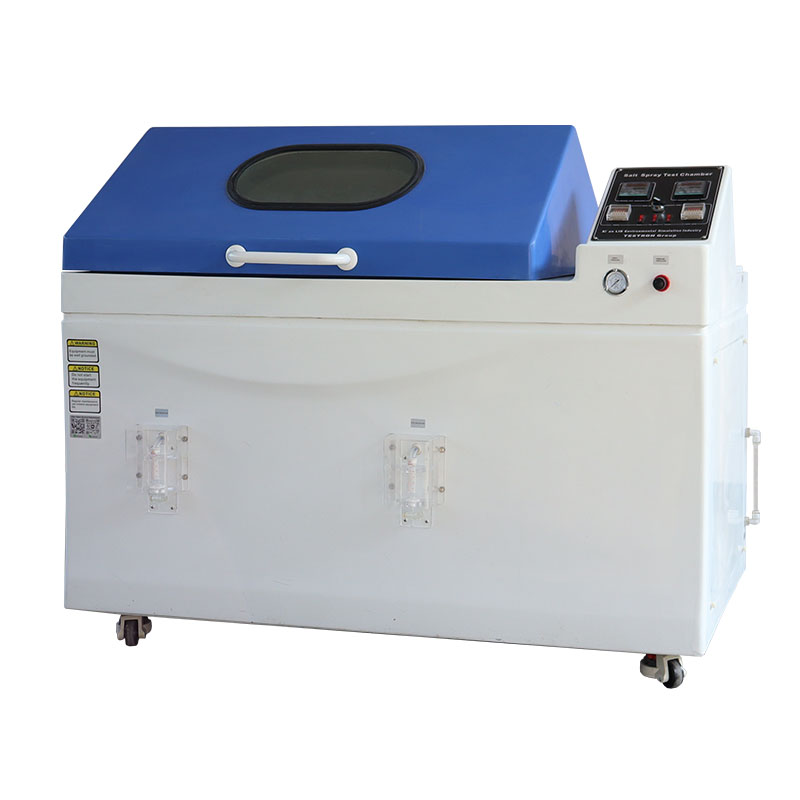
ASTM B117 Fog Corrosion Salt Spray Test Cabinet |
|
Procuring the correct equipment requires matching specific hardware configurations to your material portfolio. Filter technologies represent the most critical specification. Xenon lamps emit a spectrum that requires modification before hitting the test sample. You must match optical filters to the material's end-use environment. Daylight filters simulate direct, outdoor sunlight perfectly. Conversely, Window Glass filters remove specific short-wave UV rays. You use Window Glass filters for automotive interiors or indoor textiles to replicate sunlight passing through a standard glass pane.
Form factor and sample capacity also dictate your procurement choices. Hardware configurations generally fall into two distinct categories. Understanding this difference ensures you can actually fit your products inside the machine.
| Form Factor Type | Sample Orientation | Best Suited For |
|---|---|---|
| Rotating Rack (Carousel) | Vertical, rotating around a central xenon lamp. | Flat samples, standard fabric swatches, thin plastic plaques, uniform coatings. |
| Flat-Array (Flatbed) | Horizontal, resting beneath an array of lamps. | Irregular 3D parts, bulky components, automotive headlamps, thick assemblies. |
Finally, carefully evaluate environmental controls. The precision of relative humidity (RH) control and water spray mechanisms dictates test accuracy. Moisture-sensitive materials demand exacting humidity tolerances. Wood coatings, natural fibers, and permeable packaging react violently to minor humidity shifts. Your chosen hardware must prove its ability to stabilize RH rapidly after a water spray cycle concludes.
Successfully integrating weathering equipment into your laboratory requires transparent planning. You must account for strict maintenance schedules and facility prerequisites. Consumables and routine maintenance demand ongoing attention. Xenon lamp replacement remains a primary operational reality. Laboratories typically replace these specialized lamps every 1,500 hours to maintain spectral integrity. Furthermore, optical filter cleaning and eventual replacement prevent undesirable spectral shifts from contaminating your long-term data.
Facility requirements often surprise first-time operators. Utility prerequisites go beyond standard electrical connections. You absolutely must provide a purified (DI/RO) water supply for the spray cycles. Using tap water causes mineral deposits on your samples, which ruins optical evaluations and invalidates the test. Additionally, you must account for specialized exhaust systems to manage heat load and ozone generation. Proper electrical load considerations prevent unexpected laboratory power trips.
Lastly, calibration dictates your data validity. Routine radiometer calibration prevents disastrous downtime. If your sensors drift out of tolerance, you risk invalidating weeks or even months of continuous testing data. You must implement a strict calibration schedule to maintain global compliance and guarantee reproducible results across multiple testing batches.
A properly specified xenon testing apparatus remains an indispensable investment for modern manufacturing. It accurately predicts the lifespan of light-sensitive and weather-exposed materials. You gain invaluable foresight into product durability long before your items reach the consumer market.
We advise buyers to apply strict shortlisting logic before procuring hardware. Always map your specific material portfolio directly to the required ASTM, ISO, or SAE standards. This alignment guarantees you select the correct optical filters, chamber dimensions, and moisture control systems for your specific engineering needs.
Your quality assurance and research teams should take immediate action. We encourage you to schedule a technical consultation to review your material matrix. Request detailed technical specifications for relevant hardware, or arrange a pilot test for your most critical material samples today.
A: No, bare metal requires dedicated salt spray or cyclic corrosion testing to evaluate rust and baseline oxidation. Xenon light does not induce standard metallic corrosion. Instead, xenon is used exclusively for testing the physical coatings, clearcoats, or structural paints applied to those metals.
A: Testing duration is highly dependent on the specific global standard and the material type. Timelines range significantly. Basic textile fading tests might conclude in 48 hours. Conversely, rigorous automotive exterior coating protocols frequently require 3,000 to 5,000+ hours of continuous exposure.
A: Carbon arc is an outdated, legacy technology that fails to accurately reproduce the full spectrum of natural sunlight. It heavily skews toward short-wave UV. Modern xenon arc technology largely replaced it by providing a vastly superior, full-spectrum match. However, carbon arc is still cited in some older industry standards.
Contact LIB Industry today to discuss your testing requirements, request a detailed technical specification, or arrange a pilot weathering test for your critical materials. Our experts will help you select the right Xenon Test Chamber configuration to meet your industry standards and product durability goals.