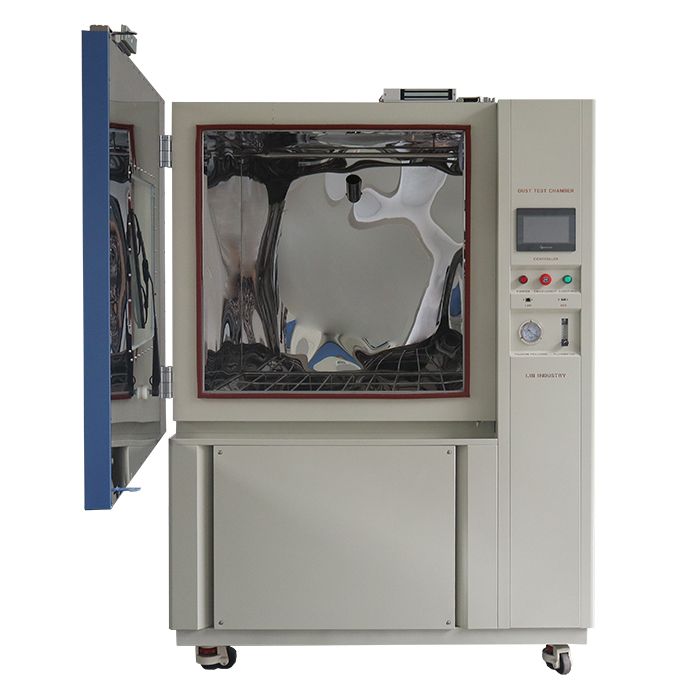
A Dust Test Chamber is a controlled environmental testing system used to verify how well a product resists airborne particles such as talcum powder, fine dust, abrasive sand, and suspended contaminants. In practical terms, a Dust Test Chamber helps manufacturers determine whether an enclosure, housing, connector, lamp, sensor, display, control box, or automotive component can continue working safely after exposure to dust-heavy conditions.
Recently, our UAE customer Robert shared his experience with LIB Dust Test Chambers: “I use the Rain and Dust Chambers quite often. We have recently calibrated it for the next year. All is functioning well, thanks.” This positive feedback highlights the chamber’s reliability and precision in reproducing dust-heavy environments, making it an essential tool for R&D, quality assurance, and compliance testing. Models such as DIM-1000 and RIM-0120 allow engineers to test products under realistic conditions with repeatable results, saving both time and cost.
LIB Dust Test Chambers provide manufacturers with a versatile solution for simulating fine dust, abrasive sand, and airborne contaminants under controlled temperature, humidity, and airflow. This article explains how LIB chambers work, the applications they support, and why they are indispensable for meeting global standards such as IEC 60529, ISO 20653, and MIL-STD-810H.
The main function of a Dust Test Chamber is to simulate dusty operating environments in a repeatable laboratory setting. Instead of waiting for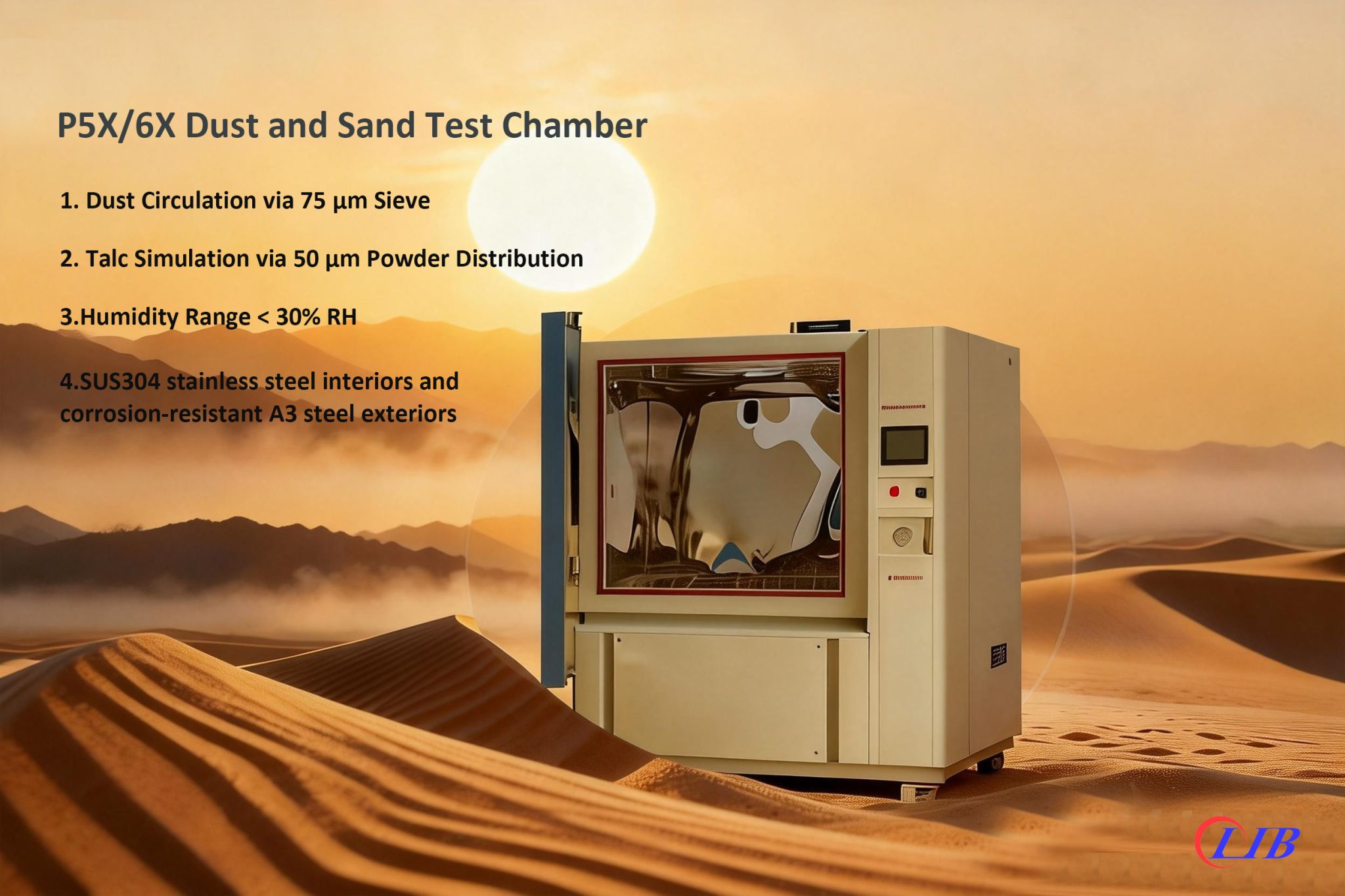 field failures in deserts, mines, roadsides, factories, logistics hubs, or construction sites, companies use a Dust Test Chamber to reproduce contamination risks in advance. This is why a Dust Test Chamber is often used during R&D, design verification, supplier qualification, and final compliance testing.
A Dust Test Chamber is especially important because modern products are getting smaller, more integrated, and more sensitive. Miniaturized vents, charging ports, camera modules, sensors, seals, and connector interfaces can all become weak points. For that reason, a Dust Test Chamber is frequently used for Sealing Integrity Test, Dustproof Test, Dust Ingress Protection Test, and Dust Resistance Protection Test procedures. In harsher applications, the same Dust Test Chamber platform may also support or complement a Blowing Sand and Dust Test strategy for military, transport, and off-road products.
A standard Dust Test Chamber works by circulating standardized test dust inside a sealed enclosure under controlled conditions. The Dust Test Chamber may regulate dust concentration, air velocity, exposure duration, vacuum differential, and internal temperature. Some systems also allow powered testing, meaning the product operates while the Dust Test Chamber is running so engineers can observe failure modes in real time.
In a typical Dust Test Chamber workflow, the specimen is placed inside the chamber, the test profile is programmed, and dust is circulated for a defined period. Depending on the test objective, the Dust Test Chamber may combine passive exposure with negative pressure to encourage dust ingress into seals and openings. This makes the Dust Test Chamber particularly useful for enclosure validation and performance-based durability screening.
Common variables controlled by a Dust Test Chamber include:
Dust particle size
Dust concentration
Airflow or blowing intensity
Test duration
Vacuum application
Temperature conditions
Specimen operating state
Because of that flexibility, a Dust Test Chamber is not just a single-purpose box. It is a verification tool that links design, compliance, and real-world durability.
The most recognized compliance framework for a Dust Test Chamber is IEC 60529, which defines IP ratings for protection against dust and water.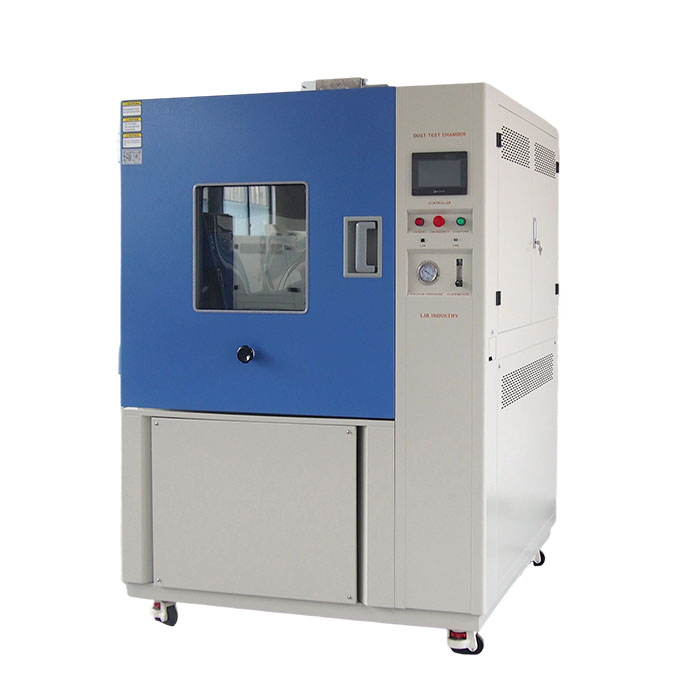 Under this standard, products are evaluated for resistance to ingress of solid foreign objects, including dust. The first numeral in the IP code addresses solid particle protection, with IP5X and IP6X being the most common targets for a Dust Test Chamber application. IEC continues to position IEC 60529 as the key global reference for dust and liquid ingress classification.
For road vehicles, ISO 20653 is also highly relevant because it aligns with IEC 60529 while adding “K” designations for specific automotive requirements. This makes the Dust Test Chamber increasingly important for EV components, automotive electronics, battery enclosures, sensors, and lighting systems.
For rugged and defense-oriented products, the Dust Test Chamber is commonly associated with MIL-STD-810H, especially where products must prove durability in desert-like or particulate-heavy conditions. Recent testing-market updates continue to frame MIL-STD-810H as a major benchmark for harsh-environment validation.
A Dust Test Chamber is widely used in the following industries:
| Industry | Why a Dust Test Chamber is used | Typical target |
|---|---|---|
| Consumer electronics | Validate sealed housings and ports | IP5X / IP6X |
| Automotive | Protect sensors, lamps, ECUs, connectors | ISO 20653 / IP code |
| Defense | Verify mission reliability in desert exposure | MIL-STD-810H |
| Industrial equipment | Prevent contamination-related failure | Durability and sealing |
| Lighting | Check enclosure resistance to particulate ingress | Outdoor reliability |
| Energy and infrastructure | Protect controls, cabinets, and field electronics | Long-term environmental protection |
This table shows why the Dust Test Chamber aligns closely with actual Google search intent. Most users searching for a Dust Test Chamber are not looking for a vague definition alone. They usually want to know what a Dust Test Chamber tests, what standards apply, what products need it, and how to compare one Dust Test Chamber with another.
Many buyers confuse a standard Dust Test Chamber with a more aggressive sand system. The distinction matters.
| Test type | Main purpose | Particle behavior | Best use case |
|---|---|---|---|
| Dust Test Chamber | Fine dust ingress simulation | Suspended fine particles | IP and enclosure validation |
| Blowing Sand and Dust Test setup | Abrasion plus ingress under airflow | Higher-velocity particulate flow | Military, transport, desert exposure |
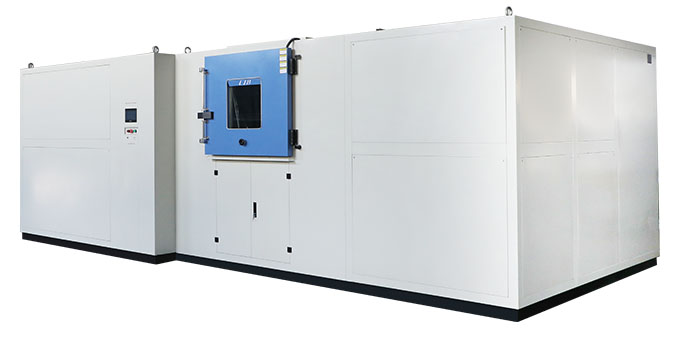
Blowing Sand and Dust Test Chamber
A Dust Test Chamber is usually optimized for enclosure sealing, IP verification, and contamination resistance. A Blowing Sand and Dust Test setup is more severe and is often used where airflow stress, abrasive wear, and particulate attack must be considered together. In procurement terms, a buyer should first define whether the goal is a Dustproof Test, a Sealing Integrity Test, or a true Blowing Sand and Dust Test.
When choosing a Dust Test Chamber, engineers usually compare these factors:
Chamber volume and specimen capacity
Dust circulation uniformity
Support for vacuum-assisted Dust Ingress Protection Test
Programmable controller accuracy
Visibility and monitoring functions
Safety interlocks and over-temperature protection
Ease of cleaning and maintenance
Compatibility with IEC, ISO, or MIL requirements
A good Dust Test Chamber should provide stable dust distribution, repeatable results, and configuration flexibility. For enclosure products, the best Dust Test Chamber is one that supports repeatable Sealing Integrity Test conditions. For rugged products, the best Dust Test Chamber is the one that can also support demanding Dust Resistance Protection Test or Blowing Sand and Dust Test scenarios.
From an engineering perspective, a Dust Test Chamber reduces field failure risk by identifying weak seals, vent design flaws, gasket issues, assembly defects, connector leakage, and housing tolerances before release. This means a Dust Test Chamber supports both quality assurance and design optimization.
IP6X Dust Resistant Sand and Dust Test Chamber | 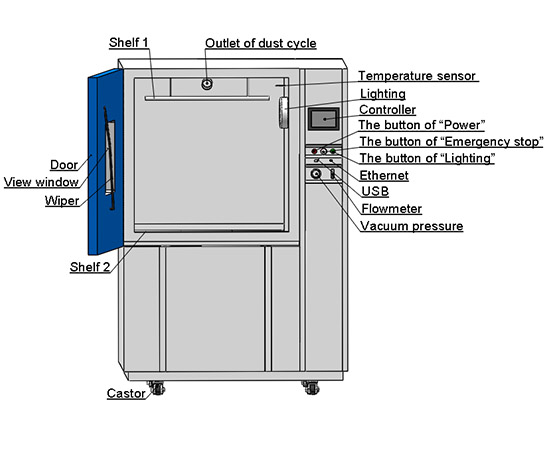 | ||
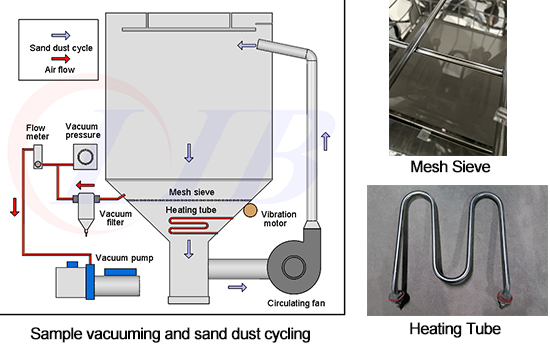 | Temperature Range | Ambient ~ +50℃ | |
Humidity Range | < 30% RH | ||
Normal Wire Diameter | 50um | ||
Nominal Width of a Gap Between wires | 75um | ||
lectromagnetic lock | Specimen Power Outlet | Dust-proof socket 16A | |
Heating Element | Nichrome heater | ||
Vacuum System | Equipped with a pressure gauge, air filter, pressure regulator, connecting tube | ||
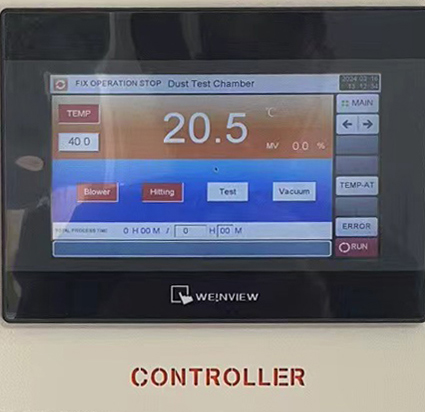 | Controller | Programmable color LCD touch screen controller,Ethernet connection, PC Link | |
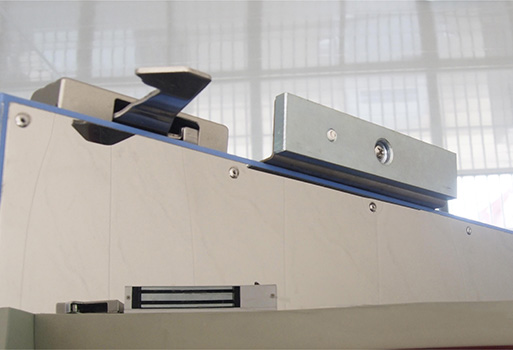
Door Lock | Electromagnetic lock | ||
Maximum Noise | 65 dBA | ||
Typical benefits of using a Dust Test Chamber include:
Earlier detection of enclosure weaknesses
Better support for Dustproof Test claims
More reliable Dust Ingress Protection Test documentation
Faster iteration in Sealing Integrity Test development
Lower warranty and maintenance costs
Stronger confidence in Dust Resistance Protection Test performance
In other words, a Dust Test Chamber is not only a compliance tool. A Dust Test Chamber is also a product-improvement tool.
In practice, the terms are often used interchangeably. However, Dust Test Chamber is the more precise industry term because it refers specifically to a laboratory system designed for controlled environmental dust exposure and compliance testing.
A Dust Test Chamber is commonly used for electronics, automotive parts, outdoor lighting, electrical enclosures, connectors, sensors, displays, switches, industrial controls, and defense equipment.
Yes. A Dust Test Chamber is widely used for Sealing Integrity Test work because it helps determine whether dust can penetrate an enclosure through weak seals, joints, cable entries, vents, or interfaces.
Not always. A Dustproof Test is a broader descriptive term. An IP-related Dust Ingress Protection Test is usually conducted according to recognized standards such as IEC 60529 and may target ratings such as IP5X or IP6X.
A Blowing Sand and Dust Test is necessary when a product will operate in severe outdoor or desert-like conditions where airflow, abrasion, and particulate impact matter in addition to simple dust ingress.
LIB Dust Test Chambers combine compliance, reliability, and product development support in a single platform. They enable engineers to identify weaknesses, verify dust resistance, and improve enclosure performance before market release.
Contact LIB Industry today to explore your Dust Test Chamber solution and ensure your products withstand even the harshest environments.