Views: 0 Author: Site Editor Publish Time: 2026-07-02 Origin: Site


Material failure due to sunlight and weather exposure results in massive brand damage annually. Unpredictable environmental degradation causes product recalls and ruins customer trust. Relying on natural outdoor testing is simply too slow for modern product development cycles. You cannot wait years to see how a polymer reacts to natural sunlight. Accelerated weathering is required to predict lifespan and validate materials quickly. This proactive approach keeps development moving forward while ensuring ultimate reliability.
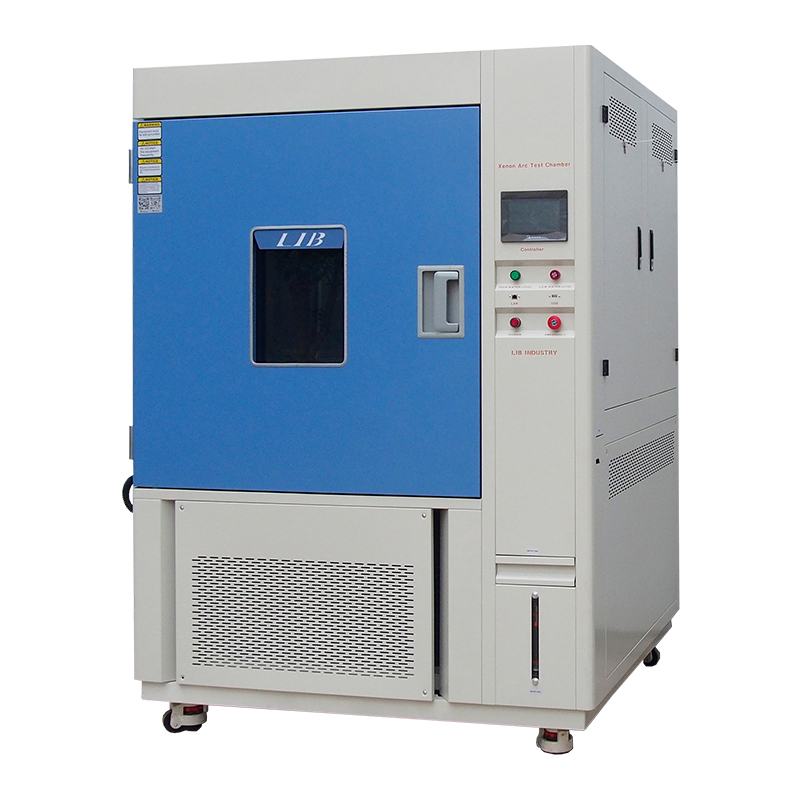
LIB Xenon Test Chamber provides the most accurate simulation of full-spectrum sunlight available today. It enables R&D and QA teams to compress years of environmental damage into just weeks of testing. You can achieve this accelerated degradation under strictly controlled, repeatable conditions. Throughout this guide, R&D professionals will learn how these chambers replicate complex weather systems. We will explore key industry applications, vital evaluation dimensions, and global compliance standards for precise material testing.
1. Xenon Test Chambers simulate full-spectrum sunlight (including UV, visible, and infrared light) alongside temperature and moisture to test material durability.
2. They are critical for compliance with international industry standards, including ASTM G155 and ISO 4892-2.
3. Evaluating a Xenon Arc Test Chamber requires choosing between rotating drum vs. flat array designs, and air-cooled vs. water-cooled systems based on sample volume and operating parameters.
Natural weathering is inherently unpredictable and highly geographically dependent. You cannot rely on Florida or Arizona weather patterns for consistent, repeatable data year after year. Seasonal shifts make precise environmental replication impossible. Waiting for real-time degradation stalls your time-to-market significantly. Accelerated testing solves this critical development bottleneck.
The main goal is achieving reproducible, standardized degradation data. You want laboratory results correlating directly with real-world outdoor or indoor service life. A Xenon Arc Test Chamber delivers this exact consistency. It empowers your engineering team to test new materials rigorously. They can benchmark new formulations against legacy materials quickly and accurately.
Risk mitigation drives this entire testing process. You must identify photocoating failures long before mass production begins. Polymer yellowing ruins product aesthetics rapidly in retail environments. Textile fading leads directly to consumer complaints and returns.
Automotive interior cracking destroys brand reputation and consumer trust. Catching these structural and visual flaws early prevents localized product recalls. It protects your brand from catastrophic material failures in the field. In-house accelerated testing provides rapid, actionable feedback loops. You avoid the inherent delays of outsourcing every test to third-party labs. Your R&D team can iterate and improve chemical formulations instantly.
Unlike basic fluorescent UV testers, these advanced chambers reproduce the complete solar spectrum. Fluorescent testers only simulate short-wave UV light effectively. They miss the visible and infrared spectrums almost completely. A xenon lamp mimics natural sunlight across all critical wavelengths. It provides highly accurate color change and thermal degradation data.
Specialized glass filters tailor the xenon lamp’s raw output precisely. These optical filters match specific end-use environments flawlessly. Without filters, a xenon arc emits too much short-wave UV radiation. You must filter the light to replicate real-world conditions.
Daylight Filters: These simulate direct, harsh summer sunlight outdoors. They provide the most punishing baseline for exterior materials.
Window Glass Filters: These replicate sunlight passing through standard commercial or automotive window panes. They filter out extreme short-wave UV, testing interior fading realistically.
Extended UV Filters: These allow for harsh, extreme exposure scenarios. They are utilized heavily in aerospace and specialized automotive exterior testing.
Moisture and thermal shock simulation play crucial roles in material breakdown. Water spray cycles simulate heavy rain and morning dew effectively. Precise relative humidity (RH) control triggers severe mechanical stress inside the chamber. Materials swell as they absorb moisture and shrink as they dry. This continuous physical stress combines with photo-oxidation to accelerate degradation exponentially. We often see materials survive dry UV exposure but fail catastrophically when moisture cycles are introduced.
Irradiance control maintains consistent light intensity throughout the test duration. Xenon lamps age naturally over time and usage. Their photon output drops significantly without proper electronic regulation. Closed-loop feedback systems monitor this light intensity constantly. Specialized sensors measure the precise wattage hitting the samples. The system adjusts electrical power automatically to ensure perfectly stable irradiance. This prevents testing discrepancies as the lamp approaches the end of its lifespan.
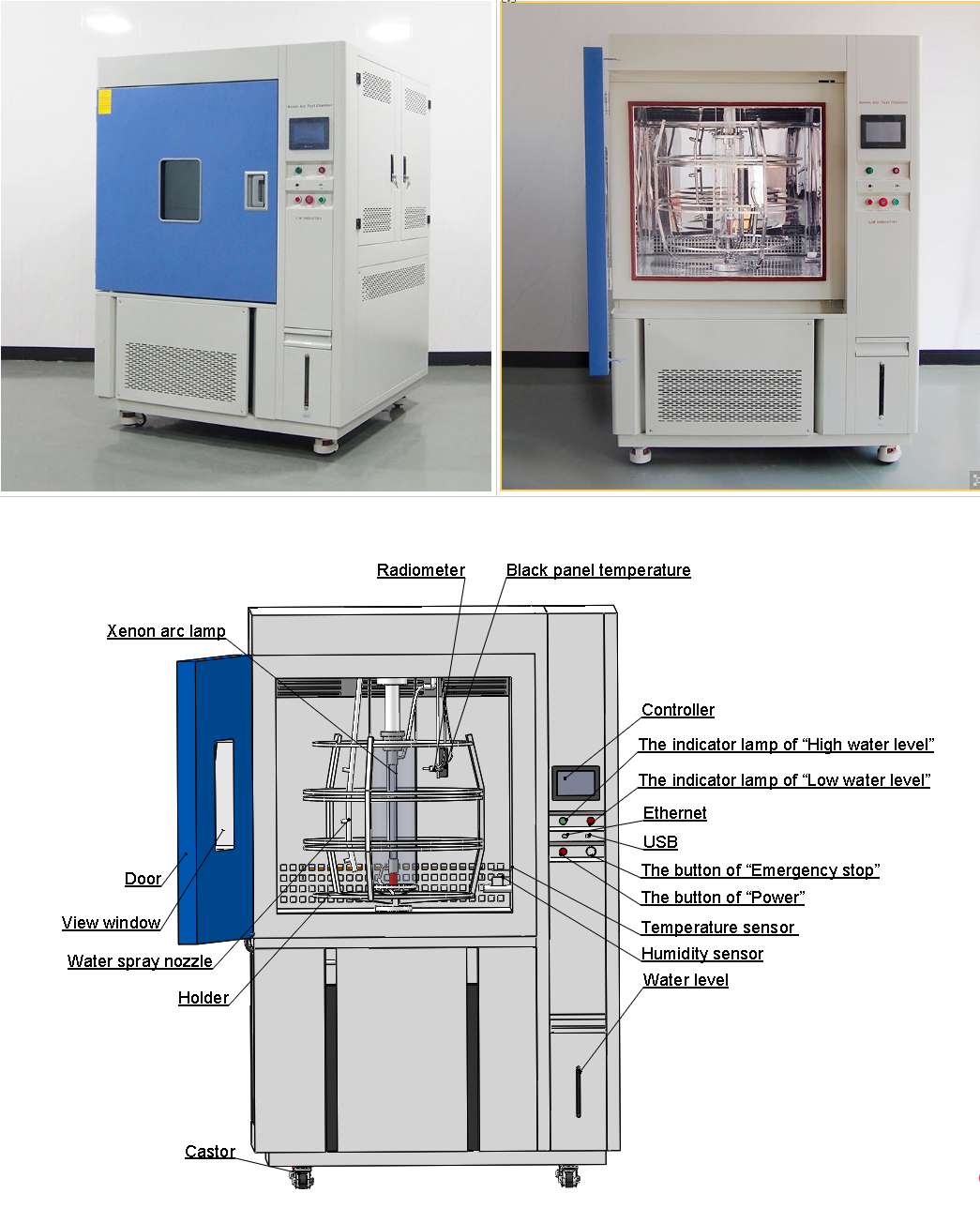
Model | XL-S-750 |
|
Internal Dimension (mm) | 950*950*850 mm | |
Overall Dimension (mm) | 1400*1400*1950 mm | |
Specimen Holder Size(mm) | 95*180 | |
Specimen Capacity | 42pcs | |
Chamber Type | Rotating Holder | |
Irradiation Source | 1 piece of 4500w water-cooled xenon arc lamp | |
Irradiance Range | 35~150 W/㎡ | |
Bandwidth Measurement | 300nm~400nm (340nm or 420nm) | |
Chamber Temperature Range | Ambient ~ 100 ℃ ±2℃ | |
Black Panel Temperature | BPT 35 ~ 85 ℃ ±2℃ | |
Humidity Range | 50% ~ 98% RH | |
Humidity Deviation | ± 5% RH | |
Water Spray Cycle | 1~9999H59M (Adjustable) | |
Controller | Programmable color LCD touch screen controller | |
Water supply system | Automatic water supply, Water purification system | |
Radiometer | UV Radiometer, Tolerance: ±5% | |
Cooling System | Mechanical compression refrigeration system | |
Safety Device | Over-temperature Protection; Over-current Protection; Water Shortage Protection; Earth leakage Protection; Phase Sequence Protection | |
Exterior Material | Steel plate with protective coating | |
Interior Material | SUS304 Stainless steel |
Various global industries rely heavily on this weathering technology. Standardized testing ensures ultimate consumer safety and aesthetic longevity. Different sectors look for completely different failure modes during testing.
Fabrics face extreme light exposure daily. You must test colorfastness under prolonged sunlight continuously. Window glass filters simulate retail display or automotive interior conditions perfectly. Teams measure tensile strength loss accurately after weeks of exposure. Dye stability is evaluated rigorously to prevent premature fading in consumer garments. Sun-faded clothing generates immediate negative product reviews.
Vehicles endure brutal environmental extremes worldwide. Dashboard plastics warp and crack without proper UV stabilizers. Leather upholstery requires extensive validation against severe fading and shrinking. Clear-coat exterior paints face chalking, delamination, and blistering risks. Accelerated weathering replicates years of aggressive sun exposure flawlessly. Automotive OEMs demand massive amounts of xenon testing data before approving any new trim material.
Architectural coatings must retain their visual appeal for decades. Thermal cycling causes severe adhesion loss over time. UV exposure breaks down polymer paint binders quickly. Testers evaluate gloss retention and surface flaking rigorously. They measure how quickly a vibrant facade turns dull and chalky. Sealants are tested for premature embrittlement, ensuring building envelopes remain waterproof.
Packaging and construction materials demand exceptionally high durability. UV light triggers invisible molecular breakdown in polymers. Teams measure the yellowing index (YI) to track visual discoloration. Embrittlement leads directly to catastrophic structural failures. Micro-cracking reveals weak chemical formulations before they ever reach consumers.
| Industry | Common Materials Tested | Key Degradation Metrics Evaluated |
|---|---|---|
| Automotive | Dashboards, Leather, Clear-coats, Bumpers | Chalking, cracking, color shift (Delta E), delamination |
| Textiles | Apparel, Upholstery, Canvas, Seatbelts | Tensile strength loss, dye fading, photo-yellowing |
| Coatings | Architectural Paints, Varnishes, Sealants | Gloss retention, blistering, flaking, adhesion loss |
| Plastics | PVC Pipes, Polycarbonate, Packaging Films | Yellowing Index (YI), embrittlement, tensile reduction |
Selecting the correct machine requires understanding your specific sample types deeply. Different hardware configurations suit different testing workflows perfectly. You cannot simply buy a standard chamber and expect it to fit every application.
How you place your samples dictates exposure uniformity and testing capacity.
Rotating Drum: This traditional design maintains a standardized distance from a central lamp. It offers highly uniform exposure across all sample coupons. This geometry is ideal for flat, uniform test pieces like paint panels or textile swatches. Samples rotate constantly around the light source, averaging out any slight variations in irradiance.
Flat Array (Flatbed): This layout accommodates massive 3D components easily. You can test thicker parts and uneven shapes simultaneously. It typically uses multiple lamps positioned above a flat tray to cover a larger area. It offers unmatched flexibility for complex product testing, such as fully assembled headlamps or bulky footwear.
Thermal management dictates machine performance and your facility requirements.
Air-Cooled Systems: These systems offer much simpler daily maintenance routines. They use ambient air and high-power fans to cool the xenon lamps. They suit most standard testing requirements perfectly. Facility integration is incredibly straightforward since they do not require complex plumbing infrastructure.
Water-Cooled Systems: These machines run at much higher peak irradiance levels. The liquid cooling allows the lamps to operate at extreme wattages. They generally operate quieter than air-cooled counterparts. However, they carry a high risk of internal scaling if water quality drops. They demand strict, continuous water quality management to prevent system failures.
Modern compliance demands rigorous data tracking and reporting. You need verifiable audit trails for strict quality assurance mandates. Advanced controllers provide automated calibration reminders to prevent accidental testing errors. Ethernet and cloud connectivity streamline compliance reporting drastically. You can monitor active tests remotely without ever entering the physical laboratory. This digital integration is practically mandatory for modern ISO-certified facilities.
| LIB Popular Weathering Test Chamberfor Aging tests | ||
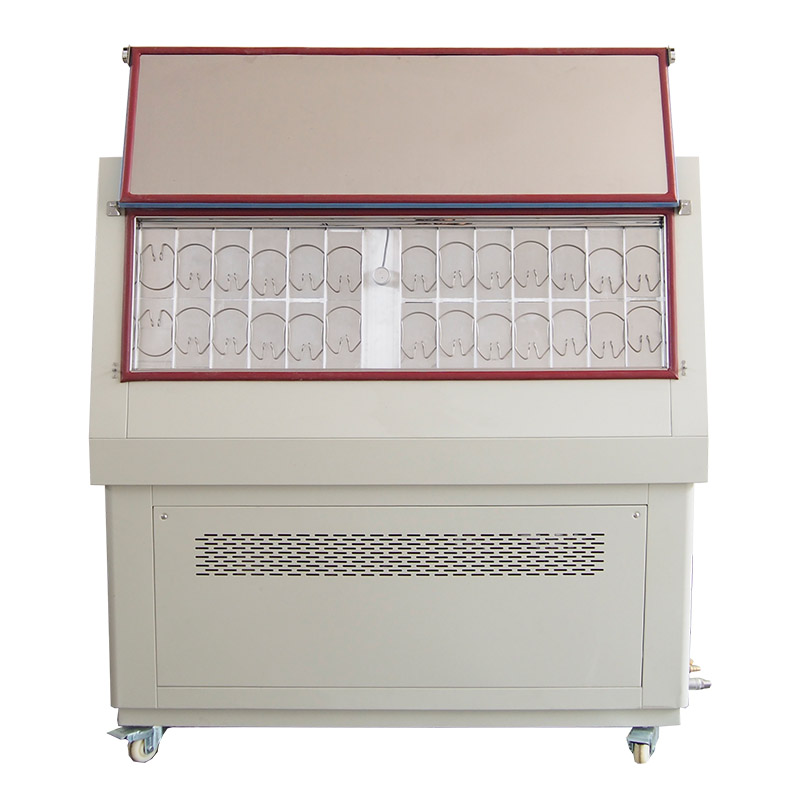
Full-Spectrum Sunlight Simulation, |
Fast UV Degradation Testing, |
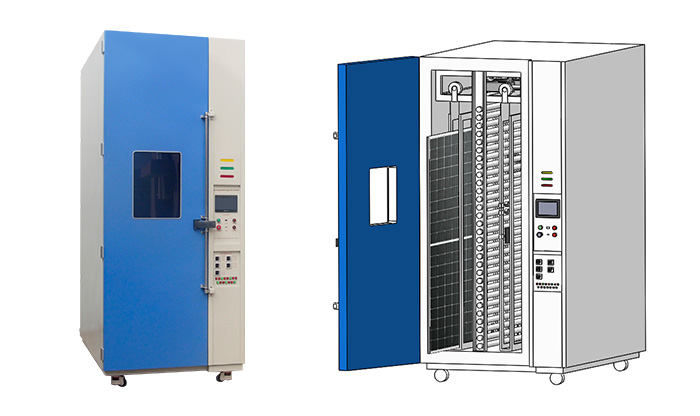
UV Preconditioning Chamber For PV Solar Panel IEC-Compliant PV Preconditioning, |
ASTM B117 Fog Corrosion Salt Spray Test Cabinet ASTM B117 Compliance Testing, Trusted Corrosion Resistance Evaluation |
Cyclic Salt Spray Corrosion Chamber (CCT Chamber) Real-World Corrosion Cycling, |
Multi-Environment Corrosion Simulation, Accelerated Industrial Durability Testing |
A testing chamber is only useful if regulatory bodies recognize its data. Major global supply chains require absolute adherence to standardized methods. You cannot rely on unverified, proprietary testing parameters. Your results must translate seamlessly across the global manufacturing landscape.
General standards dictate the baseline machine capabilities and tolerances. The chamber must satisfy strict international frameworks reliably.
ASTM G155: This outlines the standard practice for operating xenon arc light apparatuses for exposure of non-metallic materials. It details the exact filter types, irradiance setpoints, and black panel temperatures required.
ISO 4892-2: This standard details specific methods of exposure for plastics to laboratory light sources. It governs how moisture and light cycles should be applied for repeatable plastic degradation.
Meeting these broad standards guarantees your baseline data is universally accepted.
Different sectors utilize highly specialized testing frameworks built upon the general standards. They tweak the humidity and light cycles to match specific environments.
Textile Standards: AATCC TM16.3 and ISO 105-B02 dictate strict colorfastness testing. They focus heavily on window-glass filtered light and precise ambient humidity.
Automotive Standards: SAE J2412 governs extreme interior trim testing. SAE J2527 handles harsh exterior material exposure, incorporating heavy water spray cycles.
You must match your hardware capabilities to these specific standards carefully. We advise against buying entry-level chambers lacking required humidity tolerances. Strict OEM mandates require highly precise filter combinations and tight temperature control. Failing to meet these strict specifications renders your test data completely useless. Auditors will reject batches if the chamber drifts out of compliance. Always verify standard compliance capabilities before integrating new equipment into your laboratory.
An accelerated weathering program requires ongoing operational commitment. You must plan for consistent upkeep, consumable management, and rigorous calibration. A poorly maintained chamber produces unreliable, dangerous data.
Xenon lamps experience inevitable lumen depreciation over time. They lose intensity gradually as the intense plasma arc erodes the internal electrodes. You must establish expected replacement intervals early in your testing program. Lamps typically last between 1,500 to 3,000 hours of continuous use. This lifespan depends heavily on your required irradiance levels. Running tests at maximum intensity burns out lamps much faster. Tracking lamp hours diligently prevents sudden drops in test quality.
Water quality impacts your test accuracy drastically and immediately. You absolutely cannot use standard tap water in these machines. Type II Deionized (DI) or Reverse Osmosis (RO) water is strictly required. This strict rule applies to both spray systems and water-cooling loops.
Impure water leaves microscopic mineral deposits on your test samples. These calcium and silica deposits block UV light and skew your results entirely. Furthermore, minerals blind the expensive optical glass filters rapidly. This "blinding" effect forces premature filter replacement and degrades irradiance. High-purity water prevents this severe contamination, keeping your optical pathways crystal clear.
Testing data is only as reliable as your sensor accuracy. You must prioritize regular radiometer calibration constantly. Radiometers measure the light intensity hitting your samples. Over time, these sensors drift and lose accuracy due to constant UV exposure. ISO 17025 traceable calibration ensures legal and scientific defensibility. It proves your irradiance levels match the documented testing standards exactly. Scientific defensibility protects you during strict supplier audits or liability claims. Schedule professional calibration routines at least annually, or follow the manufacturer's suggested interval strictly.
A properly configured chamber bridges the critical gap between rapid product development and long-term quality assurance. It provides unmatched, full-spectrum sunlight simulation for diverse manufacturing industries. When evaluating equipment, base your primary procurement decision on your specific sample geometry. Choose between flexible flat array or highly uniform rotating drum designs accordingly. Ensure the equipment meets your mandatory industry standards, particularly ASTM and ISO requirements. Evaluate your laboratory infrastructure capabilities carefully regarding high-purity water supply and facility cooling preferences.
To move forward effectively, audit your current testing volume and sample dimensions. Next, identify the exact testing standards your downstream buyers demand. Finally, request sample testing from prospective vendors to verify their equipment capabilities. Review their detailed irradiance uniformity data thoroughly before requesting a quote. Rigorous preparation guarantees you select the perfect accelerated weathering solution for your material validation needs.
A: Xenon simulates the entire sunlight spectrum, including UV, visible, and infrared light. This makes it ideal for evaluating color change and thermal degradation. UV chambers focus only on the damaging short-wave UV portion. They are best suited for testing physical property loss like cracking and embrittlement.
A: Test duration is dictated entirely by your specific standard and desired correlation. Common tests run from 500 hours to over 2,000 hours. There is no universal magic number that perfectly equals one year outdoors, because natural weather fluctuates wildly.
A: Yes, you need water for any test requiring relative humidity control or water spray cycles. High-purity deionized (DI) or RO water is mandatory. Using standard water leaves mineral residue on test specimens and permanently blinds the optical filters.
A: No, they are simply different approaches. Modern air-cooled systems meet all major international standards, including ASTM G155, with simpler maintenance routines. Water-cooled systems are often chosen for legacy corporate protocols or specific tests demanding unusually high peak irradiance levels.
Looking for a reliable Xenon Test Chamber for accelerated weathering testing? LIB offers customized xenon arc weathering chambers that comply with ASTM G155, ISO 4892-2, SAE J2527, SAE J2412, AATCC TM16.3, and other international standards. Contact LIB Industry today to discuss your testing requirements and receive professional technical support.