Views: 0 Author: Site Editor Publish Time: 2026-06-05 Origin: Site


Procuring testing equipment represents a high-stakes capital investment for any quality control laboratory. Selecting an improper configuration often leads to non-compliant test results. These failures delay crucial product launches and drastically increase your ongoing maintenance burdens. While most modern test chambers claim to simulate full-spectrum sunlight, reality proves far more complex. Nuances in hardware design fundamentally alter weathering test repeatability. Furthermore, environmental control precision and software capabilities directly impact your adherence to strict industry standards. Accurate environmental simulation demands far more than just illuminating a material sample.
This guide bypasses basic introductory definitions to examine critical evaluation criteria. We explore specific hardware limitations and operational realities governing these sophisticated testing machines. You will learn exactly what technical factors to assess before finalizing your procurement shortlist. By evaluating spectrum control, cooling architectures, and environmental synergies, you ensure long-term testing reliability. Understanding these variables protects your laboratory from crippling downtime and failed compliance audits.
1. Spectrum Control is Non-Negotiable: Look for systems with closed-loop irradiance control and optical filters specifically matched to your industry's standards (e.g., Daylight, Window Glass).
2. Cooling Architecture Dictates Maintenance: The choice between air-cooled and water-cooled xenon test chambers fundamentally changes your facility requirements and ongoing maintenance burdens.
3. Environmental Synergies Matter: Accurate weathering requires precise, simultaneous control of Black Panel Temperature (BPT/BST), relative humidity (RH), and water spray mechanisms.
4. TCO > Initial Purchase Price: Consumables (xenon lamps, optical filters) and caLIBration frequency often dictate the true cost of the equipment over a 5-to-10-year lifecycle.
Every laboratory operates under unique testing directives. You must clarify your primary operational objectives before evaluating technical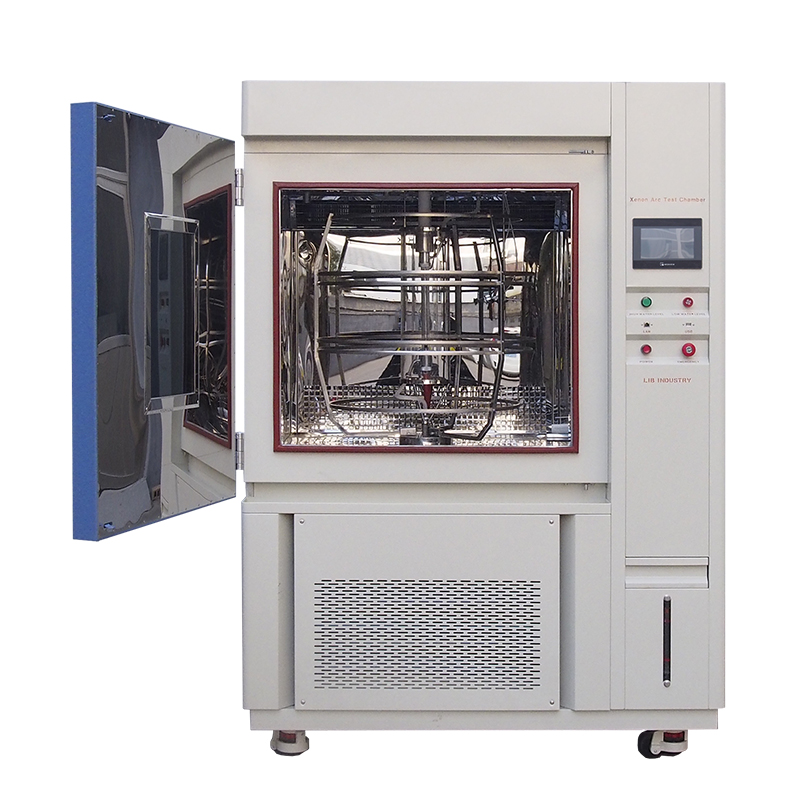 specifications. A configuration perfect for rapid prototyping might fail miserably during strict quality assurance audits. We recommend defining your exact success criteria early in the procurement phase.
1. Rapid R&D Screening: Focuses on quick comparative data. You need high irradiance capabilities to accelerate material degradation.
2. Strict Pass/Fail QA Testing: Demands extreme repeatability. Your system must deliver identical environmental conditions across hundreds of consecutive batches.
3. OEM Contractual Fulfillment: Requires rigid adherence to proprietary corporate standards. You must align hardware capabilities directly to these external mandates.
Different materials also dictate specific chamber features. Textiles evaluated under ISO 105-B02 require flat specimen trays holding thin samples. Conversely, automotive manufacturers evaluating three-dimensional exterior parts under SAE J2527 require voluminous chamber interiors. The physical dimensions of your standard test subjects dictate your ideal hardware geometry.
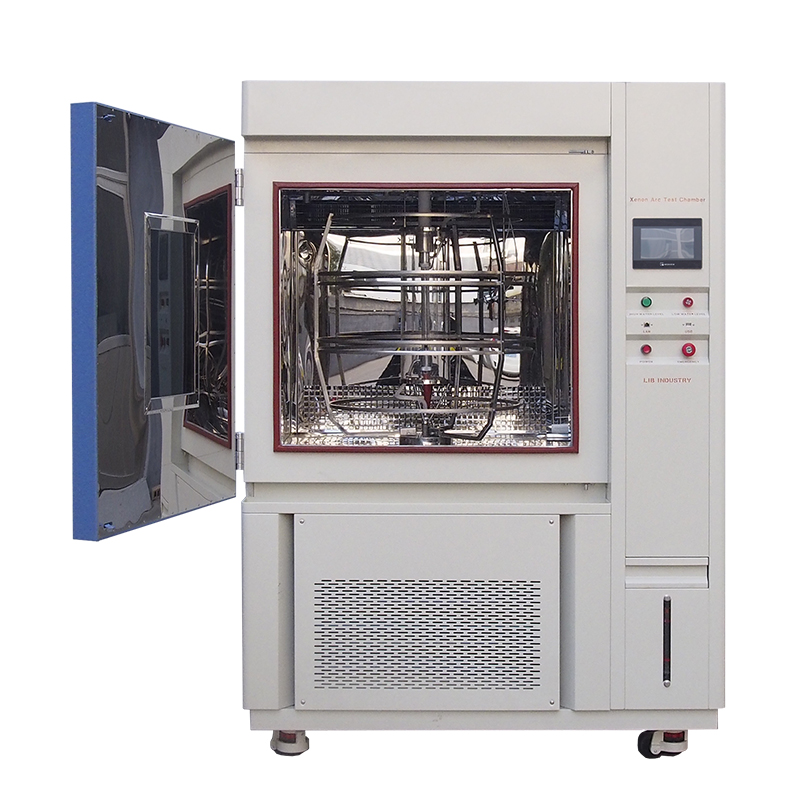
When you specify a Xenon Test Chamber, clear alignment between machine capacity and daily throughput ensures long-term testing success. Over-specifying equipment leads to wasted laboratory space and underutilized technical capacities. Under-specifying poses a far greater risk. It virtually guarantees future audit failures. You will find yourself unable to run more rigorous test cycles when industry standards inevitably evolve. Always match your core materials to the exact structural format of the testing apparatus.
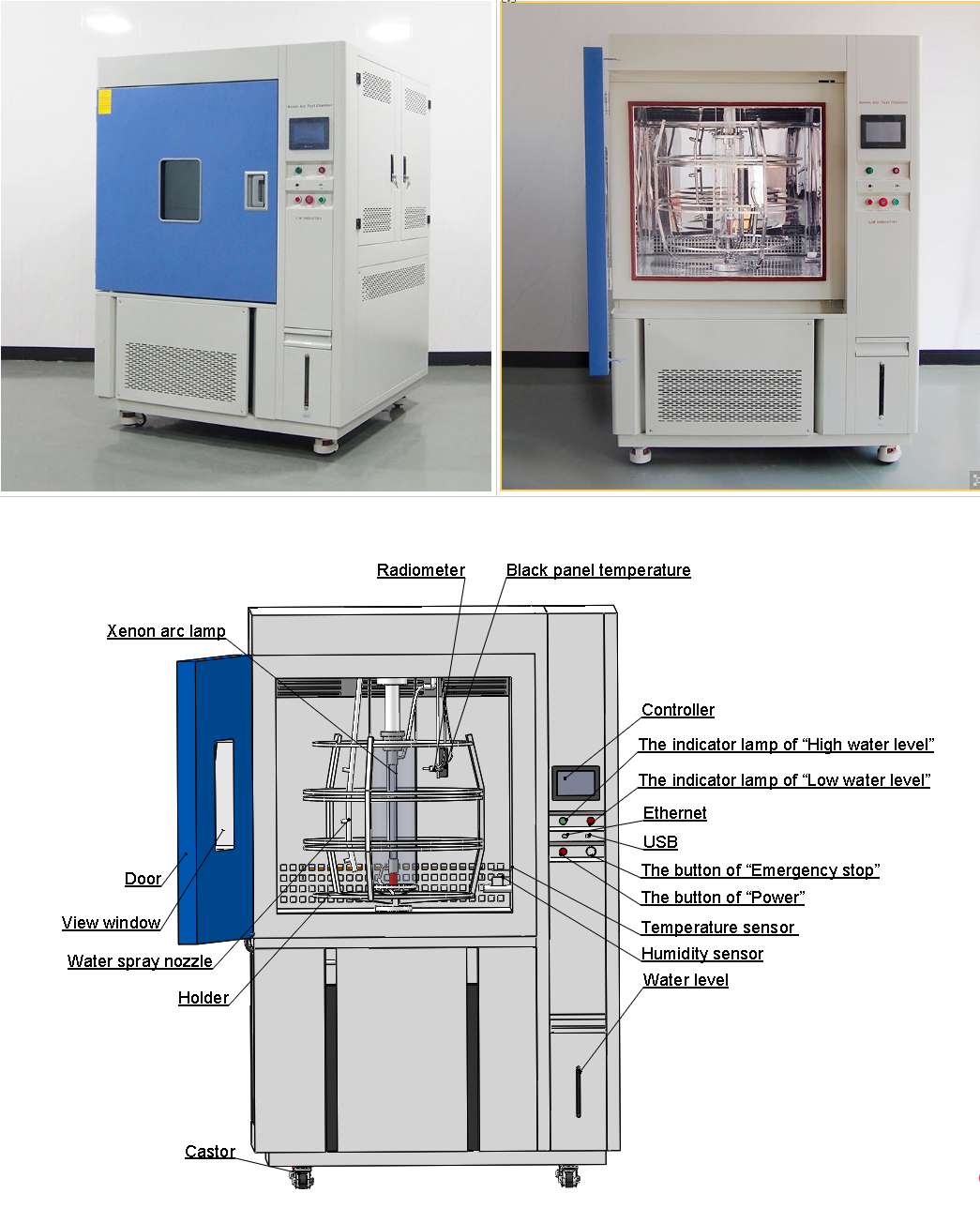
Light intensity degrades naturally as arc lamps age. Continuous monitoring and automatic adjustment of this light intensity remain absolutely critical. We call this mechanism closed-loop irradiance control. High-quality systems utilize dedicated radiometers continuously measuring photon output. These sensors communicate directly to the main power supply. As the lamp darkens over hundreds of hours, the system automatically increases electrical wattage. This constant adjustment ensures your materials receive a perfectly steady thermal and radiant load.
Most testing protocols require precision at specific wavelengths. Systems usually control irradiance at a narrowband (340nm or 420nm) or across a broadband (300-400nm). Monitoring at 340nm works best for simulating short-wave ultraviolet damage on polymers. Monitoring at 420nm suits interior textile fading applications perfectly.
Raw xenon light test chamber does not match natural sunlight. You must use specialized optical filters to modify the raw light spectrum. The necessity for easily interchangeable filters cannot be overstated. Technicians frequently switch between different testing methodologies. One day you might simulate direct outdoor daylight. The next day you might simulate sunlight filtered through window glass. Modern chambers utilize slide-in filter cassettes. These eliminate the need for specialized technician intervention. You simply swap the glass panels and load the corresponding software profile.
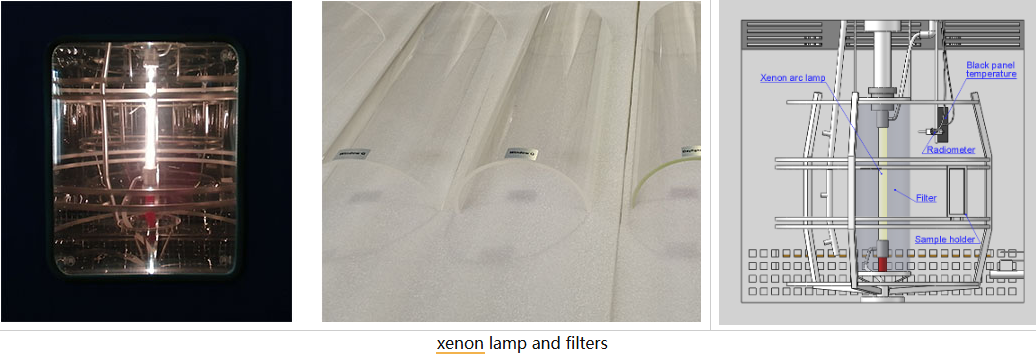
Manufacturers design chambers using different lamp architectures. You must understand the distinct trade-offs regarding light uniformity across your specimen tray.
| Architecture Type | Primary Advantage | Operational Limitation |
|---|---|---|
| Single High-Wattage Lamp | Simpler hardware replacement. Excellent vertical uniformity. | Requires larger reflector assemblies. Potential edge drop-off. |
| Multiple Lower-Wattage Lamps | Superior horizontal light dispersion across wide flat trays. | More individual components to track, caLIBrate, and replace. |
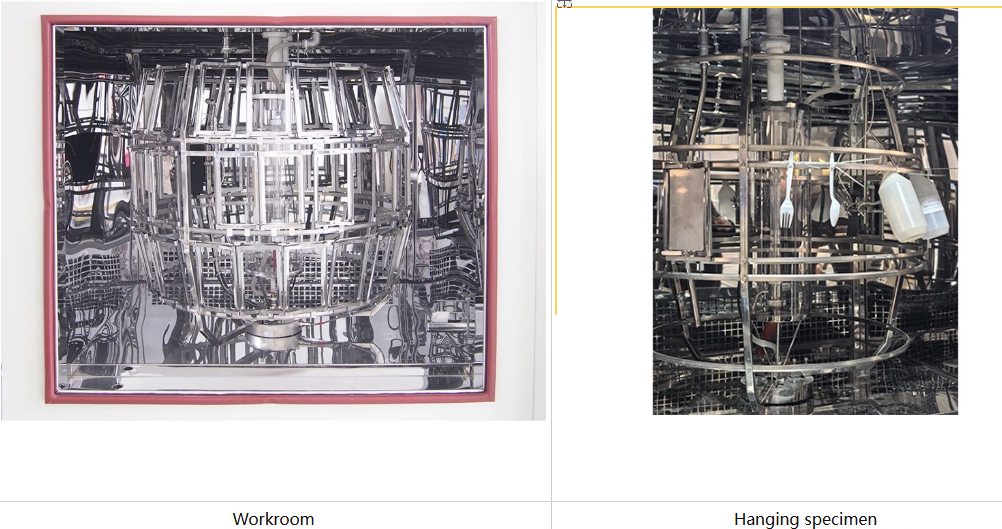
Best Practice: Always request an irradiance uniformity map from the manufacturer. This document proves the system delivers consistent light to specimens placed in the corners of the tray, not just the center.
Light provides the primary mechanism for chemical degradation. However, heat drastically accelerates this deterioration process. Precise temperature management separates average test chambers from elite environmental simulators. You cannot rely solely on ambient air readings to judge material stress.
Darker materials absorb significantly more infrared heat than lighter materials. To standardize this thermal load measurement, laboratories utilize a Black Panel Temperature (BPT) or Black Standard Temperature (BST) sensor. These specialized sensors sit directly alongside your test specimens on the sample tray. They absorb radiant energy identically to a dark test sample. Accurate BPT/BST monitoring ensures materials reach the exact thermal load required by international testing protocols.
You must differentiate between controlling ambient chamber air and the actual surface temperature of your test samples. Ambient air temperature (Dry Bulb) simply measures the surrounding environment. BPT measures the radiant heat absorption on the sample's surface.
Common Mistake: Many novice technicians incorrectly program ambient air parameters into BPT fields. This error drastically undertests materials. Always verify which thermal metric your specific standard mandates before initiating a long-term cycle.
Moisture causes immense structural damage to exposed materials. Evaluation protocols often require front and back water spray mechanisms. Front spray directly simulates aggressive outdoor rain. It washes away degraded surface particles and induces rapid thermal shock. Back spray cools the sample panel. This cooling creates condensation on the front surface, mimicking early morning dew.
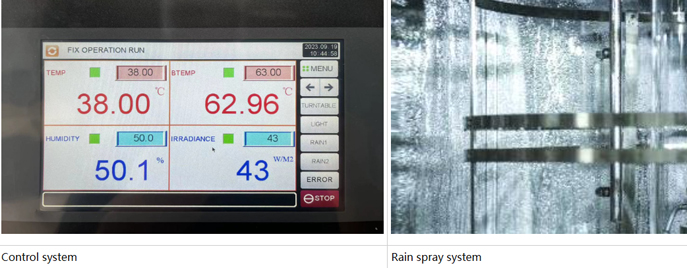
Furthermore, you must maintain precise Relative Humidity (RH) control. Moisture-sensitive materials like specialty coatings and complex polymers react violently to humidity shifts. Sophisticated chambers utilize ultrasonic humidifiers and dedicated moisture sensors. They inject fine vapor directly into the airflow. This ensures the environment remains perfectly stable even under intense irradiance loads.
Cooling architecture represents a major divergence in machine design. The choice between air-cooled and water-cooled systems fundamentally changes your facility requirements. It also dictates your ongoing operational complexities. You must align the cooling methodology with your actual laboratory infrastructure.
Air-cooled machines utilize powerful internal fans to dissipate the extreme heat generated by xenon lamps. They draw in ambient laboratory air, pass it over the lamp housing, and exhaust the hot air externally.
Pros: They impose significantly lower facility requirements. You do not need complex plumbing or external chillers. Routine maintenance remains much simpler. They fit perfectly into benchtop or mid-size standalone configurations.
Cons: They sometimes struggle handling extreme thermal loads required by aggressive aerospace standards. They may also possess lower maximum irradiance thresholds compared to their water-cooled counterparts.
Water-cooled chambers pump chilled water directly around the lamp assembly. This highly efficient liquid cooling mechanism allows the machine to operate at absolute maximum irradiance for extended periods.
Pros: They offer massive testing capacity. They easily achieve and sustain ultra-high irradiance levels. They remain the undisputed standard in specific high-stress automotive applications.
Cons: They demand high-purity facility water. You will need dedicated Deionized (DI) or Reverse Osmosis (RO) filtration systems. They require greater maintenance overhead to prevent mineral scaling. They also occupy a substantially larger physical footprint.
Model | XL-S-750 Water-Cooled Systems |
|
Internal Dimension (mm) | 950*950*850 mm | |
Overall Dimension (mm) | 1400*1400*1950 mm | |
Specimen Holder Size(mm) | 95*180 | |
Specimen Capacity | 42pcs | |
Chamber Type | Rotating Holder | |
Irradiation Source | 1 piece of 4500w water-cooled xenon arc lamp | |
Irradiance Range | 35~150 W/㎡ | |
Bandwidth Measurement | 300nm~400nm (340nm or 420nm) | |
Chamber Temperature Range | Ambient ~ 100 ℃ ±2℃ | |
Black Panel Temperature | BPT 35 ~ 85 ℃ ±2℃ | |
Humidity Range | 50% ~ 98% RH | |
Humidity Deviation | ± 5% RH | |
Water Spray Cycle | 1~9999H59M (Adjustable) | |
Controller | Programmable color LCD touch screen controller | |
Water supply system | Automatic water supply, Water purification system | |
Radiometer | UV Radiometer, Tolerance: ±5% | |
Cooling System | Mechanical compression refrigeration system | |
Safety Device | Over-temperature Protection; Over-current Protection; Water Shortage Protection; Earth leakage Protection; Phase Sequence Protection | |
Exterior Material | Steel plate with protective coating | |
Interior Material | SUS304 Stainless steel |
Your final decision relies heavily on daily testing volumes. If you run small material batches irregularly, an air-cooled model provides excellent reliability. If you operate a high-throughput laboratory running continuous extreme-stress cycles, water-cooled infrastructure becomes mandatory.
A testing machine serves zero purpose if its data cannot pass rigorous third-party scrutiny. Your hardware and software must demonstrably align with international standards. Organizations rely entirely on certified accuracy to validate product warranties.
Evaluate the machine's ability to seamlessly execute major industry protocols. Protocols like ASTM G155 and ISO 4892-2 dominate the polymer and coatings sectors. The user interface should feature these test cycles pre-programmed into the system memory. Pre-programmed cycles eliminate human data-entry errors. Technicians simply select the standard from a drop-down menu, load the samples, and initiate the sequence. The software automatically configures the correct irradiance, BPT, and moisture profiles.
Arc lamps and optical filters degrade continuously during operation. You must accurately assess the lifespan and replacement frequency of these critical components. For instance, a chamber utilizing 1,500-hour lamps requires twice the maintenance interventions over a five-year lifecycle compared to a premium system utilizing 3,000-hour lamps. Frequent lamp replacements drastically increase machine downtime. Calculate your projected annual operating hours to understand how often you will halt testing to perform routine hardware swaps.
Modern quality control audits require flawless operational transparency. You must evaluate the system's data logging capabilities thoroughly. The software should continuously record irradiance, temperature, and humidity parameters every few seconds.
Can the interface export tamper-proof test logs? It should utilize secure Ethernet or USB connections for seamless data transfer. Auditors expect unalterable digital records proving the chamber maintained strict tolerances throughout a 2,000-hour test run. Reliable audit trails prevent costly re-testing scenarios.
Sensors drift over time. Radiometers and thermometers require strict caLIBration schedules to maintain ISO accreditation. You must review the frequency and technical difficulty of caLIBrating these instruments.
Ask the manufacturer if their irradiance and temperature sensors can be caLIBrated in-house. Some systems require returning the master radiometer to the factory for annual certification. This factory-return process causes unacceptable delays. Leading manufacturers provide smart, interchangeable caLIBration modules. You can simply plug a freshly certified reference sensor into the chamber, run a brief software routine, and resume testing immediately.
| Popular Environmental Aging Test Chamber for Coating and Paint Testing | |
|
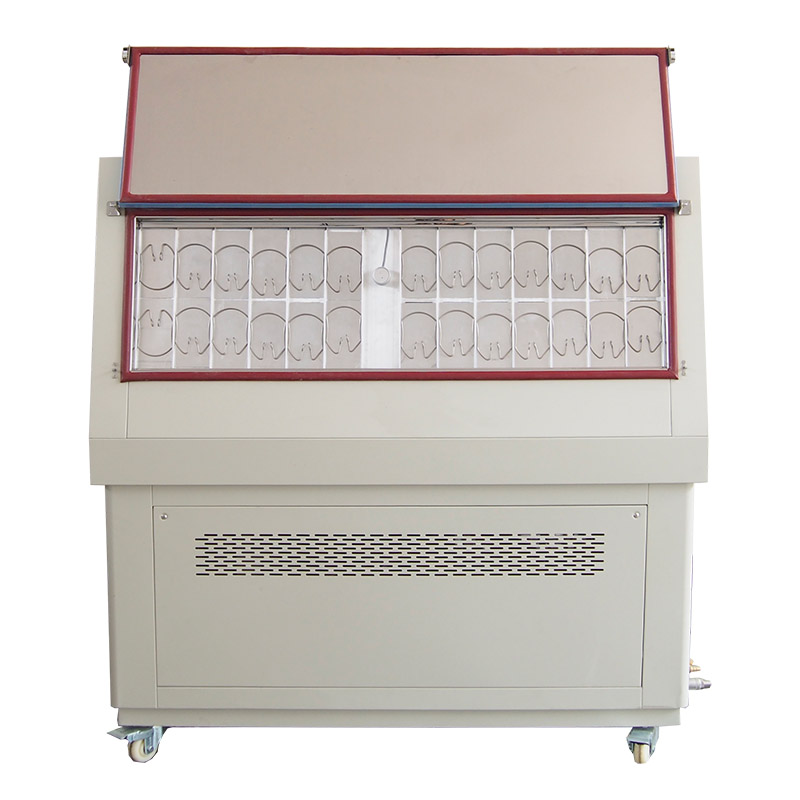
UVA UVB UVC Lamp UV Accelerated Weathering Tester |
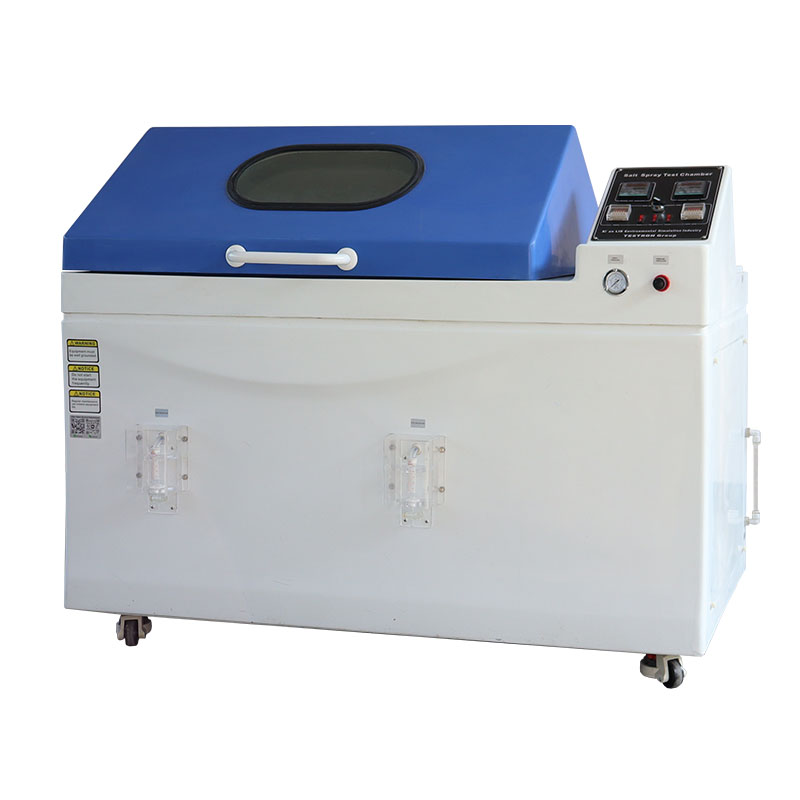
ASTM B117 Fog Corrosion Salt Spray Test Cabinet |
|
Selecting the optimal environmental testing hardware requires rigorous technical evaluation. You must base your final vendor shortlisting logic on a strict matrix of capabilities. Prioritize international standard compliance, verifiable specimen capacity, and your facility's ability to support the required cooling infrastructure. Overlooking fundamental facility constraints inevitably leads to installation delays and operational friction.
Take proactive steps before finalizing any procurement decisions. Request a live demonstration using your specific material samples. Ask vendors to provide a detailed 5-year consumable replacement schedule. This schedule highlights exactly how often you will face maintenance downtime for lamp and filter swaps. Prioritizing caLIBration simplicity, robust data logging, and automated closed-loop controls guarantees your laboratory produces unassailable, highly repeatable weathering data.
A: Replacement frequency depends heavily on the specific hardware architecture and your programmed irradiance levels. Typically, lifespans range between 1,500 and 3,000 continuous operating hours. Running tests at ultra-high intensity significantly accelerates degradation. You must monitor closed-loop power delivery to determine exactly when a lamp falls below acceptable spectral output.
A: Yes. A single high-quality system easily meets both standards. The chamber must feature fully programmable environmental controls and interchangeable optical filters. Technicians simply swap the specific daylight or window-glass filters and select the corresponding software profile to match the exact spectral requirements of either ASTM or ISO methodologies.
A: Benchtop models feature compact, air-cooled designs with smaller specimen capacities. They fit perfectly inside textile facilities or small R&D laboratories. Standalone models occupy floor space and offer massive capacities. They integrate advanced relative humidity and dual-spray controls. Standalone units utilize either heavy-duty air or water cooling to support rigorous QA production testing.
Contact LIB Industry today to receive expert consultation and discover the ideal xenon weathering test chamber for your laboratory.