Views: 0 Author: Site Editor Publish Time: 2026-03-26 Origin: Site


A proper Dust Test Chamber validation process is not simply a check that the equipment can run normally. It verifies whether the chamber is capable of delivering a controlled and repeatable dust environment, maintaining key parameters such as airflow, pressure conditions, exposure time, and operational safety to support dependable test results.
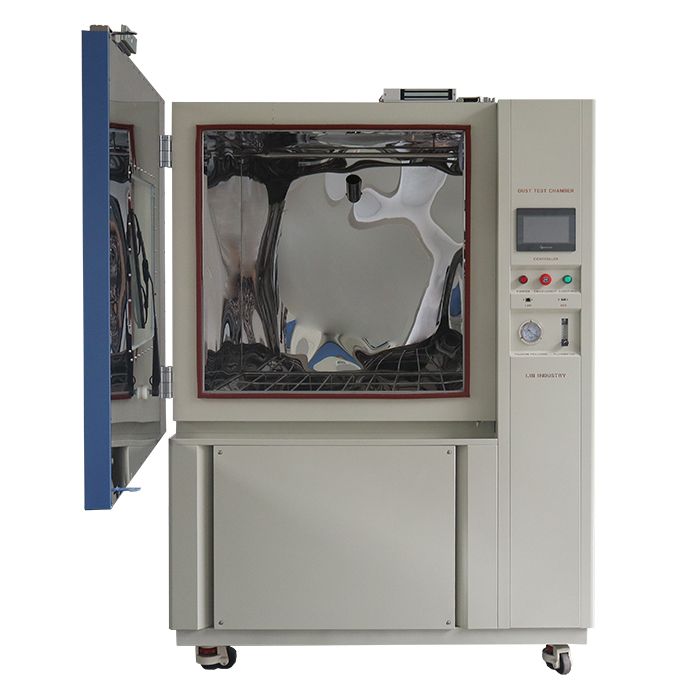
LIB IP6X Dust Resistant Sand and Dust Test Chambers are designed for precise, repeatable testing under controlled conditions. For example, Robert from the UAE, a Principal Engineer at R&D Laboratories, frequently uses LIB's Rain and Dust Chambers. After recently calibrating his DIM-2000 & RIM-0120 units, he confirmed that “all is functioning well,” demonstrating consistent performance and reliability in real operational environments.
This article highlights the IP6X Dust Resistant Sand and Dust Test Chamber, covering its design, working principles, key applications, compliance with international standards, and real-world validation cases, showing why it is trusted for reliable dust protection testing.
A Dust Test Chamber validation procedure is a formal sequence of checks used to confirm that the chamber performs according to technical requirements before actual product testing begins. The procedure usually includes mechanical inspection, parameter verification, airflow and dust distribution checks, control system confirmation, safety verification, and test repeatability review.
A good Dust Test Chamber validation procedure should answer the following questions:
Can the Dust Test Chamber maintain the required dust concentration?
Is the airflow stable and uniform inside the Dust Test Chamber?
Does the vacuum system work correctly for enclosure testing?
Are the timing, blowing cycle, and exposure settings accurate?
Does the Dust Test Chamber prevent external dust leakage during operation?
Is the control system repeatable from one test cycle to the next?
Are safety features functioning correctly under normal and abnormal conditions?
These points are essential because a Dust Test Chamber is often used for qualification decisions that affect product release, regulatory claims, and customer acceptance.
A Dust Test Chamber validation procedure matters because the reliability of the product test depends on the reliability of the chamber. If the Dust Test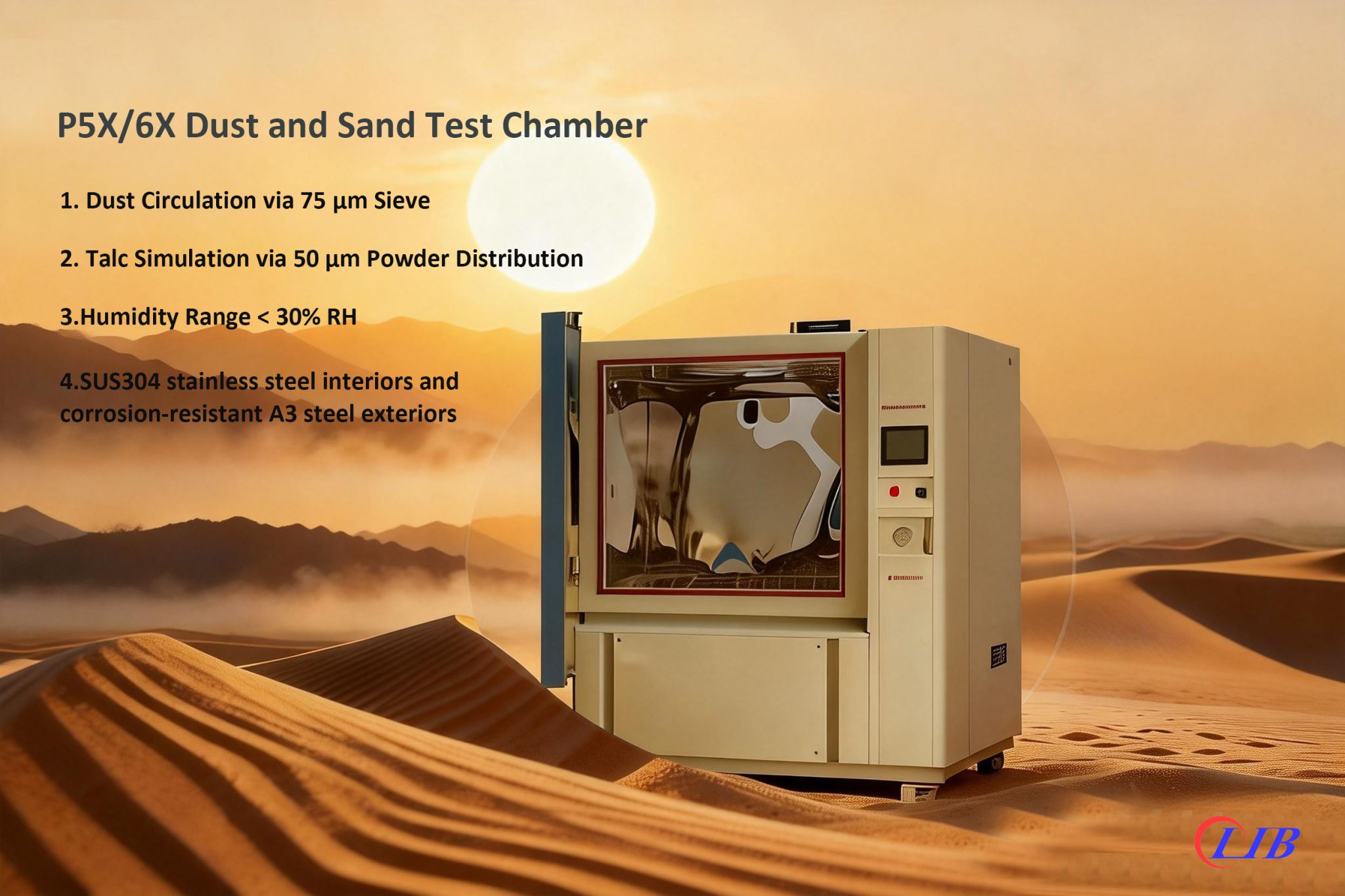 Chamber is not validated, the lab may record results that look compliant but do not reflect real exposure conditions.
For example, if dust is not distributed evenly in the Dust Test Chamber, one sample may receive less exposure than another. If the vacuum system is unstable, a Dust Ingress Protection Test may underrepresent the actual risk of dust entry. If the chamber door sealing is poor, the internal dust concentration may drop during a long Dustproof Test. If the controller is inaccurate, the programmed exposure time may not match the actual testing period.
This is why a Dust Test Chamber validation procedure is not optional in serious testing environments. It protects the integrity of the entire testing process.
Before beginning any Dust Test Chamber validation procedure, define what type of testing the chamber must support. Not every Dust Test Chamber is used for the same purpose. Some systems are mainly used for IP5X and IP6X enclosure work, while others are designed for more severe desert simulation or military-style particulate testing.
The validation objective should clearly identify whether the Dust Test Chamber will be used for:
Sealing Integrity Test
Dustproof Test
Dust Ingress Protection Test
Blowing Sand and Dust Test
Dust Resistance Protection Test
This step is important because the validation criteria should match the intended use. A Dust Test Chamber validated for standard enclosure dust testing is not necessarily validated for an aggressive Blowing Sand and Dust Test.
The next step in the Dust Test Chamber validation procedure is a detailed physical inspection. This confirms that the chamber structure, internal surfaces, door system, fixtures, and observation components are in acceptable condition before calibration or performance testing starts.
The inspection should cover:
Chamber interior cleanliness
Wear or corrosion on internal surfaces
Condition of the door seal
Integrity of the observation window
Status of lighting and internal fixtures
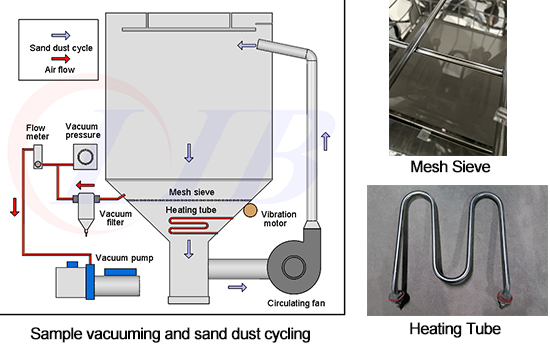
Dust circulation components
Condition of wiring ports and specimen power outlets
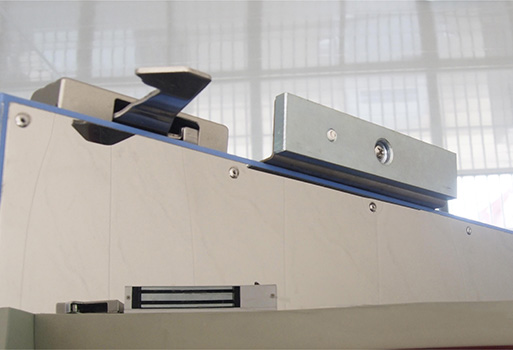
Door lock and interlock mechanism
A Dust Test Chamber with a strong structural design, corrosion-resistant interior, and effective sealing is easier to validate and maintain over time. This is especially relevant for long-duration testing, where dust accumulation and mechanical fatigue can affect performance.
A Dust Test Chamber validation procedure must include control system verification. The operator should confirm that the touchscreen or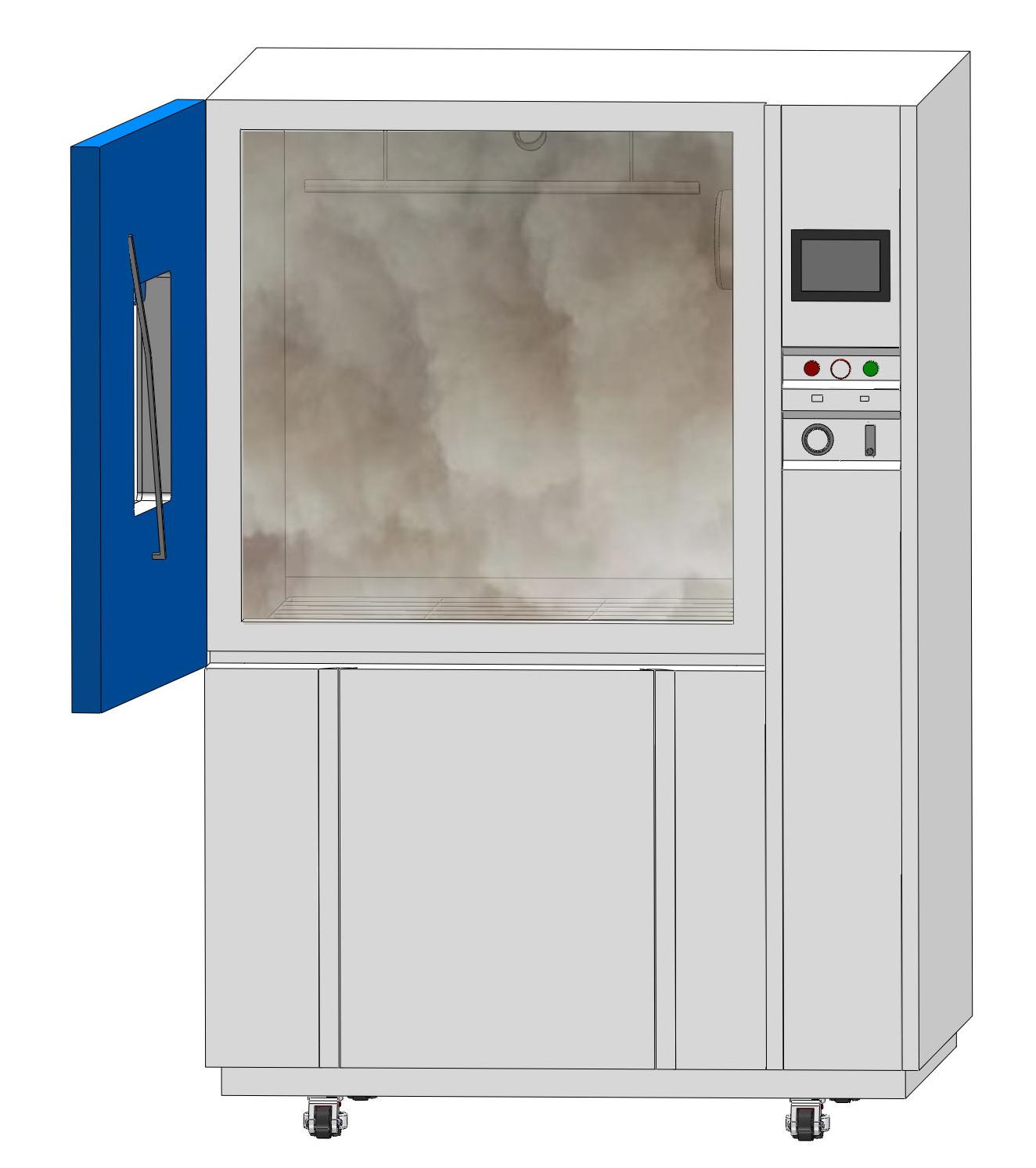 programmable controller accurately sets and stores critical parameters such as dust circulation time, blowing time, test duration, temperature, and vacuum conditions.
At this stage, the validation should check:
Parameter | Why it matters in Dust Test Chamber validation | Typical validation focus |
|---|---|---|
Test duration | Ensures full exposure cycle accuracy | Timer consistency |
Dust circulation | Maintains particle suspension | Repeatability |
Blowing time | Supports dust loading conditions | Program accuracy |
Vacuum setting | Critical for ingress simulation | Pressure stability |
Temperature | Supports controlled environmental conditions | Display vs actual value |
Program storage | Reduces human setup error | Recall consistency |
A validated Dust Test Chamber should be able to run the same programmed profile repeatedly with minimal deviation. This is especially important for comparative testing and trend analysis across multiple samples.
One of the most important parts of a Dust Test Chamber validation procedure is confirming the dust media and concentration system. If the wrong particle size is used, or if dust concentration is unstable, then the Dust Test Chamber will not provide meaningful results.
During validation, the lab should confirm:
Type of standardized dust used
Nominal particle size suitability
Dust loading amount
Uniform circulation capability
Resistance to caking or clumping
Dust replenishment consistency
For many enclosure-focused applications, a Dust Test Chamber is expected to work with controlled fine dust at a defined concentration range. For more severe applications, the Dust Test Chamber may need to support larger particles and stronger particle movement for Blowing Sand and Dust Test conditions.
This step is crucial for a Dustproof Test and a Dust Resistance Protection Test, because both depend heavily on realistic particulate exposure.
Airflow validation is one of the most technically important stages of the Dust Test Chamber validation procedure. A Dust Test Chamber must distribute dust evenly across the specimen zone. If airflow is weak or uneven, the test results may vary depending on where the sample is placed.
The airflow validation process should assess:
Fan performance
Flow stability
Air velocity range
Dead zones in the chamber
Uniform particle suspension
Repeatability of circulation between cycles
For a standard Dust Ingress Protection Test, airflow must support steady exposure without pushing the system into unrealistic turbulence. For a Blowing Sand and Dust Test, the Dust Test Chamber may require a wider airflow range and more aggressive velocity settings to simulate desert-like conditions.
A vacuum system is a major feature in many Dust Test Chamber designs, especially when the equipment is used for enclosure evaluation. During a Dust Ingress Protection Test, vacuum can simulate pressure differences that pull dust into small openings, making the test more severe and more realistic.
The Dust Test Chamber validation procedure should therefore verify:
Vacuum generation capability
Stability during the full test cycle
Gauge accuracy
Regulator response
Leakage in the vacuum line
Compatibility with test specimens
This part of validation is highly relevant for a Sealing Integrity Test because small deviations in vacuum can change the severity of the test and alter the final result.
After the basic systems are checked, the Dust Test Chamber validation procedure should include a full trial run. This trial run should simulate a realistic application using representative settings for the intended test type.
For example, the validation profile may include:
Fine dust exposure for a Dustproof Test
Vacuum-assisted exposure for a Dust Ingress Protection Test
Longer duration cycling for a Dust Resistance Protection Test
High airflow particulate exposure for a Blowing Sand and Dust Test
The purpose of the trial run is to confirm that the Dust Test Chamber can complete the entire programmed sequence without abnormal alarm conditions, unstable dust behavior, or control errors.
A Dust Test Chamber is only fully validated when it can produce repeatable results. That is why a strong Dust Test Chamber validation procedure includes repeated runs under the same settings and comparison of the outcomes.
Key repeatability indicators include:
Stable airflow at the same setpoint
Consistent dust suspension over time
Reproducible vacuum behavior
Reliable timing control
Similar chamber recovery behavior between tests
Consistent internal observation conditions
This matters because many customers want to compare results across batches, designs, or prototypes. Without repeatability, the Dust Test Chamber cannot support meaningful engineering decisions.
A Dust Test Chamber validation procedure must also include safety verification. Dust testing often involves long durations, moving airflow systems, electrical connections, and particulate exposure, so operator protection is essential.
The safety review should include:
Electromagnetic door lock function
Over-temperature protection
Over-current protection
Earth leakage protection
Phase sequence protection
Emergency stop logic
Safe specimen loading and unloading
Visibility during operation
A properly validated Dust Test Chamber protects both the operator and the testing process.
The final step is documentation. A Dust Test Chamber validation procedure should always end with a formal record of the validation method, test settings, observed performance, deviations, corrective actions, and final approval status.
A strong validation record usually contains:
Validation section | What should be recorded |
|---|---|
Equipment identification | Chamber type, capacity, configuration |
Intended use | IP, military, industrial, or custom testing |
Parameter check | Timer, airflow, dust concentration, vacuum, temperature |
Safety review | Interlocks and protections |
Trial run | Program details and chamber response |
Repeatability | Comparison of repeated cycles |
Final result | Approved, conditionally approved, or rejected |
This documentation is especially useful when the Dust Test Chamber is used in regulated product development, supplier audits, or customer qualification reviews.
In recent product development practice, the LIB Dust Test Chamber is no longer used only for end-stage compliance. More companies now use the Dust Test Chamber during prototype optimization, reliability screening, and platform qualification. This means validation must support both formal standards work and fast engineering iteration.
IP6X Dust Resistant Sand and Dust Test Chamber | 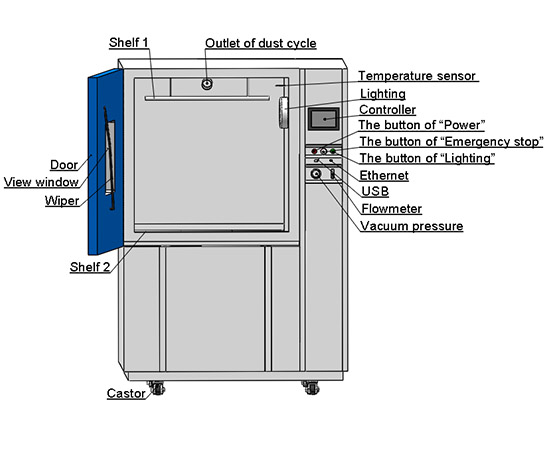 | ||
 | Temperature Range | Ambient ~ +50℃ | |
Humidity Range | < 30% RH | ||
Normal Wire Diameter | 50um | ||
Nominal Width of a Gap Between wires | 75um | ||
lectromagnetic lock | Specimen Power Outlet | Dust-proof socket 16A | |
Heating Element | Nichrome heater | ||
Vacuum System | Equipped with a pressure gauge, air filter, pressure regulator, connecting tube | ||
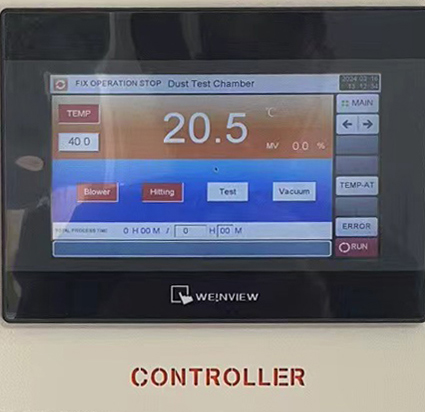 | Controller | Programmable color LCD touch screen controller,Ethernet connection, PC Link | |
Door Lock | Electromagnetic lock | ||
Maximum Noise | 65 dBA | ||
Another current trend is the growing demand for multi-function systems. A single Dust Test Chamber may need to support standard IP testing, enclosure verification, powered sample monitoring, and harsh environment simulation. Because of that, the validation procedure must confirm versatility as well as accuracy.
The main purpose of a Dust Test Chamber validation procedure is to confirm that the chamber can generate stable, repeatable, and accurate dust test conditions before it is used for formal product testing.
A Sealing Integrity Test is important because it verifies whether enclosure joints, gaskets, and interfaces can prevent dust from entering the product under controlled exposure conditions inside the Dust Test Chamber.
A Dustproof Test evaluates the product, while a Dust Test Chamber validation procedure evaluates the chamber itself. The chamber must be validated first so the product test results can be trusted.
Yes. Vacuum verification is often essential in a Dust Ingress Protection Test because pressure differences can draw dust into weak points. A Dust Test Chamber must maintain stable vacuum performance for accurate results.
Yes, but the Dust Test Chamber validation procedure must confirm that the system can handle both fine dust conditions and stronger airflow particulate exposure. A chamber should not be assumed to support both without verification.
Contact LIB Industry today to learn how our dust test solutions can improve your product validation, accelerate R&D, and ensure consistent, repeatable testing results.