Views: 0 Author: LIB Team Publish Time: 2026-03-09 Origin: Site


Environmental testing is a key process for determining whether products can maintain reliable performance when exposed to different climate conditions. Temperature and Humidity Chambers provide a controlled environment to reproduce extreme heat, low temperatures, and moisture exposure, allowing manufacturers to evaluate product lifespan, uncover potential defects, and verify that designs meet required industry standards before market release.
Among these, the LIB Temperature Humidity Chamber has earned high praise from users worldwide. For example, a Canadian laboratory recently reported that the chamber has been in continuous use for over a week and is performing excellently, providing reliable, stable, and repeatable test conditions. Such feedback highlights the chamber's strong stability, ease of operation, and overall user satisfaction, making it a trusted choice for precise environmental testing.
Stability in a Temperature Humidity Chamberrefers to how precisely the chamber can maintain programmed environmental conditions without significant fluctuation. In environmental testing, stability is usually measured in terms of:
Temperature fluctuation
Temperature deviation
Humidity fluctuation
Humidity uniformity
For example, a high-quality Temperature Humidity Chamber typically maintains:
Parameter | Typical Stability |
|---|---|
Temperature fluctuation | ±0.5°C |
Temperature deviation | ±2°C |
Humidity stability | ±2–3% RH |
| Temperature sensor resolution | up to ±0.001 °C |
High-precision PT100 Class A temperature sensors combined with accurate humidity detection allow the system to maintain extremely stable environmental conditions. Uniform airflow design is equally important. Multi-directional centrifugal fans circulate air inside the chamber to prevent hot spots or cold zones, ensuring every sample experiences identical conditions.
The goal of environmental testing is to accurately reproduce real-world environmental conditions. A
Temperature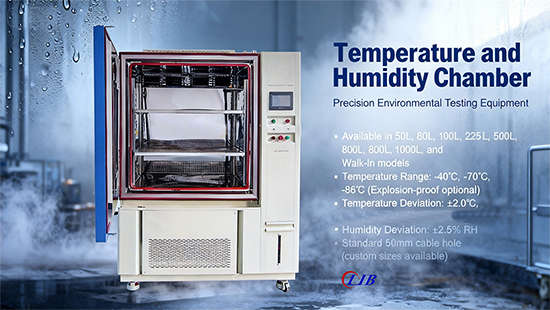 Humidity Chamber with unstable environmental control can introduce testing errors, leading to incorrect conclusions about product reliability. Stability is critical for several reasons.
Engineers rely on environmental chambers to deliver repeatable and consistent results. For example, if a chamber fluctuates by±2 °C instead of ±0.5 °C, the aging rate of polymers, electronic components, or batteries can change significantly. Stable environmental control ensures that repeated tests produce the same results.
Many environmental testing standards require strict control of temperature and humidity.
Examples include:
IEC environmental testing standards
UL certification testing
automotive validation protocols
Tests such as the 1000-hour Damp Heat Test (85 °C / 85 % RH) require extremely stable conditions throughout the entire test duration. Even small environmental fluctuations can invalidate test results.
Environmental chambers are often used to simulate years of environmental exposure within days or weeks.
For instance:
High-temperature aging tests
Thermal cycling tests
Long-term humidity exposure tests
A chamber capable of maintaining stable conditions for hundreds or thousands of hours allows engineers to accurately predict product durability.
Many laboratories test multiple samples simultaneously. Uniform environmental conditions are essential. With good airflow design and uniformity control (typically ≤ ±1.5 °C across the chamber workspace), both small components and large assemblies experience the same test environment. This allows accurate comparison of product performance.
Feature | Stable Temperature Humidity Chamber | Unstable Chamber |
|---|---|---|
Temperature control | Precise and consistent | Frequent fluctuations |
Test reliability | Highly repeatable | Inconsistent results |
Standard compliance | Meets testing standards | Risk of non-compliance |
Product evaluation | Accurate reliability data | Unreliable conclusions |
This comparison shows why stability is essential in environmental testing.
Several technical factors contribute to the strong stability of the LIB Temperature Humidity Chamber:
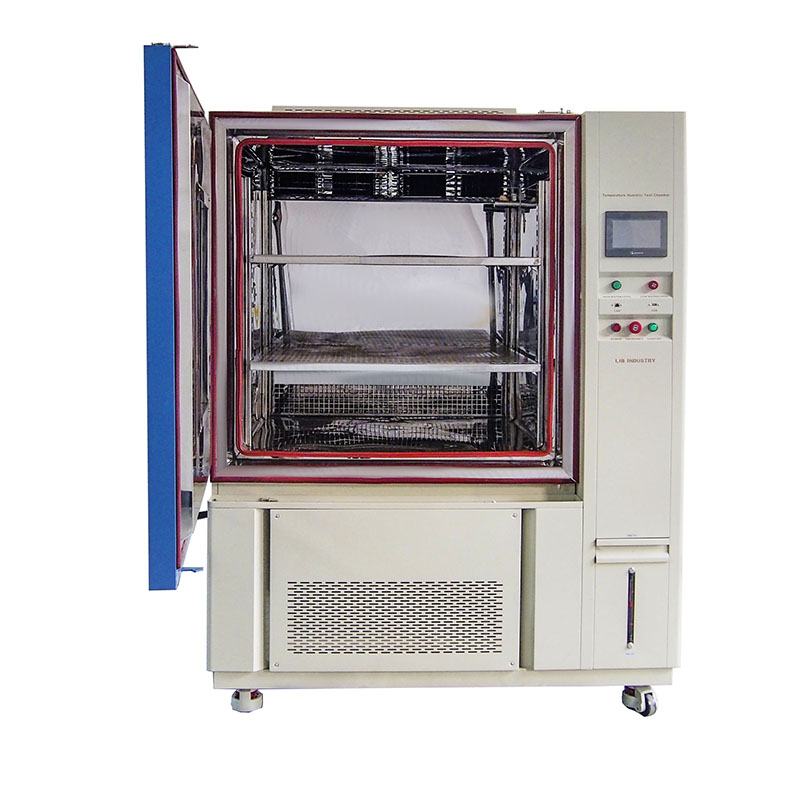 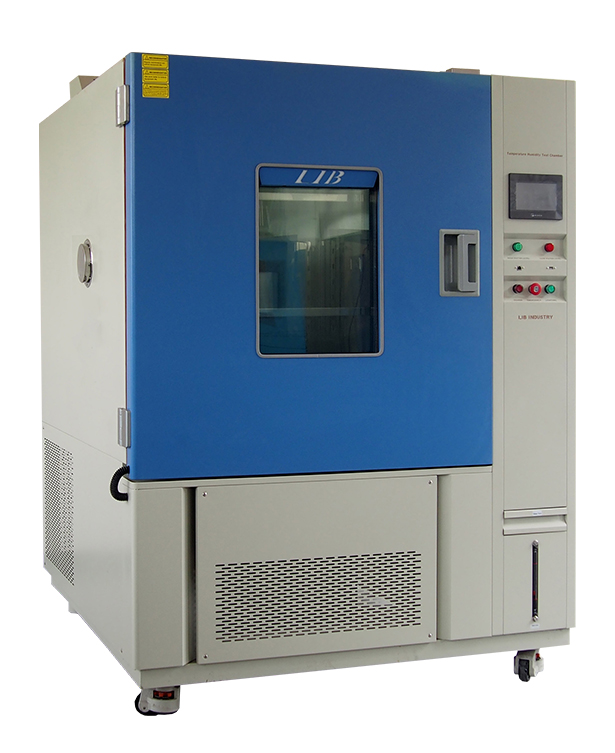 | |||||
Temperature range | -20℃ ~+150 ℃ | ||||
Low type | A: -40℃ B:-70℃ C -86℃ | ||||
Humidity Range | 20%-98%RH | ||||
Temperature deviation | ± 2.0 ℃ | ||||
Heating rate | 3 ℃ / min | ||||
Cooling rate | 1 ℃ / min | ||||
Controller | Programmable color LCD touch screen controller, Multi-language interface, Ethernet , USB | ||||
Refrigerant | R404A, R23 | ||||
Exterior material | Steel Plate with protective coating | ||||
Interior material | SUS304 stainless steel | ||||
Standard configuration | 1 Cable hole (Φ 50) with plug; 2 shelves | ||||
Timing Function | 0.1~999.9 (S,M,H) settable | ||||
|
| 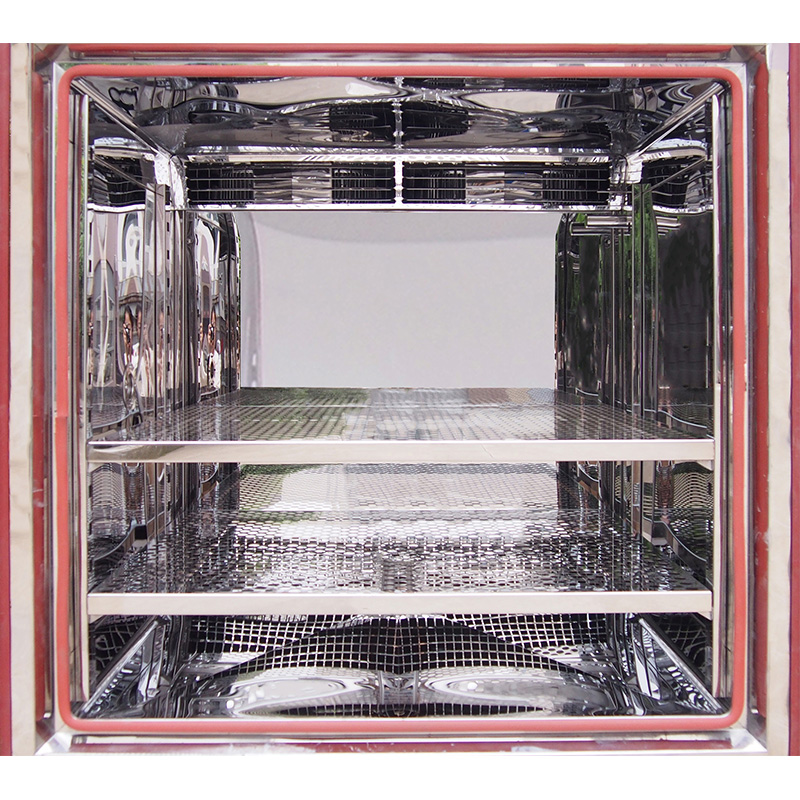 | 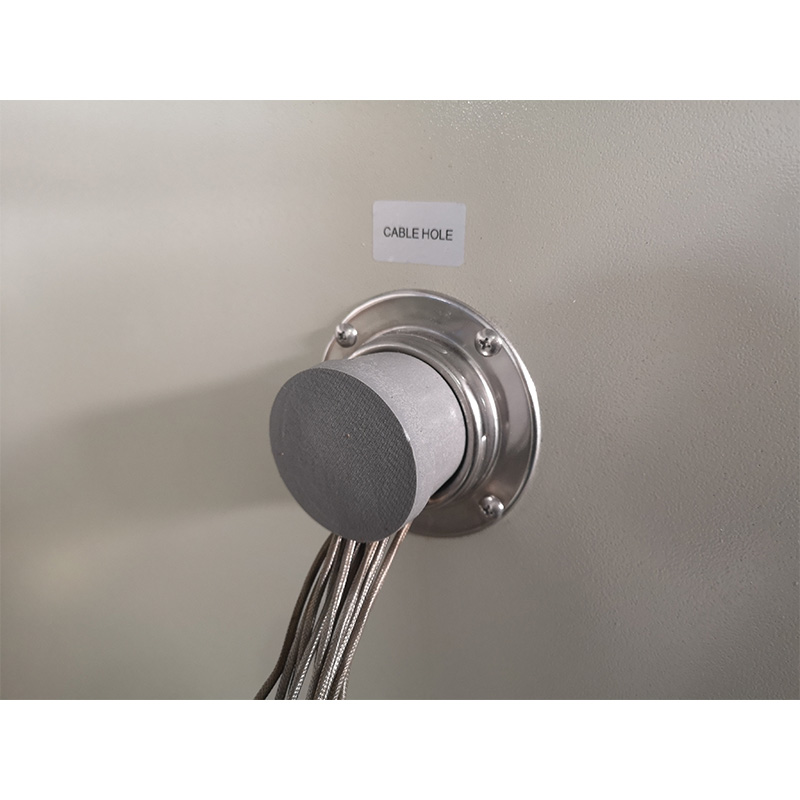 |
Touch screen controller | The compressor | Robust Anti-Corrosion Workroom | Integrated Power Access hole |
1.Airflow Design
The chamber uses built-in centrifugal fans with optimized air ducts to create a vertical forced convection circulation (air supply at the top, return at the bottom). This ensures uniform distribution of temperature and humidity throughout the workroom, with deviations controlled within ±2.0 °C. The number of fans is configured according to the chamber size, promoting faster air circulation for rapid heating, cooling, or humidification while reducing noise.
2.Sensor Accuracy
High-precision sensors monitor temperature and humidity in real time. Accurate readings allow the control system to maintain stable environmental conditions and respond quickly to fluctuations, ensuring precise testing outcomes.
3.Control System Performance
Advanced PID controllers regulate heating, cooling, and humidification systems. The chromium-nickel alloy heaters can achieve heating rates up to 3 °C/min, while French TECUMSEH compressors provide rapid cooling down to −70 °C at up to 1 °C/min. This precise control minimizes overshoot and fluctuation, maintaining consistent conditions.
4.Chamber Construction Materials
The interior is made of SUS304 stainless steel, resistant to high temperature and corrosion. Combined with double-layer insulation walls and airtight doors with concave-convex silicone seals, the chamber maintains stable internal temperature and humidity, even during long-duration tests.
5.Sample Loading and Placement
Perforated stainless steel sample shelves and careful arrangement allow smooth airflow around the samples, preventing localized hot or cold spots. This ensures uniform exposure and accurate, repeatable test results.
6. Additional Stability Features
Cable holes: Sealed with silicone plugs to maintain airtight conditions while allowing live monitoring of samples.
Viewing window: Anti-fog double-layer glass with built-in LED lighting allows observation without opening the chamber.
Automatic water inlet: Maintains consistent humidity by automatic water supply and condensate recovery, avoiding fluctuations caused by manual refilling.
Certain environmental tests rely heavily on stability to ensure accurate results. LIB Temperature Humidity Chamber must maintain precise environmental conditions during these tests.
TThis test evaluates how materials degrade under prolonged temperature exposure. The chamber must maintain stable conditions during long test cycles. For example, a typical aging test may run for 500–1000 hours, requiring temperature stability of ±0.5 °C throughout the entire test.
The Thermal Abuse Test is widely used in battery safety testing. In an Aging Environmental Battery Temperature Humidity Chamber, batteries are exposed to elevated temperatures to observe potential thermal runaway behavior. Precise temperature control is essential for safety evaluation and accurate testing results.
The Humidity Freeze Test involves cycling between high humidity and freezing conditions. A Temperature Humidity Chamber must maintain accurate humidity levels before transitioning to freezing temperatures. If humidity stability is poor, condensation formation may not occur as expected, leading to inaccurate test outcomes.
The Damp Heat Test simulates tropical environments where high temperature and humidity occur simultaneously. Typical conditions include 85 °C and 85 % RH with 1000 hours of continuous exposure. Solar panels, electronics, and materials must be tested in a stable Temperature Humidity Chamber to evaluate corrosion resistance and moisture protection.
Low-temperature tests evaluate product performance under extreme cold environments. A high-quality Temperature Humidity Chamber can maintain temperatures as low as –40 °C/-86℃, with stable control during long testing cycles.
Test Type | Purpose | Key Conditions / Requirements |
High/Low Temperature Aging Test | Evaluate material degradation under prolonged temperature exposure | 500–1000 hours, temperature stability ±0.5°C |
Thermal Abuse Test | Battery safety testing, observe thermal runaway | Precise temperature control, elevated temperatures |
Humidity Freeze Test | Test effects of cycling between high humidity and freezing | Accurate humidity control before freezing to ensure condensation formation |
Damp Heat Test | Simulate tropical environments, evaluate corrosion and moisture resistance | 85°C / 85 % RH, 1000 hours continuous exposure |
Low Temperature Test | Assess product performance under extreme cold | Temperatures down to −40°C / −86°C, stable control during long cycles |
Different types of environmental chambers require high stability to perform specialized testing.
This chamber is widely used in electronics and automotive testing. It typically operates within a temperature range of –40 °C to +85 °C or higher, maintaining stable environmental conditions during reliability tests.
Designed for battery safety testing, this chamber must maintain highly stable temperatures during thermal abuse and aging tests, where even small fluctuations may affect battery behavior.
Endurance chambers run continuous long-duration tests, often operating for days or weeks without interruption. Stable temperature and humidity control ensures accurate product lifetime evaluation.
Solar panels undergo strict environmental testing to ensure durability. The UL 1703 IEC 61464 Photovoltaic Panel Temperature Humidity Chamber is used to perform photovoltaic reliability tests such as the Damp Heat Test and Humidity Freeze Test. Because these tests may last hundreds of hours, the Temperature Humidity Chamber must maintain consistent environmental conditions.
| Temperature Range | -60℃ ~ +100 ℃ |
|
| Temperature Fluctuation | ± 0.5 ℃ | |
| Temperature Deviation | ± 2.0 ℃ | |
| Temperature Change Rate | 1 ~ 3.4℃ / Min | |
| Humidity Range | 20% ~ 98% RH | |
| Humidity Deviation | ± 2.5% RH | |
| Panel Size | 1M*2M | |
| Panel Capacity | 4 / 6 / 8 / 10 / 12 Pieces | |
| Cooling system | Mechanical compression refrigeration system | |
| Refrigerating unit | French TECUMSEH compressor | |
| Controller | Programmable color LCD touch screen controller, Ethernet connection | |
| Water supply system | Automatic water supply | |
| Safety Device | Humidifier Dry-combustion Protection; Over-temperature Protection; Over-current Protection; | |
| Refrigerant High-pressure Protection; Water Shortage Protection; Earth leakage Protection | ||
| Exterior Material | Steel Plate with protective coating | |
| Interior Material | SUS304 stainless steel | |
| Thermal Insulation | Polyurethane foam and insulation cotton | |
| Observation Window | Interior lighting, double-layer thermo stability silicone rubber sealing | |
| Standard | IEC61215, IEC61646, IEC61108, IEC62688, UL1703, IEC61345 |
The Cryogenic Thermal Cycling Temperature Humidity Chamber is used for extreme environmental testing, including rapid transitions between high and low temperatures. Maintaining stability during these transitions is essential for accurate reliability testing in aerospace and semiconductor industries. Typical ramp rates may reach 3 °C per minute heating and 1 °C per minute cooling, allowing accelerated reliability testing.
Stability ensures that the Temperature Humidity Chamber maintains consistent temperature and humidity conditions throughout the testing process, allowing engineers to obtain accurate and reliable test results.
Tests such as High/Low Temperature Aging Test, Thermal Abuse Test, Humidity Freeze Test, Damp Heat Test, and Low Temperature Test all require a stable Temperature Humidity Chamber to ensure accurate testing conditions.
Industries including electronics, automotive, renewable energy, aerospace, and battery manufacturing depend on a stable Temperature Humidity Chamber for environmental testing.
Stability can be improved by using advanced control systems, precise sensors, optimized airflow design, and proper maintenance of the Temperature Humidity Chamber.
If a Temperature Humidity Chamber cannot maintain stable conditions, test results may become unreliable, making it difficult to accurately evaluate product reliability.
In conclusion, stability is one of the most important performance factors in environmental testing. A reliable Temperature Humidity Chamber must maintain consistent temperature and humidity conditions to ensure accurate test results. Whether performing a High/Low Temperature Aging Test, Thermal Abuse Test, or Humidity Freeze Test, stability allows engineers to evaluate product durability and safety with confidence. As environmental testing technology continues to advance, improving stability in the Temperature Humidity Chamber will remain essential for ensuring reliable product development and quality assurance.
Contact LIB Industry to learn more about our stable and reliable Temperature & Humidity Chambers, request a demonstration, or discuss your laboratory testing requirements