
Views: 0 Author: Site Editor Publish Time: 2026-09-11 Origin: Site


Choosing the right environmental test equipment is a critical capital decision for laboratories, manufacturers, and quality-control departments. The goal is not simply to purchase the chamber with the widest specification range. The equipment must match the actual failure mechanisms, compliance requirements, sample characteristics, and facility conditions involved in your testing program.
Over-specifying a chamber increases acquisition cost, utility consumption, maintenance requirements, and calibration workload. Under-specifying creates a different risk: the equipment may be unable to reproduce the environmental conditions required by your test standard or product application.
The key decision is therefore straightforward:
Do you need temperature control only, or must temperature and humidity be controlled together?
Environmental chamber manufacturers such as LIB Industry offer both temperature-focused and temperature-humidity testing solutions for different reliability applications. Understanding the technical difference between these systems helps buyers avoid unnecessary configuration while ensuring that the chamber can reproduce the required environmental stress.
Temperature-only chambers are primarily used to evaluate thermal expansion, contraction, thermal fatigue, high-temperature aging, and low-temperature performance.
Temperature humidity chambers are required when moisture ingress, corrosion, electrochemical migration, swelling, delamination, or humidity-sensitive material degradation must be investigated.
Test standards should drive chamber configuration. Some procedures explicitly require humidity control, while others only specify temperature.
Humidity capability increases infrastructure requirements, including treated water, drainage, humidity calibration, and additional maintenance.
Procurement decisions should be based on actual test profiles, sample load, facility utilities, and required environmental conditions rather than maximum specifications alone.
The most important distinction between the two chamber types is the environmental stress they reproduce.
Temperature chambers control sensible heat through heating and refrigeration systems. Depending on the application, they can maintain stable high or low temperatures or execute repeated temperature cycles.
Typical failure mechanisms include:
Thermal expansion and contraction
Solder joint fatigue
Material warping
Cracking
Seal deformation
Thermal aging
Cold-start failure
Temperature-induced dimensional changes
These failures are caused primarily by temperature rather than atmospheric moisture.
For products that are not significantly affected by humidity, adding a humidity control system may provide little additional testing value.
Humidity changes the environmental mechanism.
A humidity system introduces controlled water vapor into the test workspace. The chamber must coordinate heating, cooling, humidification, dehumidification, airflow, sensing, and condensation management simultaneously.
This creates a combined environmental stress that cannot be reproduced by temperature testing alone.
Higher temperatures can accelerate moisture penetration into:
Polymers
Adhesives
Encapsulants
Printed circuit boards
Coatings
Seals
Packaging materials
When temperature subsequently changes, absorbed moisture may condense, expand, migrate, or react chemically with materials.
The result is a group of failure modes that only becomes visible when temperature and humidity interact.
For laboratories comparing chamber configurations from LIB Industry, this distinction should be established before chamber volume, cooling rate, or other secondary specifications are considered.
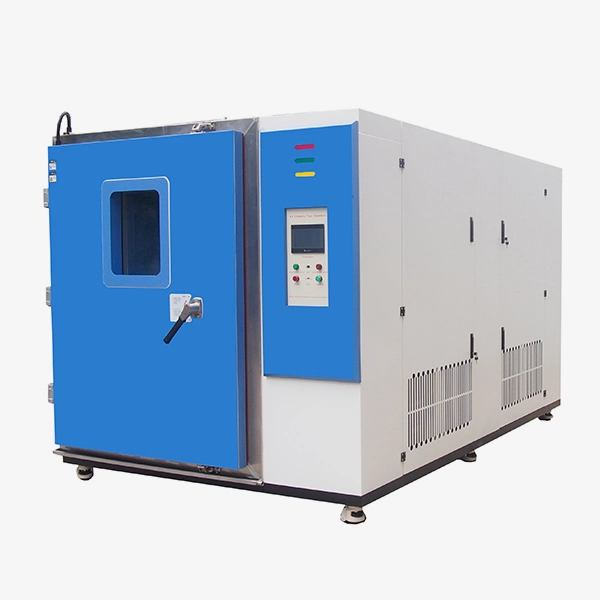
Not every reliability test requires moisture control.
A temperature chamber may be sufficient when the primary objective is to evaluate thermal behavior rather than climatic degradation.
Temperature-only chambers are commonly suitable for:
Thermal cycling
High-temperature aging
Low-temperature storage
Burn-in testing
Material expansion and contraction studies
Basic component thermal endurance
Epoxy curing
Heat resistance testing
Cold resistance testing
Temperature performance verification
Products with low moisture sensitivity may not require controlled humidity.
Examples can include:
Certain metals
Dense ceramics
Glass components
Some rigid plastics
Mechanical structures
Heat-resistant components
The actual choice should still be based on the product specification and applicable test standard.
Eliminating the humidity system simplifies the chamber significantly.
A temperature-only configuration generally requires:
No dedicated humidity water supply
No wet-bulb maintenance
Less water-system cleaning
Simpler drainage requirements
Fewer humidity-related calibration tasks
Lower routine maintenance complexity
For laboratories performing large volumes of thermal cycling or high-temperature testing, a dedicated temperature chamber may therefore be more practical than operating a temperature humidity chamber with the humidity function disabled.
LIB Industry can provide different environmental chamber configurations, allowing buyers to select equipment according to the actual scope of their test program rather than adding humidity capability by default.
climatic testing chamber evaluating components
Humidity becomes necessary when moisture itself contributes to product degradation.
In these applications, a dry temperature chamber cannot reproduce the required failure mechanism.
Electronic products are particularly sensitive to moisture.
Humidity-related risks can include:
Conductive Anodic Filament formation
Electrochemical migration
Dendritic growth
PCB corrosion
Insulation resistance reduction
Connector oxidation
Conformal coating failure
Moisture penetration into electronic packaging
These mechanisms depend on the presence of water vapor and cannot be meaningfully evaluated using dry thermal testing alone.
Temperature humidity testing is also important for packaging systems.
Potential evaluation targets include:
Adhesive durability
Seal performance
Moisture barrier properties
Material deformation
Package delamination
Moisture vapor transmission behavior
Long-term storage stability
Pharmaceutical, electronics, food, and industrial packaging applications may all require controlled climatic conditions.
Polymers and composites can absorb moisture over time.
This can produce:
Swelling
Surface blistering
Softening
Delamination
Loss of bonding strength
Dimensional changes
Reduced mechanical performance
In these cases, an Environmental Temperature Humidity Chamber provides the combined temperature and moisture conditions required to study the degradation process.
The applicable test method often provides the clearest answer to the chamber selection question.
Instead of asking whether humidity capability might be useful in the future, first identify the environmental conditions required by the product standard or customer specification.
MIL-STD-810 includes environmental procedures covering temperature, humidity, and other climatic stresses.
Humidity-related methods require equipment capable of controlling moisture as well as temperature.
For products used in aircraft, defense electronics, communication equipment, and outdoor systems, climatic exposure may be an important part of qualification.
Automotive components operate across changing outdoor and under-hood environments.
Standards and procedures associated with automotive electronics may include humidity, cyclic damp heat, or high-temperature/high-humidity exposure.
Typical test subjects include:
ECUs
Sensors
PCBs
Connectors
Electronic modules
Control systems
For these applications, the chamber must be selected according to the required profile rather than simply according to its maximum temperature.
Pharmaceutical stability programs rely on controlled combinations of temperature and relative humidity.
Common stability conditions may include:
25°C / 60% RH
30°C / 65% RH
40°C / 75% RH
Maintaining stable climatic conditions over extended periods requires reliable temperature-humidity control, monitoring, calibration, and data logging.
A Climatic Temperature Humidity Chamber is therefore more appropriate than a temperature-only chamber when both variables form part of the specified test condition.
Before requesting quotations, buyers should prepare a list containing:
Applicable standard
Required temperature range
Required humidity range
Test duration
Number of cycles
Heating and cooling rate
Sample quantity
Sample dimensions
Whether samples are powered
Required data recording functions
Providing this information to LIB Industry enables a more accurate evaluation of whether a temperature-only or combined climatic chamber is suitable.
Humidity capability affects more than the test profile. It also changes the infrastructure required around the chamber.
Humidity generation requires a suitable water source.
Depending on system design, equipment may require deionized, reverse-osmosis, or otherwise treated water.
Untreated water can introduce minerals into:
Humidification heaters
Water tanks
Piping
Sensors
Atomizers
Internal circulation systems
Mineral accumulation can reduce system efficiency and increase maintenance frequency.
Humidity testing also generates condensate.
Facilities should provide adequate drainage for:
Normal humidity operation
Condensation
Defrost cycles
Water-system maintenance
Chamber cleaning
Drain routing should be considered before equipment installation rather than after the chamber arrives.
A temperature humidity chamber requires calibration of both environmental variables.
This introduces additional verification requirements compared with temperature-only equipment.
Calibration planning may include:
Temperature sensors
Humidity sensors
Workspace uniformity
Data acquisition channels
Controller readings
Reference instrumentation
The required interval depends on laboratory procedures, quality systems, customer requirements, and applicable standards.
Humidity systems introduce components that are absent from standard temperature chambers.
These may include:
Water reservoirs
Humidification heaters
Wet-bulb systems
Humidity sensors
Drainage lines
Water filters
Water-level controls
Buyers should account for this maintenance requirement when comparing the total operating cost of the two chamber types.
A structured specification process reduces the risk of purchasing either an inadequate or unnecessarily complex system.
Start with the product rather than the chamber.
Ask:
Are failures caused by temperature?
Does moisture contribute to degradation?
Can condensation occur in actual service?
Are corrosion or electrochemical migration relevant?
Do materials absorb moisture?
Does the applicable standard specify relative humidity?
If humidity does not influence product reliability, a temperature chamber may be sufficient.
Determine the actual operating envelope required by the test.
Specify:
Minimum temperature
Maximum temperature
Minimum humidity
Maximum humidity
Heating rate
Cooling rate
Dwell time
Cycle count
Avoid selecting unnecessarily extreme specifications unless the test procedure requires them.
The chamber must be sized around the test specimen.
Important factors include:
Sample dimensions
Sample weight
Quantity
Material composition
Fixture mass
Heat dissipation
Airflow obstruction
Powered products require special consideration because they introduce heat directly into the workspace.
Before finalizing the equipment configuration, verify:
Available electrical supply
Laboratory ambient temperature
RO or DI water availability
Drainage
Ventilation
Installation access
Floor space
Service clearance
For combined climatic systems, these infrastructure considerations can materially affect installation cost.
Rather than specifying equipment based on the largest possible future requirement, select a configuration that covers the actual reliability program with appropriate operating margin.
LIB Industry can evaluate the proposed test conditions against chamber size, refrigeration requirements, humidity capability, and sample loading to help determine a suitable equipment configuration.
| System Consideration | Temperature-Only Chamber | Temperature Humidity Chamber |
|---|---|---|
| Main Stress | Heat and cold | Heat, cold, and moisture |
| Typical Failure Modes | Thermal fatigue, cracking, expansion | Corrosion, moisture ingress, swelling, CAF |
| Water Supply | Generally not required | Typically required |
| Drainage | Limited requirements | Condensate drainage required |
| Humidity Calibration | Not applicable | Required |
| Maintenance Complexity | Lower | Higher |
| Typical Applications | Thermal cycling, aging, burn-in | Electronics, polymers, packaging, pharma |
| Facility Complexity | Lower | Higher |
Many purchasing mistakes occur because buyers focus on maximum specifications rather than actual testing requirements.
Future flexibility can be useful, but it should be balanced against:
Additional acquisition cost
More maintenance
Water requirements
Calibration workload
Higher operating complexity
If the laboratory performs almost exclusively thermal testing, a dedicated temperature chamber may be the better long-term choice.
A larger chamber is not automatically better.
Excessive internal volume can increase:
Energy consumption
Temperature recovery time
Humidity generation requirements
Capital cost
Laboratory footprint
The chamber should provide enough usable space for the required sample loading and airflow clearance.
Powered electronics can significantly alter chamber performance.
The refrigeration system must compensate for this additional heat while maintaining the target temperature and humidity.
This information should be included in the specification stage rather than discovered during commissioning.
The difference between a temperature chamber and a temperature humidity chamber is ultimately determined by the environmental failure mechanisms that need to be reproduced.
Choose a temperature-only chamber when the test focuses on:
Thermal cycling
High- or low-temperature exposure
Thermal fatigue
Material expansion and contraction
Burn-in
Dry aging
Choose a temperature humidity chamber when the test must evaluate:
Moisture ingress
Corrosion
Electrochemical migration
Polymer swelling
Adhesive degradation
Packaging stability
Damp heat exposure
Climatic cycling
The correct chamber is not necessarily the system with the most functions. It is the system that reproduces the required test conditions reliably while fitting the facility, sample load, maintenance capability, and compliance program.
For buyers comparing environmental chamber configurations, LIB Industry offers temperature and temperature-humidity testing equipment for different laboratory and industrial applications. A clearly defined test profile allows the equipment specification to be built around actual testing requirements instead of unnecessary capacity.
A: Yes. Many temperature humidity chambers can operate without activating the humidity system. However, laboratories performing large volumes of dry thermal testing may still benefit from a dedicated temperature chamber because it reduces unnecessary humidity-system maintenance.
A: The required water specification depends on chamber design. Treated water such as deionized or reverse-osmosis water is commonly recommended because it reduces mineral deposits in humidification components and sensors. Always follow the manufacturer's specified water-quality requirement.
A: Generally, yes. Humidity systems add water circuits, sensors, heaters, drainage components, and additional calibration requirements. The increase in maintenance is one reason buyers should confirm whether humidity is genuinely required before selecting the equipment.
A: Standard systems have practical humidity limitations related to temperature and dew point. Very low humidity conditions may require additional dry-air purge systems, desiccant systems, or specialized chamber configurations.
A: Base the chamber size on the actual test samples, required quantity, fixture dimensions, airflow clearance, and heat load. Powered samples should also be included in the thermal-load calculation.
If you are still determining which chamber configuration fits your testing program, LIB Industry can help review the application from the equipment-selection perspective.
Share your required temperature range, humidity conditions, sample size, test standard, chamber volume, and any powered-load requirements. Based on these factors, the LIB Industry team can help identify whether a temperature-only chamber, temperature humidity chamber, or a more specialized environmental configuration is appropriate.
Contact LIB Industry to review your test requirements and obtain a chamber configuration and quotation matched to your application.


