Views: 0 Author: Site Editor Publish Time: 2026-03-12 Origin: Site


Environmental reliability has become a critical requirement for modern products.  Whether used in electronics, automotive systems, renewable energy equipment, or industrial devices, products must operate consistently under a wide range of environmental conditions. A Temperature Humidity Chamber provides engineers with a controlled environment to simulate heat, cold, moisture, and condensation, allowing manufacturers to evaluate durability and performance before products reach the market.
In real applications, reliable equipment and responsive technical support make a significant difference. For example, one of LIB’s customers in Saudi Arabia recently shared positive feedback about the TH-500A Temperature Humidity Chamber. After initial setup and guidance from our team, the chamber has been operating smoothly in the customer's laboratory. According to the client, the system is “working fine with no complaints from customers,” confirming stable performance and dependable operation in daily testing. This real-world experience highlights how a well-designed chamber can support laboratories with consistent environmental simulation and long-term reliability.
With growing global quality standards and increasingly complex products, environmental testing has become an essential part of product development. A Temperature Humidity Chamber allows engineers to simulate extreme climates—from freezing temperatures to hot and humid environments—ensuring products meet durability requirements and international testing standards before entering the market.
TThe main function of a Temperature Humidity Chamber is to recreate real-world environmental conditions such as temperature changes and humidity variations that products may experience during shipping, storage, and actual use. This controlled simulation helps engineers understand how environmental stress affects product performance, stability, and service life.
A Temperature Humidity Chamber is widely applied for multiple testing purposes, including assessing product durability, accelerating aging processes to estimate lifespan, verifying compliance with international standards, detecting potential design weaknesses during development, and ensuring long-term reliability across different global climates. By providing a stable and repeatable testing environment, it allows manufacturers to evaluate product quality more efficiently and with greater accuracy.
A Temperature Humidity Chamber supports many environmental testing methods used across industries. These tests simulate real-world conditions to verify whether products can withstand environmental stress.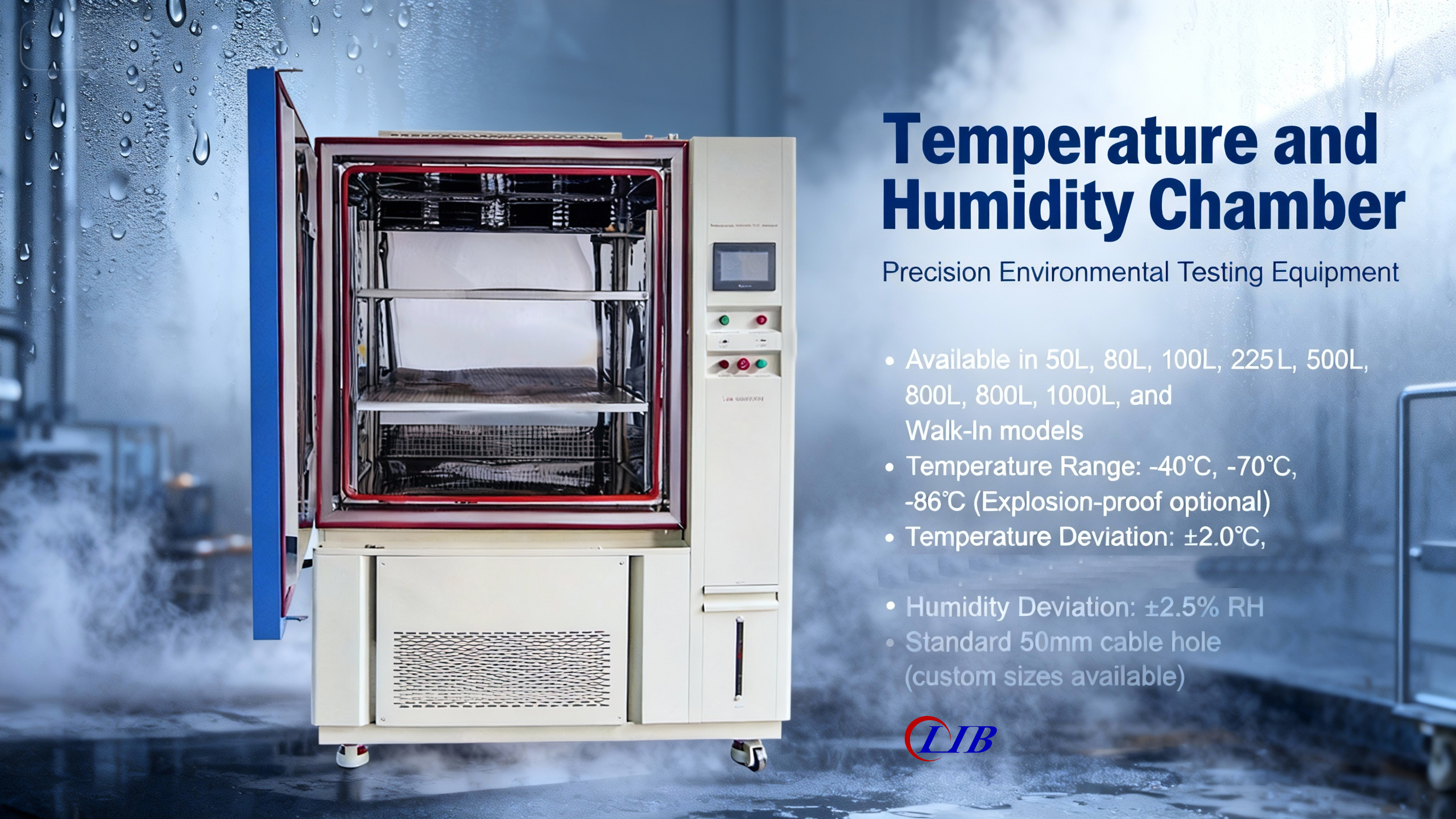
The High/Low Temperature Aging Test exposes products to prolonged high or low temperature conditions. A Temperature Humidity Chamber is used to accelerate material aging and identify potential failures caused by long-term environmental exposure.
Typical temperature ranges used in industry include –40 °C to +85 °C, –55 °C to +125 °C, or even –70 °C to +150 °C depending on the application. Test durations commonly range from 72 hours to 1000 hours to simulate long-term field conditions. By performing the High/Low Temperature Aging Test in a Temperature Humidity Chamber, engineers can predict product lifespan and durability.
The Thermal Abuse Test is particularly important for battery safety evaluation. During this test, the Temperature Humidity Chamber exposes batteries to elevated temperature conditions to determine whether thermal runaway, swelling, leakage, or ignition occurs.
Typical test parameters include temperatures between 80 °C and 150 °C, with exposure times ranging from 30 minutes to several hours, depending on the applicable safety standards. Some tests require the battery temperature to rise at a controlled rate such as 5 °C/min until the specified limit is reached. The Aging Environmental Battery Temperature Humidity Chamber is specifically designed to perform this type of test for lithium-ion batteries used in electric vehicles and energy storage systems.
The Humidity Freeze Test simulates conditions where moisture forms on a product and then freezes due to low temperatures. A Temperature Humidity Chamber cycles between high humidity and freezing conditions to evaluate product resistance to condensation and ice formation.
Typical cycle parameters include humidity levels up to 95 % RH at temperatures around +40 °C to +60 °C, followed by rapid cooling to –10 °C to –40 °C. Multiple cycles—often 10 to 50 repetitions—are used to reproduce real environmental stress.
This test is commonly used for automotive electronics, outdoor devices, and communication equipment.
The Damp Heat Test exposes products to long-term high humidity and high temperature conditions. A Temperature Humidity Chamber recreates tropical climate environments to test corrosion resistance, moisture protection, and insulation performance.
One of the most widely used conditions is 85 °C / 85 % RH, often referred to as the “85/85 test.” Standard test durations include 96 hours, 240 hours, 500 hours, or 1000 hours, depending on reliability requirements.
Solar panels, electronics, and industrial materials are frequently tested using the Damp Heat Test.
The Low Temperature Test determines whether products can function correctly in extremely cold environments. A Temperature Humidity Chamber simulates sub-zero temperatures to evaluate mechanical performance, material strength, and electronic reliability.
Typical testing temperatures include –20 °C, –40 °C, –55 °C, and –70 °C, with stabilization times ranging from 2 hours to 24 hours depending on product size and testing standards.
Test Type | Main Purpose | Typical Test Conditions | Common Applications |
High/Low Temperature Aging Test | Accelerates material aging and evaluates durability under long-term temperature exposure | –40 °C to +85 °C, –55 °C to +125 °C, up to –70 °C to +150 °C; duration 72–1000 hours | Electronics, automotive parts, plastics, industrial equipment |
Thermal Abuse Test | Evaluates battery safety and detects risks such as thermal runaway, swelling, or ignition | 80 °C–150 °C; controlled heating rate (e.g., 5 °C/min); exposure from 30 minutes to several hours | Lithium-ion batteries, EV batteries, energy storage systems |
Humidity Freeze Test | Tests resistance to condensation and freezing conditions | Up to 95 % RH at +40 °C to +60 °C, then cooling to –10 °C to –40 °C; 10–50 cycles | Automotive electronics, outdoor equipment, communication devices |
Damp Heat Test | Evaluates corrosion resistance and moisture protection under hot and humid conditions | Typical condition: 85 °C / 85 % RH; duration 96–1000 hours | Solar panels, electronics, industrial materials |
Low Temperature Test | Verifies product functionality and material performance in extreme cold | –20 °C, –40 °C, –55 °C, –70 °C; stabilization time 2–24 hours | Aerospace, automotive, outdoor equipment |
LIB environmental testing equipment is designed to provide reliable and precise environmental simulation for modern product testing. Compared with conventional environmental chambers, LIB Temperature Humidity Chambers offer several important advantages.
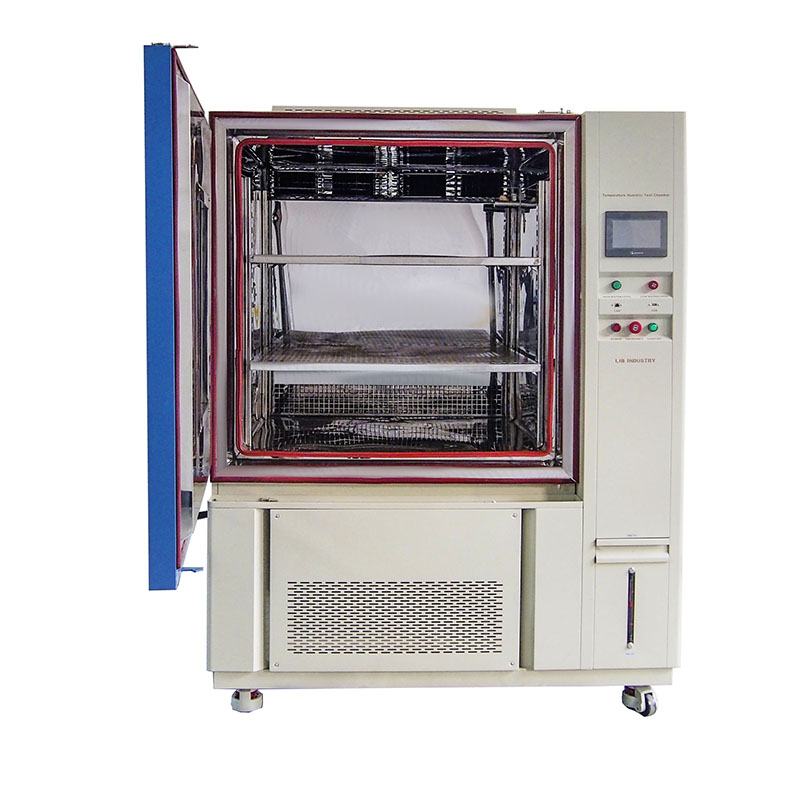 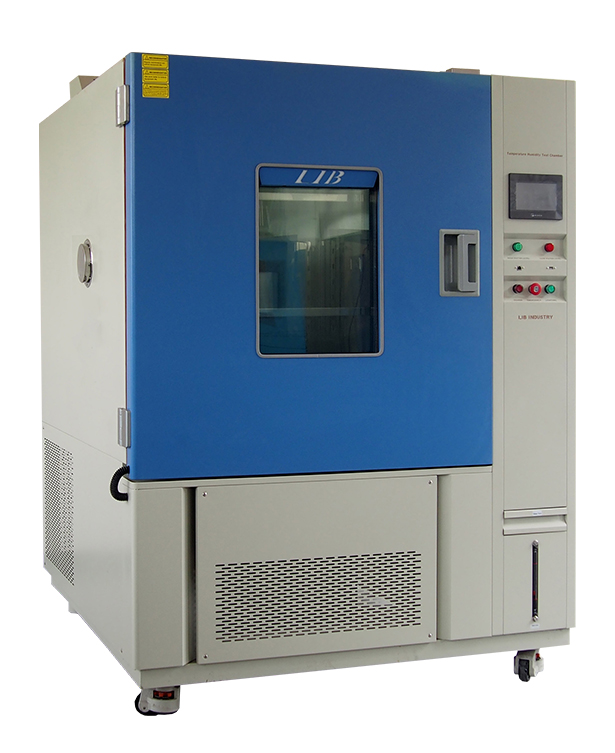 | |||||
Temperature range | -20℃ ~+150 ℃ | ||||
Low type | A: -40℃ B:-70℃ C -86℃ | ||||
Humidity Range | 20%-98%RH | ||||
Temperature deviation | ± 2.0 ℃ | ||||
Heating rate | 3 ℃ / min | ||||
Cooling rate | 1 ℃ / min | ||||
Controller | Programmable color LCD touch screen controller, Multi-language interface, Ethernet , USB | ||||
Refrigerant | R404A, R23 | ||||
Exterior material | Steel Plate with protective coating | ||||
Interior material | SUS304 stainless steel | ||||
Standard configuration | 1 Cable hole (Φ 50) with plug; 2 shelves | ||||
Timing Function | 0.1~999.9 (S,M,H) settable | ||||
LIB chambers support a wide testing range, typically from –70 °C to +150 °C and 20 % to 98 % RH, enabling accurate simulation of extreme environmental conditions such as tropical humidity, desert heat, and freezing climates.
These chambers can also support common testing setpoints used in industry, including 85 °C / 85 % RH damp-heat tests, –40 °C cold storage simulations, and temperature cycling between –40 °C and +85 °C for electronics reliability testing.
Advanced control systems ensure accurate temperature and humidity regulation. Stable environmental conditions help engineers obtain reliable and repeatable test results.
Typical control performance includes:
Temperature fluctuation within ±0.5 °C
Temperature uniformity within ±1.5 °C
Humidity accuracy within ±2 % to ±3 % RH
These precise controls are essential for long-term reliability testing, material aging studies, and product qualification.
LIB chambers are designed with optimized air circulation systems that maintain uniform environmental conditions throughout the testing space. Multi-directional airflow and high-efficiency centrifugal fans ensure consistent air distribution.
Uniformity is typically maintained within ±1 °C to ±1.5 °C, even when the chamber is fully loaded with samples. This ensures all test specimens experience the same environmental conditions, improving the reliability of comparative testing.
LIB uses high-quality refrigeration compressors and durable humidity generation systems, allowing the chamber to operate continuously for long-term testing.
Common system features include:
Cascade refrigeration systems for –40 °C to –70 °C low-temperature testing
High-efficiency humidification systems supporting 20 %–98 % RH humidity control
Long-term operation capability for 1000-hour aging tests or extended reliability experiments
These systems ensure stable performance even during continuous operation.
LIB Temperature Humidity Chambers are equipped with programmable controllers that allow engineers to set complex environmental test cycles.
Typical programmable features include:
Temperature and humidity cycling
Damp heat testing
Humidity freeze testing
Accelerated aging tests
|
| 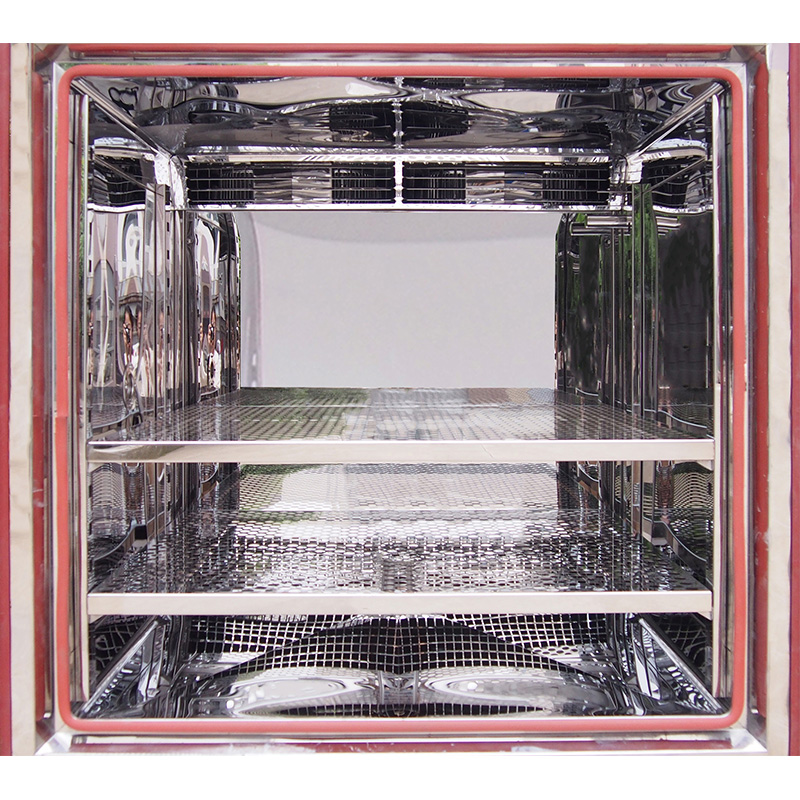 | 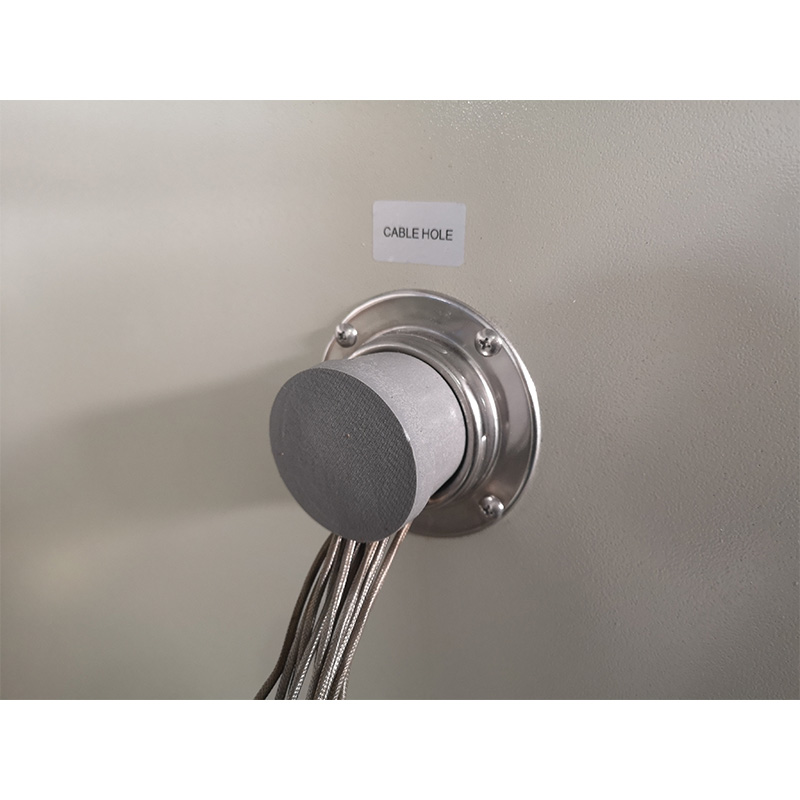 |
Touch screen controller The intuitive touchscreen controller can store up to 120 test programs, each containing 100 programmable steps. This capability allows engineers to easily run complex multi-stage environmental profiles, including temperature–humidity cycling, shock simulations, and extended soak tests. | The compressor The refrigeration compressor efficiently extracts heat from the chamber interior, enabling rapid cooling performance. The system typically achieves cooling rates of about 1 °C to 5 °C per minute, ensuring fast stabilization and improved testing efficiency. | Robust Anti-Corrosion Workroom The interior chamber is constructed from SUS304 stainless steel, providing excellent resistance to heat, moisture, and corrosion. This robust design ensures long-term durability even under demanding environmental testing conditions. | Integrated Power Access hole The built-in cable hole allows test samples to remain powered during testing, enabling real-time performance monitoring under controlled temperature and humidity conditions. The standard diameter is 50 mm, and both size and quantity can be customized according to testing requirements. |
Most controllers allow multiple programmable steps (often up to 100 steps per program) and the ability to store dozens or even hundreds of test profiles, enabling laboratories to automate repeated test procedures and improve testing efficiency.
The main purpose of a Temperature Humidity Chamber is to simulate environmental conditions such as heat, cold, and humidity to evaluate product reliability and durability.
A Temperature Humidity Chamber is widely used in industries including electronics, automotive, renewable energy, aerospace, and battery manufacturing.
Common environmental tests include:
High/Low Temperature Aging Test
Thermal Abuse Test
Humidity Freeze Test
Damp Heat Test
Low Temperature Test
These tests help manufacturers verify product reliability under extreme environmental conditions.
A Temperature Humidity Chamber allows engineers to identify potential product failures early in the development process, improving product quality and reducing warranty risks.
By simulating real-world environmental conditions, a Temperature Humidity Chamber helps manufacturers verify whether products can withstand heat, cold, humidity, and other environmental stresses over long periods of time.
In conclusion, the Temperature Humidity Chamber is a critical environmental testing system used to evaluate product reliability in modern manufacturing. Whether used for electronics, automotive components, batteries, or photovoltaic modules, the Temperature Humidity Chamber allows engineers to simulate real-world climates and perform essential tests such as High/Low Temperature Aging Test, Humidity Freeze Test, and Damp Heat Test. As industries continue to demand higher reliability standards, the importance of the Temperature Humidity Chamber in product development and quality assurance will continue to grow.
If you are looking for a reliable Temperature Humidity Chamber for environmental testing, LIB Industry can help. Our chambers are designed for precision, durability, and flexible testing applications across multiple industries.
Contact LIB Industry today to discuss your testing requirements, request technical consultation, or receive a customized solution for your laboratory. Our team is ready to support your environmental testing needs.