Views: 0 Author: LIB Team Publish Time: 2026-04-29 Origin: Site


Natural outdoor exposure testing has long stood as the benchmark of choice for gauging material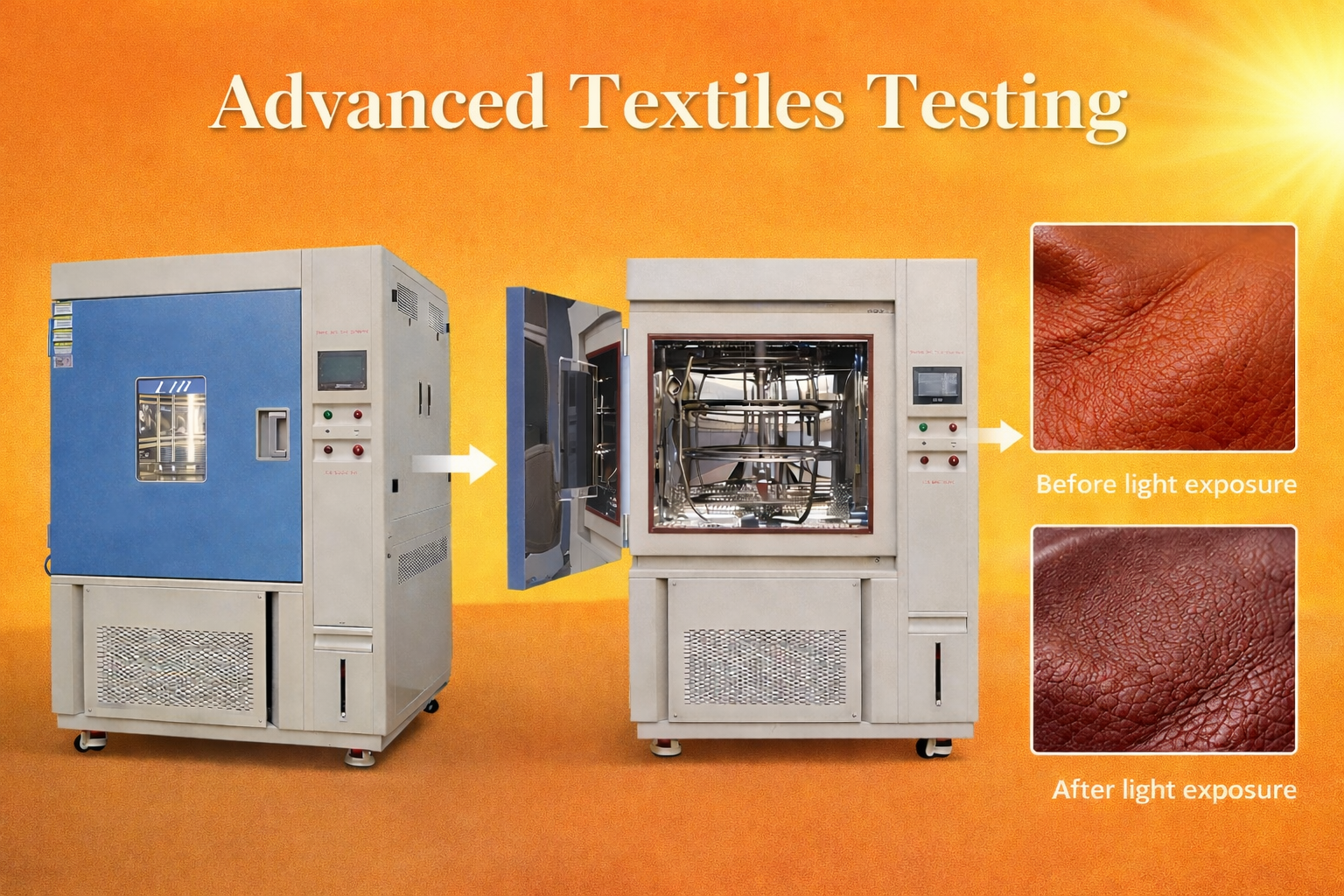 durability with real-world precision. Test sites in Florida and Arizona are particularly valued, since their intense sunlight, elevated humidity, and wide temperature swings put materials through some of the most demanding conditions found anywhere. That said, today's product development timelines leave little room for the months or even years such natural testing typically requires. To keep pace with market demands and get products to launch faster, accelerated weathering has become an essential part of the process.
Yet, a strict technical dilemma complicates this acceleration process for engineering teams. Both main testing technologies simulate sunlight, heat, and moisture effectively. They fundamentally disagree on how to replicate the actual solar spectrum. We designed this comprehensive article to provide a clear, evidence-based framework. Quality Assurance managers and lab procurement teams can use it to evaluate equipment critically. You will discover which testing environment aligns best with your specific material testing standards. You will also learn how to navigate operational constraints efficiently.
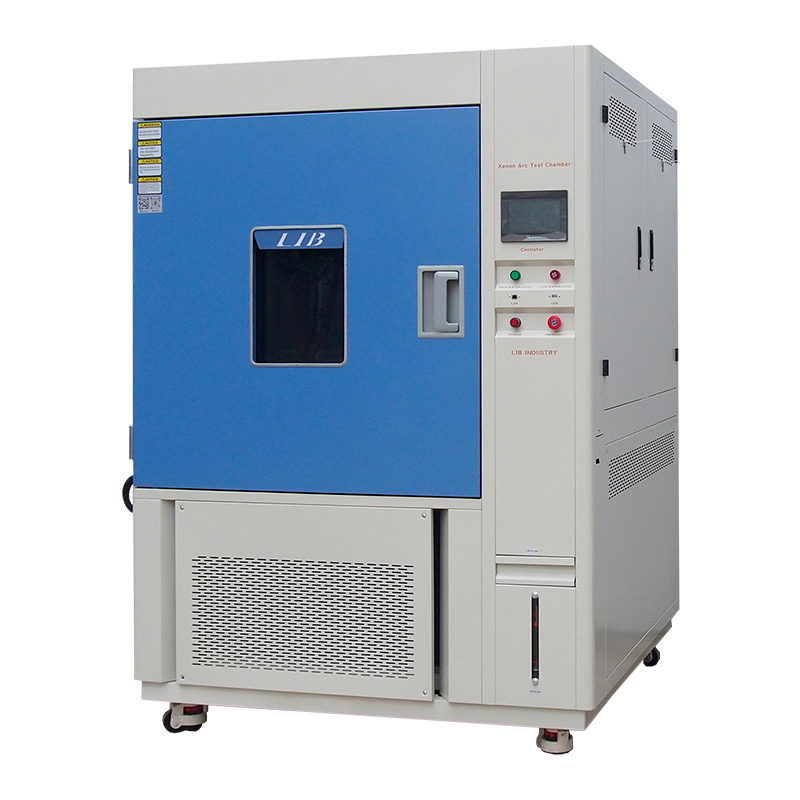
A recent customer from the Philippines shared positive feedback after using the LIB Xenon Arc Test Chamber in real applications. As they reported: “It's okay! It's been running smoothly.” During operation, they also encountered an X6 alarm related to water supply. After guidance, they confirmed that connecting an automatic water supply system effectively solved the issue and ensured stable long-term testing. This real feedback highlights both the reliability and practical usability of LIB equipment in laboratory environments.
① LIB Xenon Arc Test Chamber simulates the full solar spectrum (UV, visible, infrared) and is optimal for testing color fading, visual degradation, and indoor light stability.
② LIB UV Test Chamber isolates shortwave ultraviolet radiation and is highly efficient at reproducing severe physical degradation (cracking, chalking, embrittlement).
③ Moisture Simulation differs: UV chambers excel at mimicking harsh outdoor dew via hot condensation, while Xenon relies on spray systems and controlled relative humidity.
④ Many compliant testing pipelines utilize a "two-tier" strategy, using both machines to evaluate distinct degradation metrics.
|
|
Weathering damage relies on three primary environmental pillars working together. Sunlight drives the initial photochemical degradation at the surface. Heat accelerates these secondary chemical reactions exponentially deep within the material. Water causes severe physical stress through continuous expansion and contraction. Both testing environments address these forces effectively. Their artificial light sources, however, dictate their specific industrial applications.
Xenon arc tester's technology focuses strictly on full-spectrum simulation. It emits broad wavelengths ranging from 295 nm to 800 nm. This massive range captures the holistic impact of natural sunlight. It successfully includes the intense heat generated by infrared radiation. It also captures the distinct visual fading caused by visible light. This makes it a comprehensive tool for overall environmental simulation.
Conversely, fluorescent technology utilizes highly targeted simulation. It focuses almost exclusively on the narrow 300 nm to 400 nm range. By utilizing specialized configurations like a UVA UVB UVC lamp UV Test Chamber, you deliberately target specific shortwave radiation. This narrow energy band causes the vast majority of severe polymer degradation. Engineers generally reserve UVC wavelengths for specialized sterilization testing. They rely primarily on UVA-340 and UVB-313 standard lamps for rigorous outdoor weathering simulation.
You must also carefully consider spectral stability. Fluorescent lamps maintain extremely high spectral stability over long periods. They do not lose their specific wavelength output easily. Xenon arc lamps experience natural, continuous spectral shifts as they age. They lose shortwave intensity rapidly while gaining longwave output. They require sophisticated irradiance control systems. These built-in systems dynamically compensate for continuous degradation to maintain strict testing accuracy.
A UV Test Chamber focuses heavily on evaluating structural integrity. It serves as the ideal testing platform for durable plastics, exterior coatings, and heavy outdoor equipment. In these heavy-duty industries, physical failure matters far more than simple surface aesthetics. You need to know if a structural component will physically snap before you worry about its color fading.
| Model | UV-SI-260 |
|
| Internal Dimension (mm) | 450*1170*500 | |
| Overall Dimension (mm) | 610*1330*1470 | |
| Specimen Holder Size(mm) | 75*150 | |
| Specimen Capacity | 52 Pieces | |
| Irradiation Source | Fluorescent UV lamps (8) - 40 W | |
| Temperature Range | Ambient ~ 90 ℃ ±2℃ | |
| Black Panel Temperature (BPT) | 35 ~ 80 ℃ | |
| Humidity Range | ≥95% RH | |
| Bandwidth | 290 ~ 400nm | |
| Irradiance Control | 0.3~20 W/㎡ | |
| Water Spray Cycle | 1~9999H59M (Adjustable) | |
| Distance of Specimen and lamp | 50mm | |
| Controller | Programmable color LCD touch screen controller, Ethernet connection | |
| Water Supply System | Automatic water supply, Water purification system | |
| Safety Device | Over-temperature Protection; Over-current Protection; | |
| Water Shortage Protection; Earth leakage Protection; Phase Sequence Protection | ||
| Exterior Material | Steel Plate with protective coating | |
| Interior Material | SUS304 Stainless Steel |
Polymer degradation occurs violently at the molecular level. Shortwave ultraviolet energy aggressively attacks the covalent bonds holding plastic molecules together. This bombardment leads directly to rapid photo-oxidation. As oxygen reacts with the broken polymer chains, the material loses its inherent flexibility. Independent academic studies provide clear evidence of this raw destructive power. Researchers recently tested PVC aging over extensive 1,000-hour cycles. They found targeted shortwave exposure drives severe physical property variance. It causes significantly more chemical chain scission than equivalent full-spectrum exposure. Materials become rigid, brittle, and highly prone to structural cracking under minimal stress.
Superior moisture simulation offers another distinct mechanical advantage. Natural outdoor dew destroys materials much faster than simple rain. Dew remains resting on surfaces for 8 to 12 hours daily. It slowly permeates the microscopic layers of industrial coatings and plastics. Fluorescent testing equipment replicates this exact phenomenon naturally. It utilizes heated water baths at the base to create 100 percent relative humidity. This elegant mechanical design forces pure, naturally distilled condensation directly onto the sample surface.
Operational maintenance remains remarkably straightforward, yielding an excellent return on operational efficiency. The simple internal architecture relies on standardized fluorescent tubes. You can use standard tap water safely for the heated condensation baths. The evaporation process naturally leaves impurities behind in the pan. This entirely eliminates complex water purification requirements from your daily laboratory operations.
Xenon arc testing provides essential data for visual aesthetics and superficial surface degradation. You absolutely need this testing method for textiles, automotive interiors, printing inks, and consumer goods. In these specific commercial products, color shifting, dye fading, or undesirable yellowing represent the primary failure modes. Consumers notice these visual defects immediately upon purchase or shortly after installation.
Model | XL-S-750 | 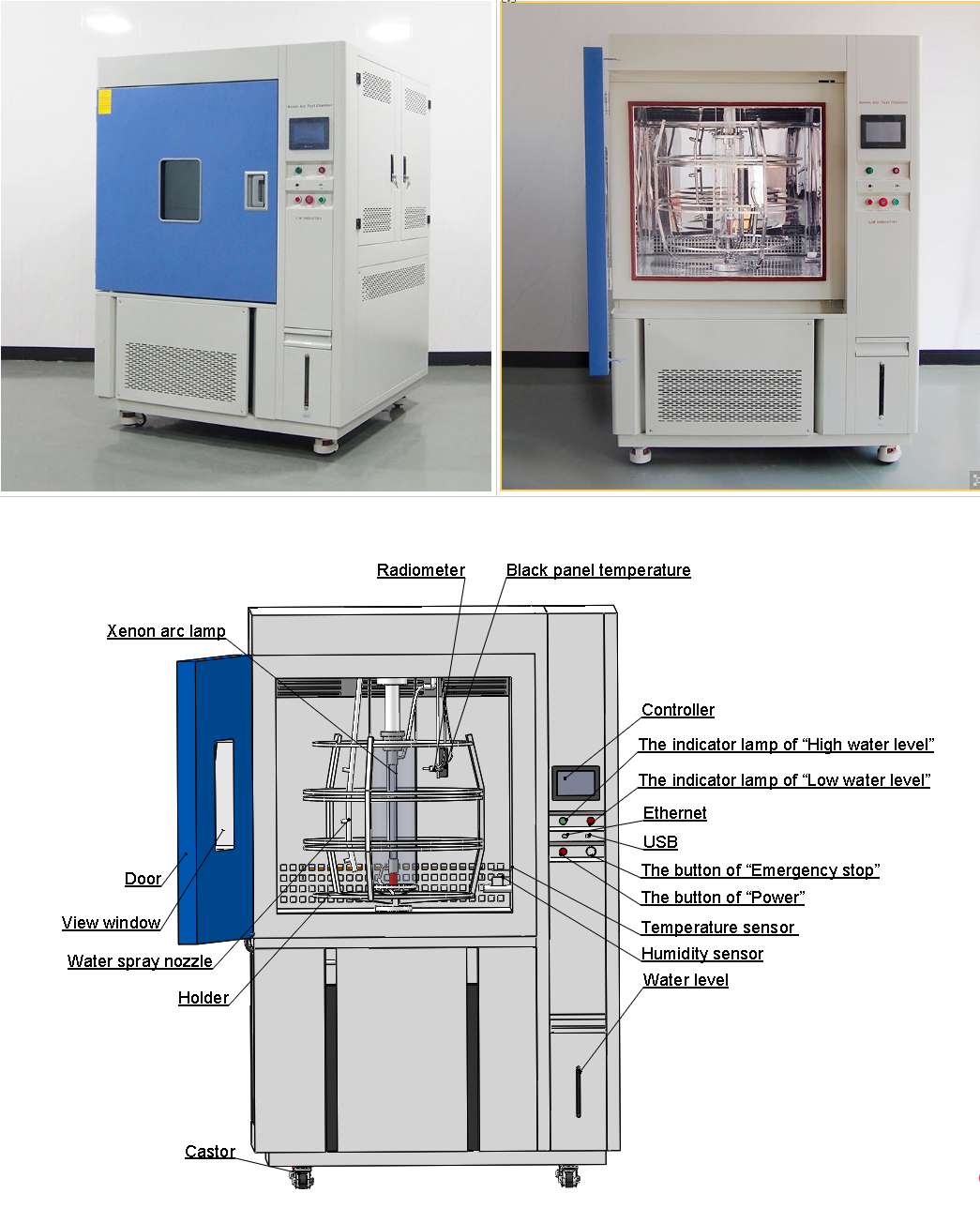 |
Internal Dimension (mm) | 950*950*850 mm | |
Overall Dimension (mm) | 1400*1400*1950 mm | |
Specimen Holder Size(mm) | 95*180 | |
Specimen Capacity | 42pcs | |
Chamber Type | Rotating Holder | |
Irradiation Source | 1 piece of 4500w water-cooled xenon arc lamp | |
Irradiance Range | 35~150 W/㎡ | |
Bandwidth Measurement | 300nm~400nm (340nm or 420nm) | |
Chamber Temperature Range | Ambient ~ 100 ℃ ±2℃ | |
Black Panel Temperature | BPT 35 ~ 85 ℃ ±2℃ | |
Humidity Range | 50% ~ 98% RH | |
Humidity Deviation | ± 5% RH | |
Water Spray Cycle | 1~9999H59M (Adjustable) | |
Controller | Programmable color LCD touch screen controller | |
Water supply system | Automatic water supply, Water purification system | |
Radiometer | UV Radiometer, Tolerance: ±5% | |
Cooling System | Mechanical compression refrigeration system | |
Safety Device | Over-temperature Protection; Over-current Protection; Water Shortage Protection; Earth leakage Protection; Phase Sequence Protection | |
Exterior Material | Steel plate with protective coating | |
Interior Material | SUS304 Stainless steel |
This versatile technology depends heavily on specialized optical filters. Unfiltered lamps naturally emit an excess of dangerous shortwave radiation. This extreme extra radiation does not actually exist at the Earth's surface. You must use precise glass filters to make the generated light realistic and useful for simulation. You install Daylight Filters for direct outdoor exposure testing. You apply Window Glass Filters for indoor products that sit exclusively behind architectural glass.
Advanced environmental control firmly sets full-spectrum testing apart from targeted alternatives. These advanced units offer highly precise Relative Humidity (RH) control throughout the entire testing cycle. This specific precision proves indispensable for moisture-sensitive materials. Textiles, paper products, and specialized inks require strict RH regulation. Without it, the structural test results become wildly inconsistent and unreliable.
These complex systems involve specific operational trade-offs for your laboratory technicians. The internal spray systems strictly require high-purity deionized (DI) water. If you use regular tap water, you risk permanent mineral spotting on your critical test samples. The complex filter systems also demand regular visual inspection and careful physical handling during routine maintenance schedules.
Choosing the right equipment requires matching technical capabilities precisely to your daily operational constraints. You must thoroughly evaluate standard compliance, sample geometry, and desired testing speed. You also need to consider how your technicians will interact with the equipment on a daily basis.
Here is a direct comparison chart to guide your technical decision:
Evaluation Criteria | 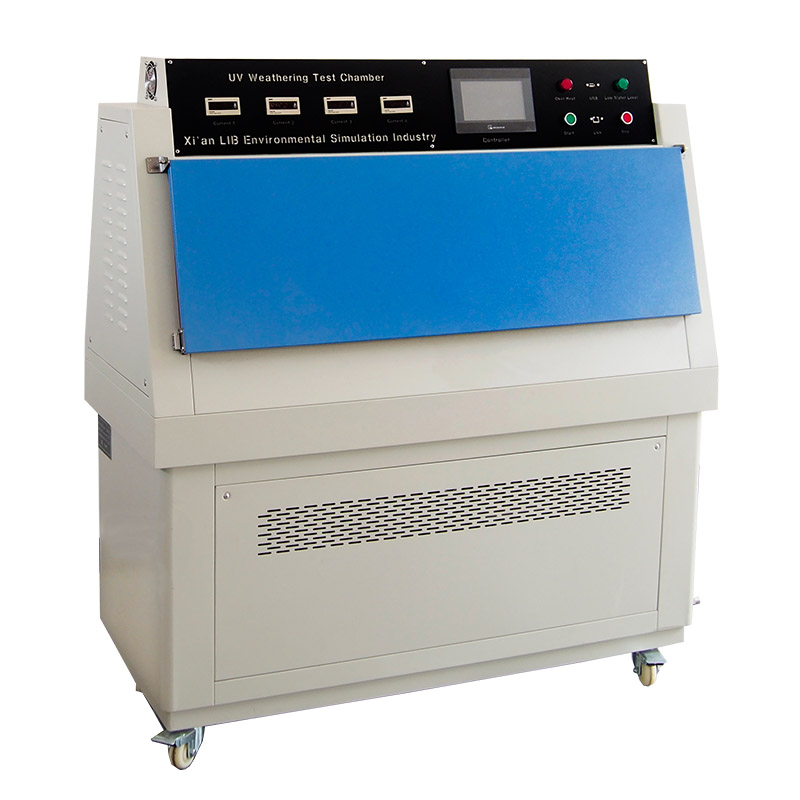 |
|
|---|---|---|
Primary Standard Compliance | ASTM G154, ISO 4892-3 | ASTM G155, ISO 4892-2 |
Best Application | Physical degradation (cracking, chalking, embrittlement) | Color fastness, aesthetic fading, full-spectrum realism |
Moisture Simulation Method | Continuous hot condensation (simulating dew) | Direct water spray and highly precise RH control |
Sample Geometry Suitability | Flat panels and uniformly thin samples | 3D parts, test tubes, irregular and bulky shapes |
Testing Speed vs. Realism | Extremely fast acceleration (lower realism) | Slower acceleration (highly realistic solar match) |
Standard compliance mapping serves as your primary and strictest filter. Regulatory bodies wrote these standards with specific equipment geometries in mind. If your manufacturing contracts require ASTM G154 or ISO 4892-3, you must procure fluorescent testing equipment. The test methods dictate the exact lamp types and condensation cycles. If your contracts dictate ASTM G155 or ISO 4892-2, you absolutely require a full-spectrum unit. You cannot simply substitute one machine for the other and remain compliant with industry auditors.
Sample geometry heavily influences your practical daily choice. Engineers design fluorescent chambers primarily for flat panels. These thin test samples actually form the outer wall of the internal condensation unit. The ambient room air cools the back of the panel, creating the precise temperature differential needed for surface condensation. Flat-bed tray units easily accommodate bulky 3D parts and irregular components. They allow you to test finished products, like entire automotive headlights or thick molded casings, rather than just raw material plaques.
You must also balance raw testing speed against environmental accuracy. UVB lamps provide the fastest possible acceleration for early durability screening. However, they may induce bizarre degradation anomalies rarely seen in nature. Full-spectrum testing moves slower but provides a much closer proxy to realistic, long-term solar damage.
Many engineering labs fall into the dangerous trap of choosing just one testing method. Relying on a single test mechanism leaves dangerous blind spots in your product durability profiles. The most robust, fully compliant testing pipelines utilize a comprehensive "two-tier" strategy.
Here is exactly how you can structure a robust hybrid testing approach to maximize laboratory efficiency:
① Conduct Early Stage Screening: Deploy shortwave fluorescent testing heavily in early R&D phases. You can quickly screen dozens of multiple formulations for sudden physical failure. Monitor the samples closely for cracking, chalking, and severe tensile strength loss.
② Filter Out Weak Formulations: Discard materials failing the rigorous condensation and shortwave exposure. This immediate filtering saves months of valuable laboratory time.
③ Validate Aesthetics: Pass your physically successful prototypes to the full-spectrum unit. You now rigorously validate color stability, dye fading, and overall aesthetic longevity.
④ Confirm Final Compliance: Run required full-spectrum standards tests before final market release. This ensures comprehensive weatherability across all environmental variables.
This highly phased approach maximizes overall lab efficiency. It prevents you from wasting long full-spectrum testing hours on physically weak prototypes. Automotive exterior manufacturers utilize this exact pipeline daily to ensure vehicle paints survive decades of abuse.
The choice between these two distinct technologies is rarely absolute. You are never simply picking which machine is objectively better. You are identifying which specific environmental failure mode makes your product most vulnerable. You must align your testing hardware directly with your greatest material weakness.
Take these actionable next steps to finalize your laboratory procurement strategy:
① Evaluate your exact required testing standards, specifically looking for distinct ASTM or ISO testing mandates in your client contracts.
② Map your primary product risk factors to prioritize either structural physical breakdown or superficial aesthetic fading.
③ Assess your lab's infrastructure capacity to consistently handle DI water storage and perform frequent specialized filter replacements.
④ Demand transparent ISO 9001 quality documentation from all prospective hardware vendors.
⑤ Secure firm written guarantees for robust post-sale support and ongoing irradiance calibration services to ensure test validity.
A: Yes, but the results remain limited. The equipment will show fading caused specifically by shortwave ultraviolet radiation. However, it will completely miss fading triggered by visible light or long-wave ultraviolet radiation. This limitation makes it much less comprehensive than full-spectrum methods for determining true colorfastness.
A: Fluorescent tubes generally maintain optimal performance for approximately 5,000 hours of use. Xenon arc lamps experience faster degradation. They typically require replacement every 1,500 to 1,600 hours. The exact lifespan depends heavily on the chosen wattage and the specific irradiance intensity used during your tests.
A: No. Xenon units strictly require high-purity deionized (DI) water for their spray mechanisms. This prevents mineral deposits from ruining test samples. Conversely, a condensation-based mechanism naturally distills regular tap water as it evaporates. This brilliant design entirely eliminates the need for strict water pre-treatment.
This article clearly explains the differences between UV and Xenon test chambers, helping you choose the right equipment based on standards, applications, and operational requirements. Looking for a reliable weathering test solution? Contact LIB Industry today for expert support, customized configurations, and fast global delivery.