Views: 0 Author: Site Editor Publish Time: 2025-01-06 Origin: Site


The European Union has introduced an updated regulation on Global Warming Potential (GWP) under EU 2024/537, which requires all industrial equipment entering the EU market to use refrigerants with a GWP value not exceeding 150, effective from January 1, 2024. This regulation significantly accelerates the global transition toward low-carbon technologies and places new compliance demands on the environmental testing industry. In response, LIB Industry has proactively upgraded its entire product portfolio with environmentally responsible refrigeration systems to ensure full compliance with the latest EU requirements.
GWP (Global Warming Potential) is a metric used to measure the environmental impact of refrigerants compared to carbon dioxide. Historically widely used refrigerants such as R404A (GWP 3922) and R23 (GWP 14,800) have already been phased out in Europe due to their high environmental burden. The newly enforced 150 GWP threshold aligns with the EU's broader climate target of reducing greenhouse gas emissions by 55% by 2030 compared to 1990 levels. As a result, industries relying on high-precision environmental simulation systems—particularly aerospace, automotive, and electronics—are now required to transition toward low-GWP cooling technologies.
Although certain refrigerants like R449A (GWP 1396) are still permitted in some applications, they remain far above the new regulatory limit. Ultra-low temperature refrigerants such as R508B (GWP 13,504) also present additional challenges, requiring strict leakage control and system-level safety design. LIB emphasizes that regulatory compliance is no longer achieved through refrigerant replacement alone—it requires a complete redesign of refrigeration architecture, energy optimization strategies, and system efficiency improvements.
To address these challenges, LIB has developed next-generation refrigerant solutions capable of achieving ultra-low temperatures below -70°C while significantly improving energy efficiency. All temperature and humidity chambers and thermal testing systems from LIB now fully comply with the ≤150 GWP requirement and have been successfully deployed in European markets. This engineering approach ensures a balance between environmental responsibility, operational safety, and high-performance testing capability, helping customers adapt to future regulatory changes with confidence.
In response to the EU's new GWP 150 limit, LIB has fully upgraded the refrigeration systems in its temperature and humidity chambers. These systems not only meet the low-GWP requirement but also deliver optimized performance and energy efficiency.
Wide Low-Temperature Range: Innovative refrigerant blends allow temperatures below -70°C, ensuring reliable ultra-low temperature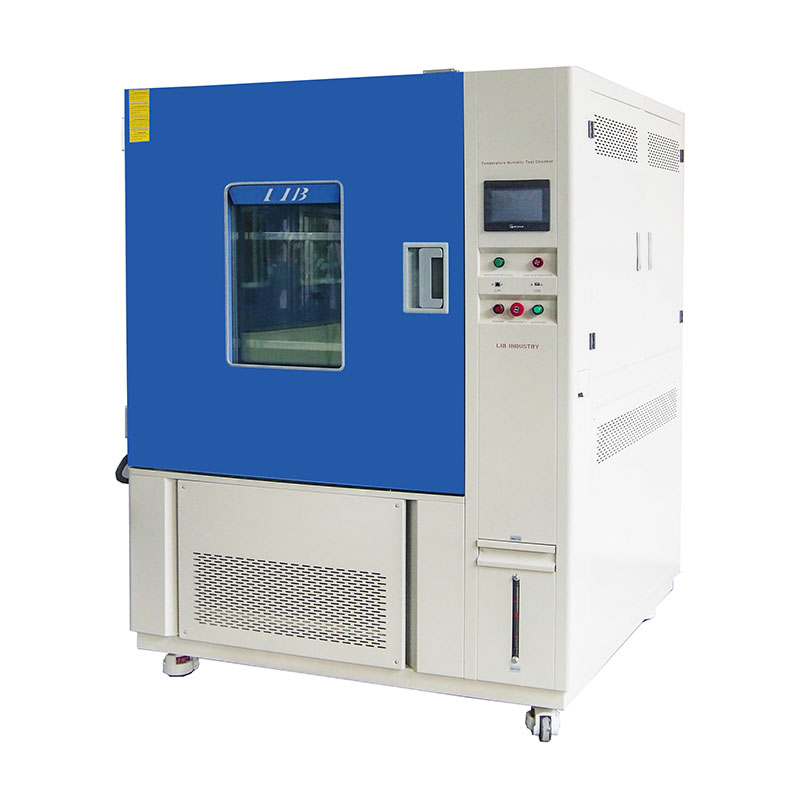 testing. Accurate Temperature Control: Combined with PID control and high-precision PT100 sensors, temperature stability reaches ±0.5°C and humidity is maintained within ±2.5% RH. Fast Response: The refrigeration system supports rapid heating and cooling, completing a -40°C to +85°C cycle in under 45 minutes, significantly reducing test times.
Eco-Friendly Refrigerants: All chambers use ≤150 GWP refrigerants, balancing environmental safety and high performance. Energy-Efficient Engineering: 100 mm polyurethane insulation, variable-speed compressors, and adjustable fans reduce energy consumption by 20–30%, lowering lab operating costs. Water Reuse System: Built-in humidity systems recycle condensate, reducing water consumption by up to 70% while extending humidifier lifespan.
Uniform Conditions: Multi-directional centrifugal fans maintain even temperature and humidity, keeping internal variation under 1.5°C so all samples experience the same environment.
Durable Construction: SUS304 stainless steel interior and A3 steel exterior with protective coating resist corrosion and impact, while remaining easy to clean.
User-Friendly Operation: A color touchscreen with multi-language interface stores up to 120 test programs with 100 steps each, allowing quick program switching without reconfiguration.
|
| 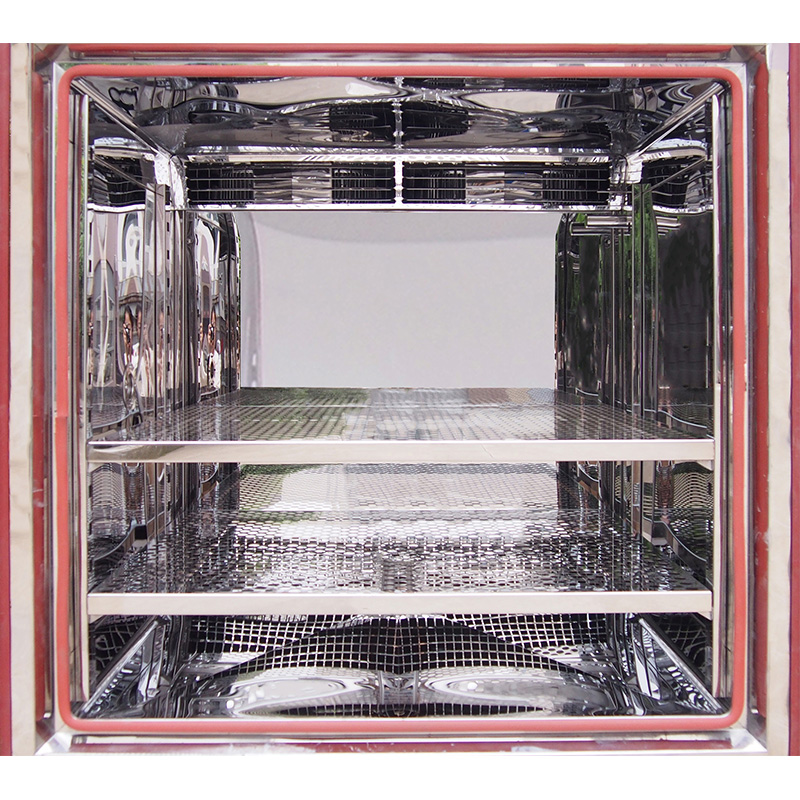 | 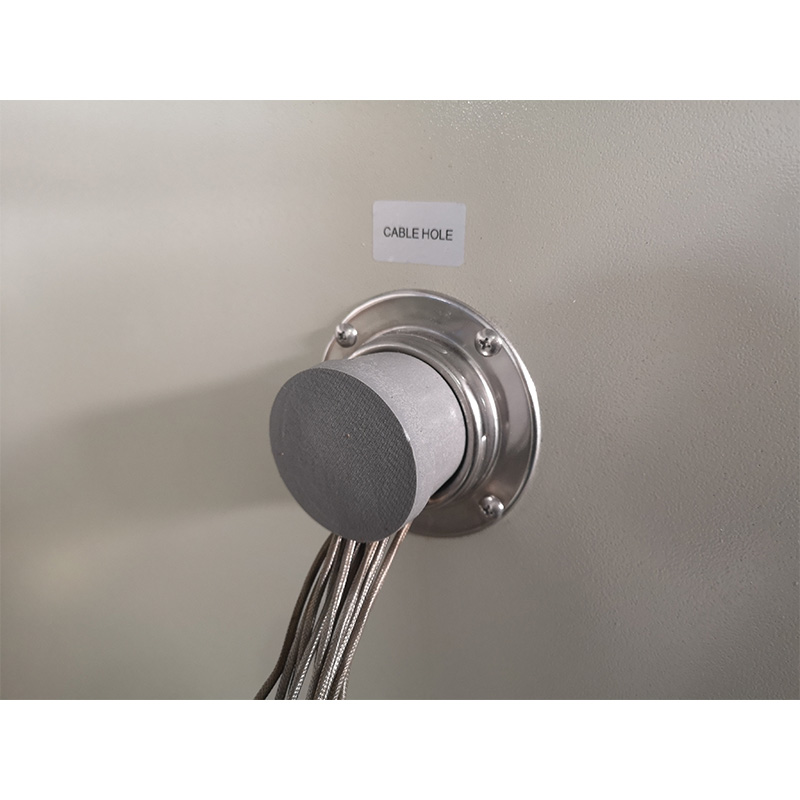 |
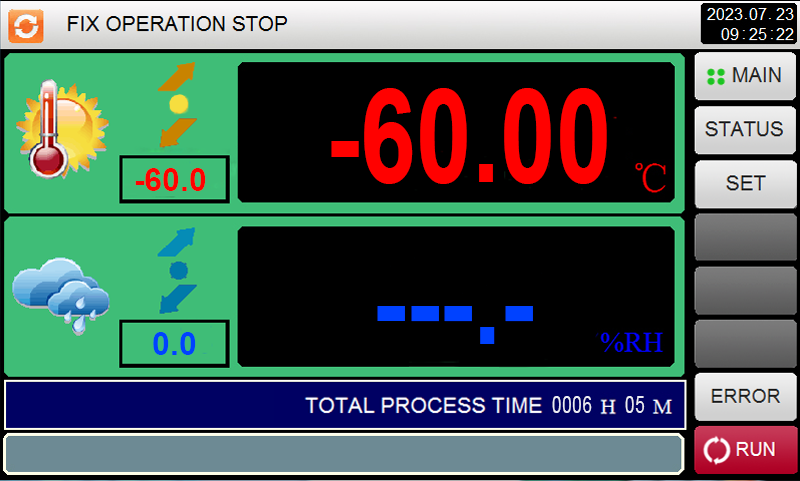
Touch screen controller Holds up to 120 test programs with 100 steps each, making it well suited for complex multi‑stage profiles such as temperature–humidity shock or soak cycles. | The compressor The compressor rapidly removes heat from the chamber interior, achieving a cooling rate around 1 °C / 5 °Cper minute. | Robust Anti-Corrosion Workroom The chamber's interior is built from SUS304 stainless steel, offering outstanding resistance to heat and corrosion for long-lasting performance. | Integrated Power Access hole Allows test specimens to stay powered during experiments, enabling performance evaluation under varying temperature and humidity. Standard 50 mm diameter; quantity and size customizable. |
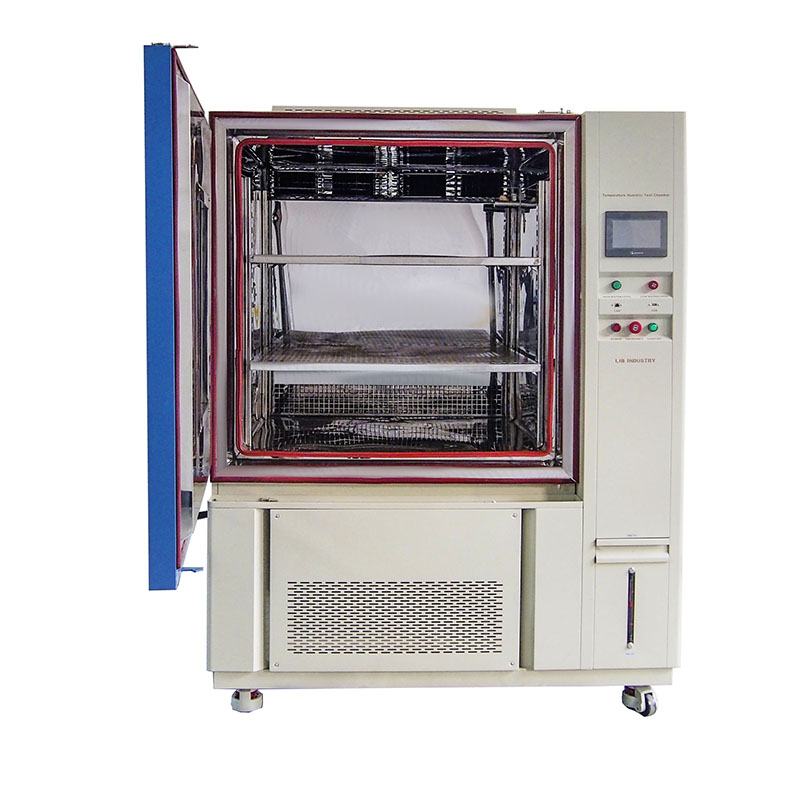  | |||||
Temperature range | -20℃ ~+150 ℃ | ||||
Low type | A: -40℃ B:-70℃ C -86℃ | ||||
Humidity Range | 20%-98%RH | ||||
Temperature deviation | ± 2.0 ℃ | ||||
Heating rate | 3 ℃ / min | ||||
Cooling rate | 1 ℃ / min | ||||
Controller | Programmable color LCD touch screen controller, Multi-language interface, Ethernet , USB | ||||
Refrigerant | R404A, R23 | ||||
Exterior material | Steel Plate with protective coating | ||||
Interior material | SUS304 stainless steel | ||||
Standard configuration | 1 Cable hole (Φ 50) with plug; 2 shelves | ||||
Timing Function | 0.1~999.9 (S,M,H) settable | ||||
1. Full Closed-Loop Control: Every LIB chamber features a fully closed-loop control system that continuously monitors key parameters, including temperature, humidity, compressor performance, and airflow. This real-time feedback ensures that the chamber maintains stable conditions over long testing periods. Whether running a few hours or several days, the system automatically compensates for fluctuations, providing highly reliable and repeatable results.
2. Intelligent Safety Protection: Safety is built into every chamber. Advanced alarms detect overtemperature, overhumidity, refrigeration faults, or even if the door is accidentally opened during a test. These safeguards protect both the equipment and your test data, preventing interruptions or damage. For laboratories conducting critical experiments, this intelligent protection ensures peace of mind and consistent data integrity.
3. Flexible Capacity: LIB chambers are designed to adapt to a wide variety of test specimens. Adjustable shelving, sliding rails, and hanging fixtures allow easy customization for small, delicate electronic boards or large automotive components. Users can quickly reconfigure the interior to match changing testing needs, making the chambers highly versatile for multiple industries.
4. Uniform Conditions Across All Samples: Multi-directional fans and optimized airflow design ensure that every corner of the chamber experiences the same environment. This prevents hot or cold spots, guaranteeing that both small and large samples are tested under identical conditions, which is crucial for precision experiments and quality assurance.
5. User-Friendly Operation: While packed with advanced technology, LIB chambers remain easy to operate. Intuitive touchscreen controls allow users to program complex temperature and humidity cycles, store multiple protocols, and monitor progress in real time. This combination of intelligence and simplicity makes it easier for engineers and QA specialists to focus on testing rather than troubleshooting equipment.
LIB's temperature and humidity chambers not only comply with the EU's ≤150 GWP regulation but also offer precise control, fast cycling, energy efficiency, and versatile configurations, providing reliable, repeatable results for R&D, quality assurance, and certification. From aerospace to automotive to pharmaceuticals, LIB chambers ensure every test is accurate, stable, and future-proof.
Ensure your lab stays compliant, efficient, and future-ready. Contact LIB Industry today to request a live demo, discuss customization options, or learn more about our sustainable, high-precision environmental test solutions.