Views: 0 Author: Site Editor Publish Time: 2026-05-29 Origin: Site


Natural outdoor weathering exposes materials to unpredictable elements over several years. This waiting game makes accelerated lab testing extremely critical for fast-paced product development. Manufacturers simply cannot afford delayed engineering timelines. However, selecting the wrong testing equipment creates severe bottlenecks across your entire organization. You risk facing rejected compliance audits. You might record highly inaccurate failure predictions. Poor hardware choices ultimately derail your entire quality assurance process.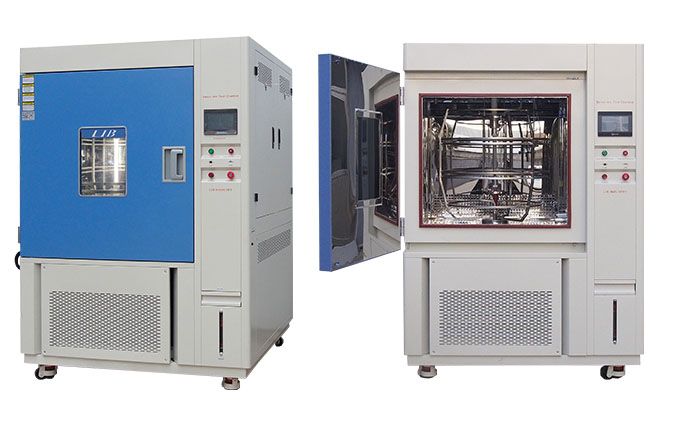
Customer Feedback from Vietnam
"The Xenon Test Chamber works stably. Thank you so much for this document."
Following LIB's preventive maintenance guidance and maintenance checklist, the customer confirmed the xenon test chamber has been operating reliably and stably in daily testing applications.
— Mr. Hùng, Vietnam
This guide clearly breaks down the essential technical parameters you must evaluate. You will discover exactly how to align chamber capacities to your specific sample geometries. We also reveal how to assess core weathering controls. You will learn to navigate the complexities of irradiance, heat, and moisture simulation. Our goal involves helping you make a confident, standard-compliant procurement decision without unnecessary guesswork.
1. Start your selection process by identifying the specific ASTM or ISO standards required by your industry (e.g., ASTM G155, ISO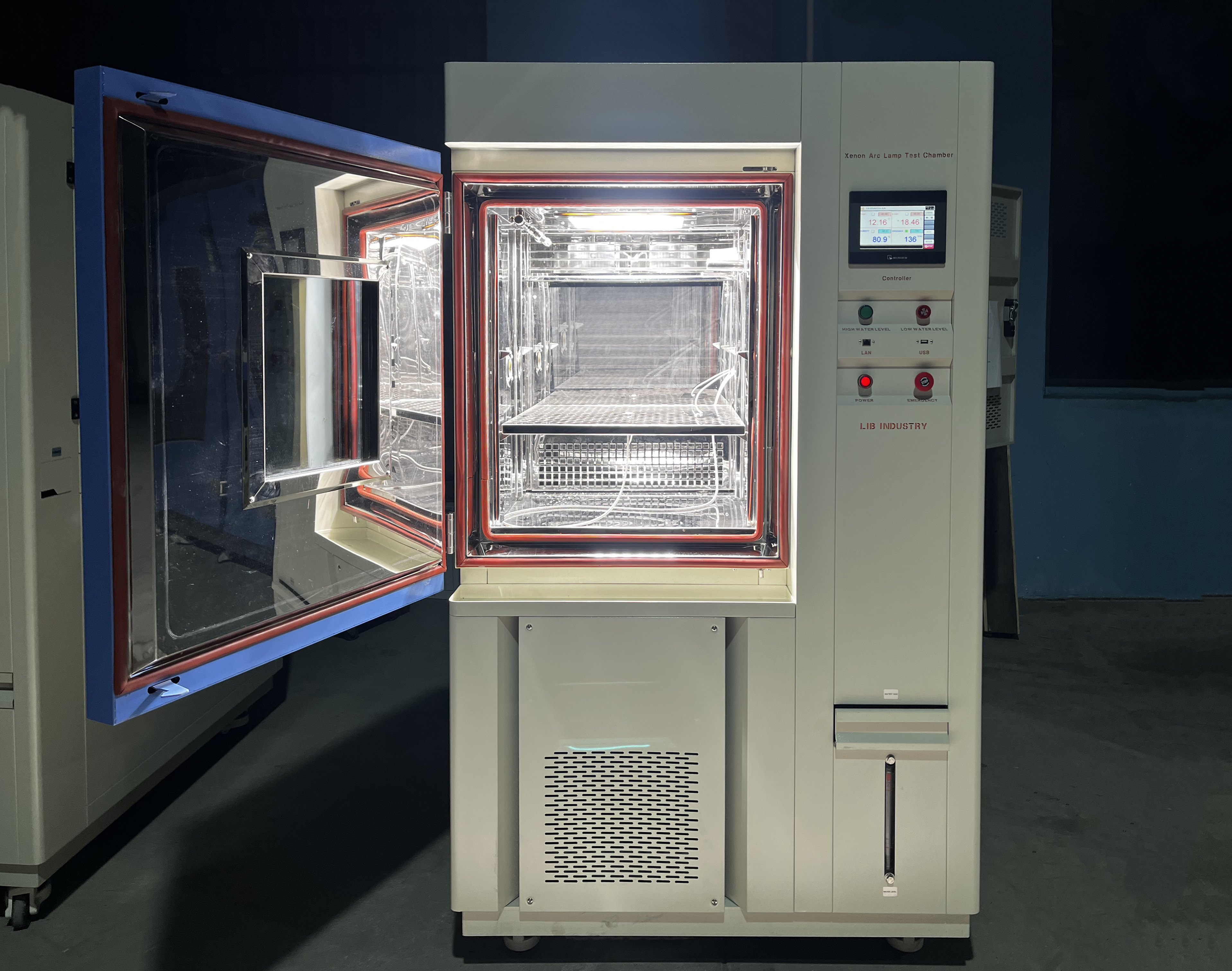 4892-2).
2. Choose chamber architecture (flat array→ vs. rotating rack) based on your sample geometry (flat coupons vs. 3D components) and testing volume.3. Evaluate the "Iron Triangle" of weathering: irradiance control precision, black panel temperature stability, and moisture delivery.
4. Prioritize Total Cost of Ownership (TCO) over initial purchase price by calculating ongoing expenses for xenon lamp replacements, optical filters, and cooling mechanisms (air-cooled vs. water-cooled).
Your equipment must satisfy strict supply chain requirements. Regulatory bodies demand proven accuracy from your lab. Chamber specifications must map directly onto your intended testing protocols. If they do not align perfectly, you risk invalidating months of expensive testing data.
General materials and plastics rely heavily on core baseline standards. You should look for verified equipment compliance against ASTM G155. You must also check for ISO 4892-2 capabilities. These specific frameworks dictate the minimum hardware capabilities necessary for acceptable degradation studies. They outline exact light exposure cycles. They define required optical filters. They set strict temperature tolerances.
Different industries enforce highly specific protocols. You must fully understand your sector's unique technical demands.
1. Textiles: The textile industry relies heavily on ISO 105-B02. This standard demands specific irradiance wavelengths. It also requires incredibly tight humidity controls to evaluate colorfastness accurately.
2. Coatings & Paints: Paint formulations require rigorous validation. You will frequently encounter ASTM D3424. You might also run ISO 11341 or ISO 16474. These protocols test against blistering, cracking, and severe gloss loss.
3. Automotive: Automotive manufacturers mandate strict OEM-specific requirements. These often demand complex cycles alternating between intense light and dark phases. They dictate precise temperature ramp rates. You will need tailored optical filters to simulate automotive interiors behind window glass.
| Industry Segment | Key Testing Standard | Primary Simulation Focus |
|---|---|---|
| General Plastics | ASTM G155 / ISO 4892-2 | Outdoor sunlight exposure, moisture degradation, and polymer embrittlement. |
| Textiles & Apparel | ISO 105-B02 | Colorfastness, specific wavelength light tracking, and ambient humidity control. |
| Paints & Coatings | ISO 16474 / ASTM D3424 | Surface blistering, chalking, gloss retention, and delamination. |
| Medical Packaging | ASTM F1980 | Accelerated aging, shelf-life performance, and material integrity over time. |
You must grasp the subtle differences between generic weathering and specific lightfastness testing. Weathering involves prolonged exposure to moisture, severe heat, and broad-spectrum light. Lightfastness isolates the material's reaction to intense visible and UV light. It usually omits heavy water spray cycles. Knowing this difference helps you avoid purchasing Xenon Test Chamber.
Identify the exact ASTM or ISO protocol required by your primary client.
Request documented proof of hardware compliance from the manufacturer.
Ask for detailed ISO 17025 accredited caLIBration certificates before shortlisting any vendor.
Verify sensor compatibility for your required testing wavelengths (340nm vs 420nm).
Physical layout completely dictates testing capabilities. It determines exposure uniformity across different geometries. We generally divide structural designs into two main categories. You will choose between rotating rack configurations and flat array systems. This crucial choice defines your daily operational flexibility.
Rotating Rack (Cylindrical Design)
The rotating rack represents a traditional cylindrical layout. It works perfectly for high volumes of standardized samples. You might load hundreds of flat textile swatches simultaneously. You could evaluate massive batches of thin paint panels.
Legacy testing standards often require this exact traditional design. It delivers excellent irradiance uniformity naturally. Samples constantly rotate around one central light source. They receive equal exposure over time. However, it offers limited physical flexibility. You cannot easily accommodate bulky items. Uniquely shaped 3D objects rarely fit inside the tight sample clips. Rack systems force you to use specific metal frames. You slide the material into a rigid holder. This limitation frustrates engineers testing finished consumer goods.
Flat Array (Static Table Design)
A flat array features a static horizontal table located beneath multiple overhead lamps. It perfectly suits 3D parts. Thick components fit easily inside. Diverse geometries slide right in without any hassle. You will absolutely need this design for testing automotive lenses. Molded plastics and bulky packaging also require this open layout.
It provides highly flexible sample placement. You easily accommodate varying material thicknesses side-by-side. Users can drop large components directly onto the testing tray. This freedom saves countless hours during batch changeovers. Conversely, this setup requires advanced reflector systems. Manufacturers must install multiple lamps. These engineering additions ensure uniform irradiance across the entire flat plane. Maintenance slightly increases due to the multi-lamp configuration.
| Feature Category | Rotating Rack System | Flat Array System |
|---|---|---|
| Best Suited For | Flat swatches, thin coupons, paint panels. | 3D parts, thick components, full products. |
| Sample Mounting | Vertical metal clips and rigid frames. | Horizontal placement directly on a wire grid. |
| Irradiance Uniformity | Achieved mechanically via physical rotation. | Achieved optically via multiple lamps and reflectors. |
| Throughput Volume | Exceptionally high for thin, standardized items. | Moderate to high depending on part footprint. |
Consider the airflow dynamics within the testing environment. Rotating racks typically utilize vertical airflow patterns. The conditioned air sweeps evenly across the moving carousel. This ensures every single clip receives identical thermal exposure. Flat arrays often employ horizontal or dual-direction airflow. They require precise baffling. Baffles prevent hot spots from forming near the edges of the flat tray. You must ensure your chosen Xenon Test Chamberactively manages these thermal dynamics to prevent sample warping.
Accelerated weathering only holds predictive value if properly controlled. You must simulate full-spectrum sunlight accurately. You need precise heat application. Moisture levels must replicate real-world environments flawlessly. Furthermore, these variables cannot drift. They must remain incredibly stable over thousands of continuous testing hours. We call this the Iron Triangle of weathering.
Light intensity naturally degrades as bulbs age. You must look for closed-loop feedback systems. These advanced sensors constantly monitor specific wavelengths. They typically track 340 nm, 420 nm, or broad TUV bands.
Closed-loop systems rely on sophisticated logic controllers. The optical sensor constantly reads the actual light output. It sends digital signals back to the main controller. The controller then incrementally increases wattage to the aging bulb. This micro-adjustment happens continuously. It completely eliminates manual guessing. You also need precise optical filter options. Daylight filters simulate direct outdoor sunlight. Window glass filters mimic indoor sunlight exposure. These filters ensure your testing equipment accurately matches the product's final end-use environment.
Monitoring internal air temperature alone proves totally insufficient. Darker samples absorb significantly more heat than lighter ones. You must ensure the equipment utilizes precise Black Panel Temperature (BPT) sensors. Some standards strictly require Black Standard Temperature (BST) sensors. You will likely need both insulated and uninsulated variants.
Understanding thermal sensors prevents ruined testing batches. A standard BPT sensor consists of a flat metal plate. It has a thermometer attached directly to the exposed side. It completely lacks rear insulation. A BST sensor adds a thick insulating plastic layer to the back. This insulation forces the sensor to retain heat longer. A BST reading typically runs higher than a BPT reading under identical light. You must know exactly which sensor your protocol demands. Mixing them up ruins your thermal profiles completely.
Moisture causes severe physical damage to outdoor products. You must carefully assess the internal water delivery mechanism. Does it support direct front spray? Can it execute complex back spray functions? Does it provide precise relative humidity (RH) control?
Moisture delivery relies on precision spray nozzles. They must distribute water in a fine, atomized mist. Droplet size matters immensely. Huge water drops pool heavily on the sample. They cause uneven cooling and distort data. Fine mist perfectly mimics morning dew. Dew actually causes the most severe outdoor moisture damage. It penetrates deep into microscopic material pores over time.
Poor water purity ruins tests. It leaves heavy mineral calcification on samples. It permanently blocks internal chamber walls. This mineral build-up invalidates your test results completely. You must verify water purity requirements. Always check if the system includes a dedicated water purification setup. Strict testing standards demand deionized (DI) or reverse osmosis (RO) water.
Model | XL-S-750 |
|
Internal Dimension (mm) | 950*950*850 mm | |
Overall Dimension (mm) | 1400*1400*1950 mm | |
Specimen Holder Size(mm) | 95*180 | |
Specimen Capacity | 42pcs | |
Chamber Type | Rotating Holder | |
Irradiation Source | 1 piece of 4500w water-cooled xenon arc lamp | |
Irradiance Range | 35~150 W/㎡ | |
Bandwidth Measurement | 300nm~400nm (340nm or 420nm) | |
Chamber Temperature Range | Ambient ~ 100 ℃ ±2℃ | |
Black Panel Temperature | BPT 35 ~ 85 ℃ ±2℃ | |
Humidity Range | 50% ~ 98% RH | |
Humidity Deviation | ± 5% RH | |
Water Spray Cycle | 1~9999H59M (Adjustable) | |
Controller | Programmable color LCD touch screen controller | |
Water supply system | Automatic water supply, Water purification system | |
Radiometer | UV Radiometer, Tolerance: ±5% | |
Cooling System | Mechanical compression refrigeration system | |
Safety Device | Over-temperature Protection; Over-current Protection; Water Shortage Protection; Earth leakage Protection; Phase Sequence Protection | |
Exterior Material | Steel plate with protective coating | |
Interior Material | SUS304 Stainless steel |
Lab throughput requirements dictate optimal equipment sizing. You must carefully match internal capacity to your daily workflow. Purchasing an oversized unit wastes valuable floor space. Buying an undersized unit creates frustrating testing bottlenecks.
Benchtop models feature a highly compact footprint. They typically utilize an economical single-lamp configuration. These units perfectly suit small research teams. Budget-constrained university labs favor them heavily. They work brilliantly for early-stage exploratory testing. You can run quick validation checks before committing to larger commercial production runs. They plug into standard outlets easily.
Mid-size chambers represent the core industry standard. They dominate textile quality assurance labs globally. Coating manufacturers rely on them heavily for consistent daily batches. They offer a strong balance between footprint and testing volume. Most mid-size units handle continuous 24/7 operation seamlessly. They require dedicated floor space but avoid massive utility upgrades.
Full-size chambers feature massive testing volumes. They utilize robust multi-lamp architectures. Engineers design these huge systems for high-throughput commercial labs. Enterprise manufacturing facilities require them for accelerated time-to-market strategies. They easily handle multiple large 3D components simultaneously.
Before buying large units, you must verify your facility's utility capabilities. Full-size chambers draw massive amounts of electricity. They often require dedicated three-phase power drops. You cannot simply plug them into standard wall outlets. They also demand robust plumbing infrastructure. High-capacity spray cycles consume dozens of liters of purified water daily. You will need dedicated drain lines routed directly under the machine. Do not overlook these facility requirements. Upgrading a lab's electrical panel costs heavily and severely delays your equipment installation timeline.
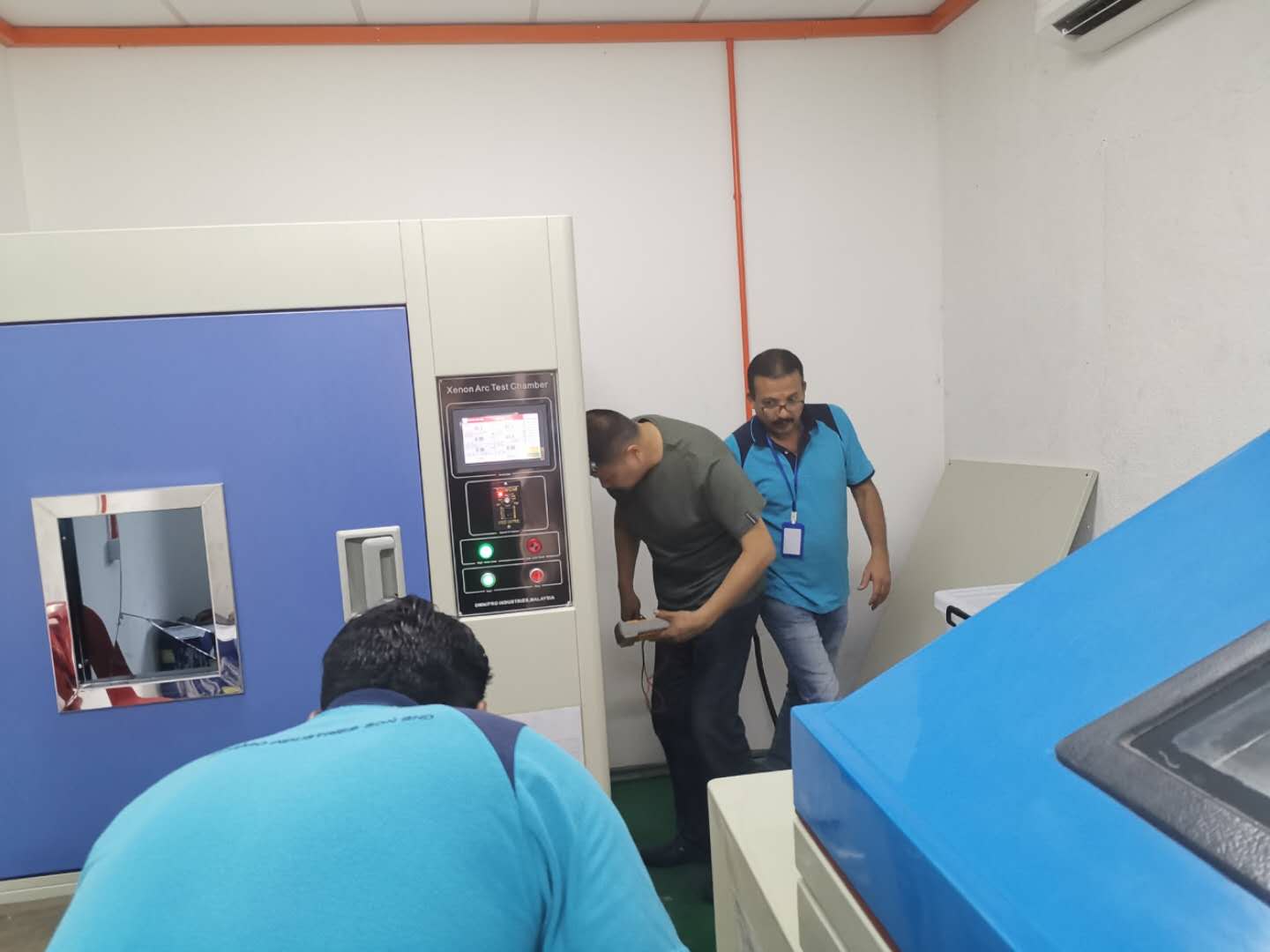
LIB recently provided after-sales maintenance and operator training for a Xenon Arc Weathering Test Chamber in Malaysia. Our engineers inspected key systems, verified testing performance, and trained laboratory staff on operation, caLIBration, and preventive maintenance. The customer expressed satisfaction with the chamber's stable performance, user-friendly operation, and LIB's professional technical support, ensuring reliable weathering testing in accordance with ASTM G155 and ISO 4892-2.
You must calculate your daily sample throughput accurately. Track exactly how many separate test protocols you run concurrently. Evaluate your average sample dimensions. If your lab frequently faces testing bottlenecks, upgrading makes perfect sense. Investing in one high-capacity unit often provides faster results than managing multiple benchtop models. It centralizes your crucial caLIBration efforts. It vastly reduces overall operator handling time.
Choosing your ideal testing equipment requires careful technical evaluation. You want to secure a highly reliable system. It must provide actionable, standardized data for your engineering teams consistently.
You must tightly align equipment architecture to your typical sample types. Flat arrays handle bulky 3D items flawlessly. Rotating racks completely dominate flat swatch testing. You also must ensure strict adherence to required ISO and ASTM standards. Evaluating irradiance precision, heat stability, and moisture control guarantees accurate product failure predictions. This careful, metric-driven approach mitigates the serious risk of poor laboratory investments.
Next Steps: Audit your laboratory's current daily sample throughput. List out all mandatory compliance standards demanded by your clients. Request detailed caLIBration capabilities from your shortlisted manufacturers. Verify utility and water purity requirements before finalizing any purchase order.
A: Test durations range from a few hundred to several thousand hours. Most laboratories run these machines 24/7 to accelerate the weathering process. The exact timeframe depends entirely on your specific industry standard. It also relies heavily on the desired product lifespan you intend to simulate.
A: Xenon equipment simulates the complete spectrum of sunlight. This includes ultraviolet, visible, and infrared light. It works perfectly for testing color fading and visual degradation. UV equipment only simulates short-wave ultraviolet light. It focuses strictly on physical property loss like cracking and severe embrittlement.
A: No. Strict international testing standards require high-purity water. You must use deionized (DI) or reverse osmosis (RO) water. Tap water contains minerals. These minerals leave heavy deposits on your samples and sensitive optical filters. Mineral build-up ultimately distorts your test results and damages the equipment.
Whether you are selecting your first Xenon Test Chamber or upgrading an existing weathering laboratory, LIB's technical team can help you identify the right configuration based on your testing standards, sample types, and throughput requirements. Contact LIB Industry today to discuss your weathering testing application and receive a customized Xenon Test Chamber solution.