
Views: 0 Author: Site Editor Publish Time: 2026-04-29 Origin: Site


Products do not fail only in ideal lab conditions. They fail in heat, cold, humidity, rapid temperature changes, and long-term exposure to harsh environments. An environmental test chamber is designed to recreate those conditions in a controlled space, so manufacturers, engineers, and labs can verify how a product performs before it reaches the market.
A recent customer from Norway shared positive feedback after putting the LIB Environmental Test chamber into operation. As they noted: “Everything is proceeding smoothly now. The machine is now operative…” During use, they also raised a practical question about program cycle settings after running a 100-cycle test, demonstrating both stable performance and active real-world application. This reflects how the chamber not only operates reliably but also supports flexible, programmable testing in daily lab work.
In simple terms, an Environmental Test chamber simulates real-world environmental stress. It helps teams evaluate reliability, durability, safety, and compliance by exposing materials or products to specific temperature, humidity, or cycling conditions.
An environmental test chamber creates stable or changing climate conditions around a test sample. Depending on the model, it can control:

① High temperature
② Low temperature
③ Humidity
④ Temperature cycling
⑤ Heat and humidity combinations
⑥ Rapid heating and cooling changes
This allows engineers to observe whether a product still works as expected after environmental exposure. For example, a battery may need to remain stable at low temperatures, while an electronic component may need to resist high heat and humidity without corrosion, deformation, or performance loss.
Environmental testing is used to reduce risk before a product is released, installed, or certified. In practical terms, it helps answer questions such as:
Will this product still function after exposure to heat or freezing conditions?
Will moisture affect internal components or insulation?
Can the material withstand repeated thermal expansion and contraction?
Does the product meet relevant industry test requirements?
Without this kind of validation, manufacturers may face product failures, returns, safety issues, or non-compliance during certification.
An environmental test chamber uses a combination of mechanical and electrical systems to create and maintain the required test conditions. The exact configuration depends on the chamber type, but the core working principle is straightforward.

Electric heaters raise the internal temperature to the programmed setpoint. The controller adjusts power output to maintain temperature stability during the test.
A refrigeration system lowers the chamber temperature. In many chambers, this is done through mechanical compression cooling, which allows stable low-temperature testing.
In temperature and humidity chambers, water is added in a controlled way to reach the target relative humidity. This is especially important for corrosion, storage, and material performance testing.
Fans distribute conditioned air evenly through the workspace. Good airflow design helps reduce hot spots or cold zones and improves test consistency.
A programmable controller allows users to set temperature, humidity, hold times, and ramp rates. More advanced systems can store multi-step test profiles and connect through Ethernet for monitoring or data logging.
An Environmental Test chamber is used across many industries because climate-related stress affects almost every product category. Common test samples include:
Circuit boards, sensors, connectors, displays, and housings are tested for thermal stress, condensation effects, and long-term reliability.
Lithium batteries, battery packs, and energy storage components often require controlled temperature and humidity testing during development and compliance validation.
Automotive electronics, interior components, connectors, seals, and materials are commonly tested for resistance to temperature cycling and humidity exposure.
Photovoltaic modules, luminaires, and related materials are often tested under controlled environmental conditions to evaluate long-term durability.
Plastics, coatings, adhesives, rubber parts, and composite materials may all behave differently under heat, cold, or moisture. Chamber testing helps identify these changes early.
Not all chambers are the same. Choosing the right type depends on the product, the test objective, and the required standard.

This type focuses only on heating and cooling. It is suitable for thermal aging, low-temperature storage, and temperature cycling without humidity control.
This is one of the most widely used options. It controls both temperature and relative humidity, making it suitable for electronics, batteries, materials, and accelerated reliability testing.
A benchtop chamber is a compact version designed for small samples and limited lab space. It is useful when users need full temperature or temperature-humidity testing capability without installing a large floor-standing unit.
For example, a benchtop model may offer:
Small footprint for laboratory use
Temperature ranges from sub-zero conditions up to high heat
Humidity control for combined climate testing
Programmable profiles for repeatable test procedures
Lower noise and easier integration into research environments
This makes benchtop units especially practical for R&D labs, quality control teams, and small-batch product validation.
Walk-in chambers are used for larger products, batch testing, or applications that need more interior space. They are common in automotive, aerospace, and industrial testing environments.
When comparing chambers, buyers should look beyond the name and focus on technical performance. These are the most important parameters.
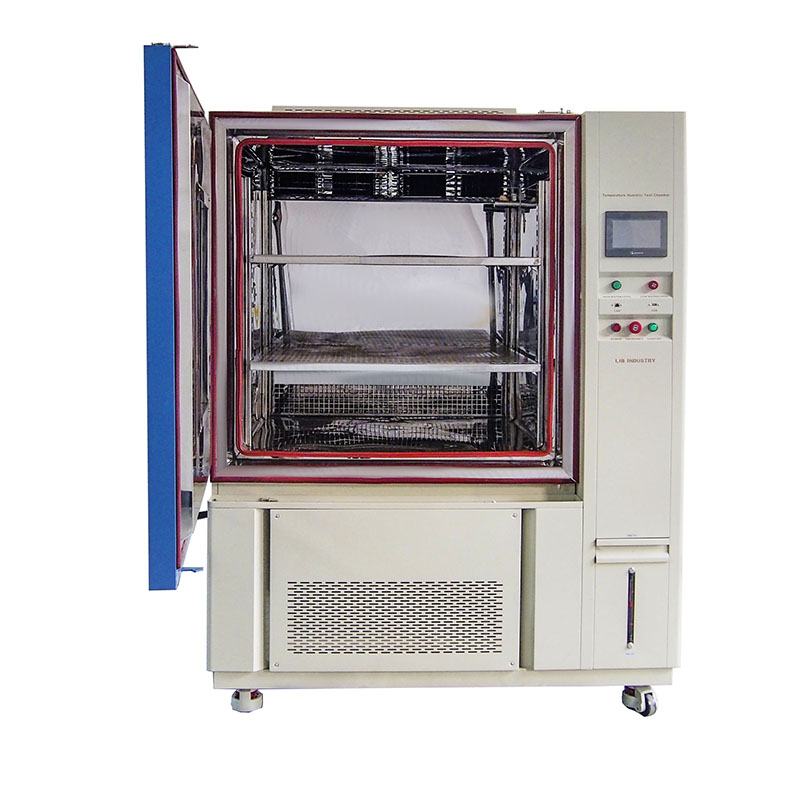 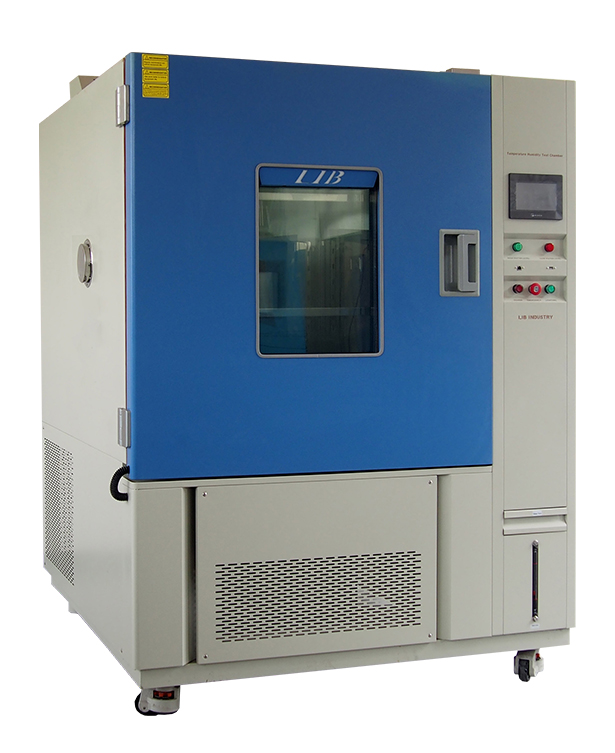 | |||||
Temperature range | -20℃ ~+150 ℃ | ||||
Low type | A: -40℃ B:-70℃ C -86℃ | ||||
Humidity Range | 20%-98%RH | ||||
Temperature deviation | ± 2.0 ℃ | ||||
Heating rate | 3 ℃ / min | ||||
Cooling rate | 1 ℃ / min | ||||
Controller | Programmable color LCD touch screen controller, Multi-language interface, Ethernet , USB | ||||
Refrigerant | R404A, R23 | ||||
Exterior material | Steel Plate with protective coating | ||||
Interior material | SUS304 stainless steel | ||||
Standard configuration | 1 Cable hole (Φ 50) with plug; 2 shelves | ||||
Timing Function | 0.1~999.9 (S,M,H) settable | ||||
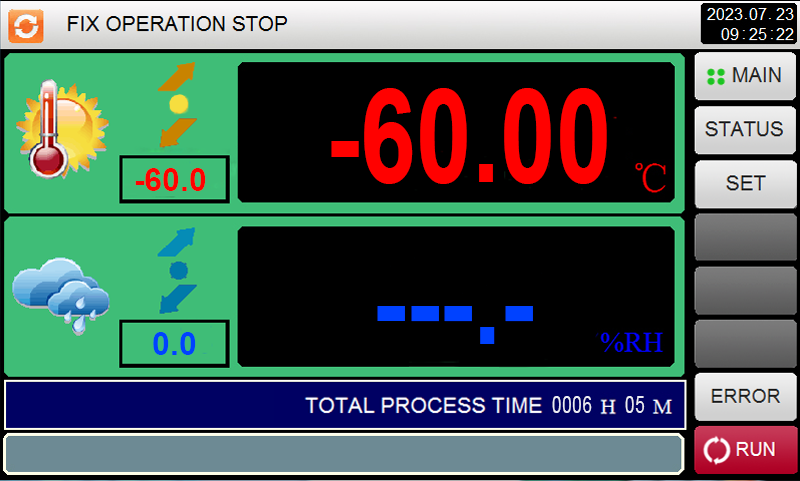 |  | 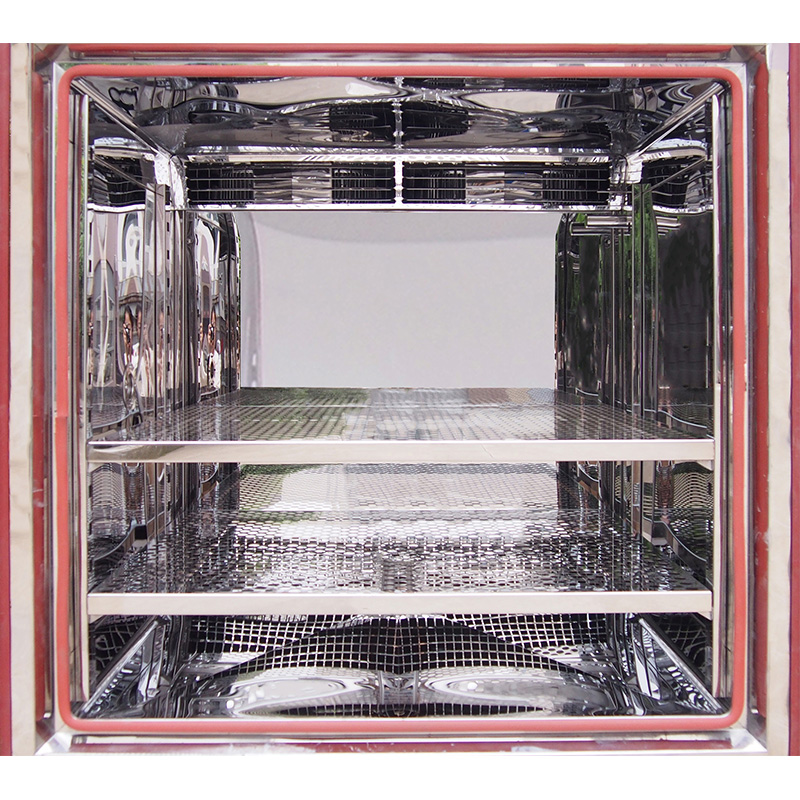 | 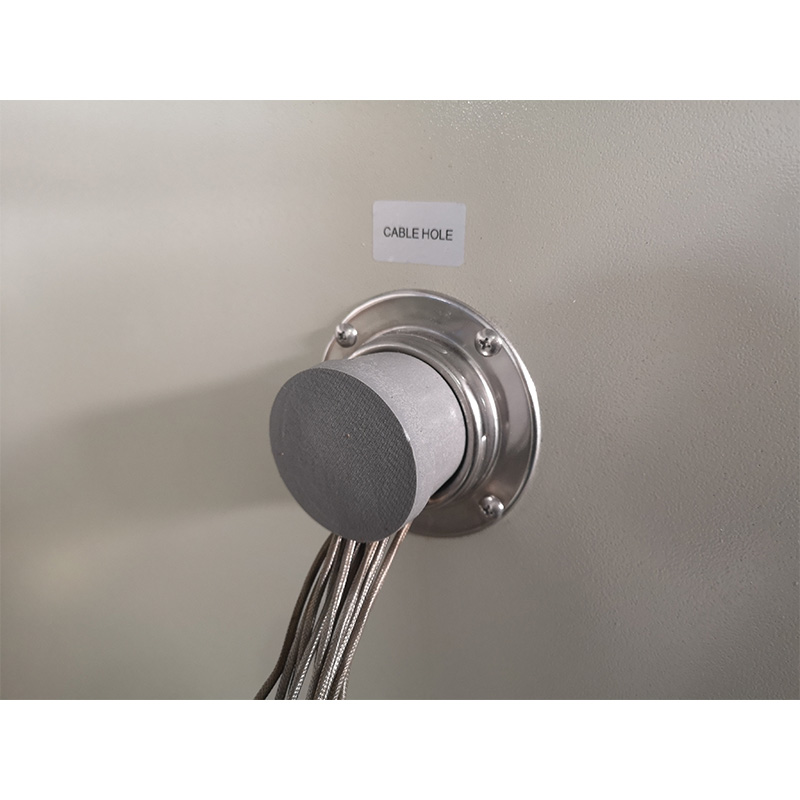 |
Touch screen controller Holds up to 120 test programs with 100 steps each, making it well suited for complex multi‑stage profiles such as temperature–humidity shock or soak cycles. | The compressor The compressor rapidly removes heat from the chamber interior, achieving a cooling rate around 1 °C / 5 °Cper minute. | Robust Anti-Corrosion Workroom The chamber's interior is built from SUS304 stainless steel, offering outstanding resistance to heat and corrosion for long-lasting performance. | Integrated Power Access hole Allows test specimens to stay powered during experiments, enabling performance evaluation under varying temperature and humidity. Standard 50 mm diameter; quantity and size customizable. |
The chamber must cover the full range required by the test method or product use case. Some applications need only moderate heat and cold, while others require deep low-temperature capability.
If humidity testing is required, check both the range and the accuracy. Some tests require only standard humidity control, while others need lower humidity limits or high-moisture exposure.
A chamber should not only reach the target condition; it should maintain it evenly. Poor uniformity can lead to inconsistent results, especially when multiple samples are tested at once.
Faster ramp rates can shorten test cycles and support more demanding thermal change procedures. However, higher speed is only valuable if the chamber can still maintain stable control.
The chamber must fit the sample size while still allowing proper airflow. Overloading the workspace can distort results.
A programmable touchscreen controller is useful for multi-step tests, repeatable procedures, and easier daily operation.
For battery, electronics, or high-load testing, safety design matters. Common protections include over-temperature shutdown, over-current protection, leakage protection, water shortage protection, and refrigerant pressure protection.
A chamber that looks sufficient on paper may still be the wrong choice for the application. Buyers should evaluate based on actual test needs.
If the product must comply with a specific standard, the chamber should match the required environmental range, deviation limits, and test profile capability.
Do not choose the largest chamber by default. A chamber that is too large may waste energy and floor space. A chamber that is too small may block airflow or limit future testing.
In many labs, the best chamber is not the one with the most features, but the one that fits the working environment. For example, a compact benchtop chamber may be more practical than a floor-standing unit when space, noise, and sample size are all limited.
A wide temperature range is useful, but control precision, recovery time, and uniformity are often more important for repeatable results.
Environmental test chambers are long-term equipment investments. Buyers should check warranty terms, spare parts support, technical assistance, and response speed for service issues.
These terms are often used interchangeably, but there can be a slight difference depending on the supplier or industry.
Environmental test chamber is a broader term and may include temperature-only, humidity, cycling, and other environmental simulation functions.
Climate chamber often refers more specifically to temperature and humidity control.
In practice, many manufacturers use both terms for similar equipment. The important point is to confirm the actual test capability rather than rely only on the product name.
An environmental test chamber is a controlled testing system used to simulate heat, cold, humidity, and changing climate conditions so engineers can verify product performance before release or certification. It plays a critical role in reliability testing for electronics, batteries, automotive parts, materials, lighting products, and many other applications.
Looking for a reliable environmental test solution? Contact LIB Industry today to get expert advice and find the right chamber for your testing needs.


