
Views: 0 Author: Site Editor Publish Time: 2026-10-06 Origin: Site


Electrical connectors are exposed to dust in automotive, industrial, and outdoor environments. Even small particles entering a connector housing can compromise contact reliability, insulation performance, or mechanical operation.
A Dust Test Chamber provides a controlled environment for evaluating connector sealing against IP5X and IP6X requirements. By reproducing standardized dust exposure conditions, manufacturers can identify potential leakage paths, verify enclosure protection, and improve product reliability before installation.
IP5X vs. IP6X: IP5X permits limited dust ingress under defined conditions, while IP6X requires complete protection against dust entry during the specified test.
Connector Sealing: Critical leakage points include mating interfaces, cable entries, gaskets, and housing joints.
Controlled Testing: A Dust Test Chamber circulates fine talcum powder and may apply negative pressure to evaluate sealing integrity.
Standardized Verification: IEC 60529 provides the main framework for determining dust ingress protection.
Reliable Product Development: Testing helps engineers detect sealing weaknesses before connectors enter production or field service.
Electrical connectors establish power and signal connections between electronic components. Their reliability depends not only on electrical contact design but also on the protection provided by the surrounding housing.
In dusty environments, airborne particles may enter through small openings around connector interfaces. Repeated exposure can gradually affect electrical and mechanical performance.
Common risks include:
Contact contamination that increases electrical resistance.
Interference with terminal engagement or locking mechanisms.
Accelerated wear on seals and moving components.
Reduced insulation reliability when dust combines with moisture.
Unstable signal transmission in sensitive electronic systems.
These risks are particularly relevant for automotive wiring harnesses, industrial sensors, outdoor communication equipment, and electrical control assemblies.
Connector sealing performance depends on several structural features working together.
Mating interface seals prevent particles from passing between connected housing sections. Cable seals protect the area where wires enter the connector body, while gaskets and housing joints provide additional barriers against external contamination.
However, a connector that appears properly sealed may still contain microscopic gaps caused by manufacturing tolerances, incorrect assembly, or gasket deformation.
A Dust Test Chamber helps determine whether the assembled connector provides the intended protection under controlled exposure conditions.
IEC 60529 defines the Ingress Protection (IP) classification system used to evaluate enclosure protection against solid objects and water.
For electrical connectors, the first digit identifies protection against solid foreign objects, including dust.
IP5X indicates that a connector enclosure provides protection against dust entry, but complete exclusion is not required.
A limited amount of dust may enter, provided it does not accumulate in quantities that interfere with satisfactory equipment operation or impair safety.
This protection level may be appropriate for applications where occasional dust exposure is expected and the specified functional requirements can still be maintained.
IP6X represents the highest dust protection classification under IEC 60529.
A connector meeting this classification must prevent dust ingress under the specified test conditions.
Testing may involve applying negative pressure to the connector cavity when required by the applicable enclosure category and test procedure.
IP6X protection is commonly specified for connectors used in demanding environments where particulate contamination must be prevented.
Test Criteria | IP5X | IP6X |
|---|---|---|
Protection classification | Dust-protected | Dust-tight |
Permitted dust ingress | Limited, without harmful effects | No dust ingress |
Main evaluation | Protection of operation and safety | Complete exclusion of test dust |
Vacuum requirement | Depends on applicable procedure | Depends on applicable procedure |
Inspection focus | Dust accumulation and its effects | Evidence of any internal dust |
Typical use | General industrial and electronic assemblies | High-protection automotive and outdoor connectors |
Importantly, the required protection classification should be determined by the connector's intended application, customer specifications, and applicable standards rather than by environmental conditions alone.
A Dust Test Chamber creates a repeatable dust exposure environment around the connector being evaluated.
During testing, fine particles circulate through the chamber while the specimen remains in its specified installation or operating configuration. Engineers then examine whether dust has penetrated the connector enclosure.
Fine talcum powder is commonly used for IEC 60529 dust ingress testing.
The test medium must meet the applicable particle-size and preparation requirements. The chamber circulates the powder so that suspended particles can reach exposed connector surfaces and potential leakage paths.
Consistent dust distribution is important because localized settling or inadequate circulation can reduce test repeatability.
Certain IEC 60529 procedures require air to be extracted from the specimen enclosure.
A vacuum system produces a controlled pressure difference between the connector interior and surrounding chamber environment.
This pressure difference can encourage dust to enter through weak sealing points.
For connectors with small internal cavities, vacuum connections must be designed carefully. Excessive extraction or inappropriate connection methods may alter the specimen's sealing behavior and invalidate the test.
Testing duration depends on the required protection level, enclosure category, and applicable procedure.
A programmable controller allows technicians to manage dust circulation intervals and exposure time.
For procedures involving air extraction, the required duration must also account for the specified extraction conditions.
After exposure, technicians inspect the connector for dust penetration.
Inspection should focus on the internal cavity, terminal region, cable entry, mating interface, and other protected areas.
Depending on the required test classification, the evaluation determines either whether dust has caused unacceptable effects or whether any dust has entered the enclosure.
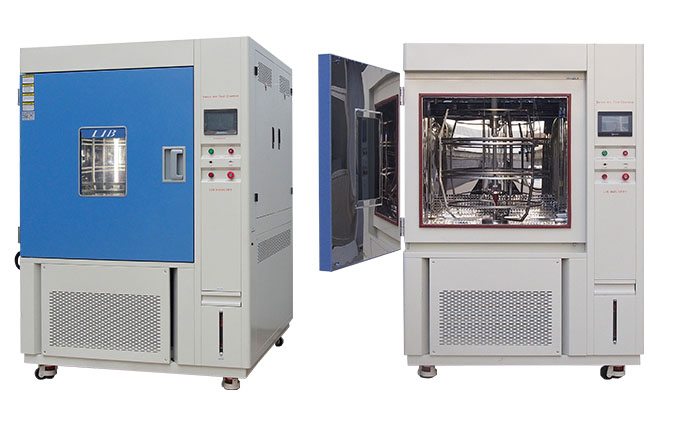
LIB Industry offers an IP6X IP5X Ingress Test Chamber Dust Test Machine designed for controlled particulate exposure testing. Its dust circulation system, vacuum configuration, and programmable controls support laboratory evaluation of electrical connectors and related electronic components.
Dust ingress testing can expose structural weaknesses that are difficult to identify through visual inspection alone.
Wire entry points are common leakage locations because they must accommodate individual conductors while maintaining an effective seal.
Incorrect wire diameter, damaged cable seals, or incomplete terminal insertion can create gaps.
A connector may fail to seal correctly if its two housing sections are not fully engaged.
Misaligned mating surfaces, worn locking features, or insufficient seal compression may allow dust to pass through the interface.
Elastomeric seals require appropriate compression to function properly.
Insufficient compression can leave gaps, while excessive compression may deform the seal or accelerate damage.
Dust testing helps engineers evaluate the assembled sealing system, although additional mechanical or material testing may be necessary to identify the precise cause of failure.
Manufacturing defects, deformation, and dimensional variation can affect enclosure integrity.
Small cracks, poorly fitted covers, or inconsistent molding dimensions may create pathways for fine particles.
Identifying these problems before mass production allows manufacturers to improve component design, assembly procedures, and quality control.
Connectors used in different industries face varying levels of dust exposure, mechanical stress, and environmental contamination.
Testing requirements should therefore reflect both the intended operating environment and the product's specified protection classification.
Automotive connectors are frequently exposed to road dust, vibration, temperature changes, and moisture.
Dust ingress testing is particularly relevant for:
Electric vehicle wiring harnesses.
Battery management system connectors.
Engine compartment electrical connections.
Automotive sensors and control modules.
Charging system connectors.
For road vehicle applications, manufacturers may also need to consider ISO 20653, which defines vehicle-specific ingress protection classifications and procedures. IEC 60529 and ISO 20653 should not be treated as interchangeable without checking their respective requirements.
Industrial equipment often operates in manufacturing environments where airborne particles originate from machining, material handling, and production processes.
Connectors used in sensors, control cabinets, robotic equipment, and industrial communication systems require reliable protection against particulate contamination.
A Dust Test Chamber allows engineers to evaluate whether the connector sealing design meets the specified environmental protection requirements.
Outdoor communication systems may be exposed to wind-driven dust and changing weather conditions.
Dust-tight connectors can help protect signal transmission interfaces and electrical connections.
For these applications, dust ingress testing is often combined with water ingress, thermal cycling, and other environmental evaluations.
Selecting suitable equipment requires more than checking whether the chamber supports an IP6X test.
Laboratories should also consider specimen dimensions, dust distribution, vacuum performance, and repeatability.
Chamber Feature | Importance for Connector Testing |
|---|---|
Fine dust circulation | Exposes connector interfaces to standardized particles |
Vacuum system | Supports procedures requiring controlled air extraction |
Programmable controller | Manages exposure time and circulation settings |
Specimen mounting | Maintains the required connector test configuration |
Dust-resistant access ports | Supports applicable electrical or vacuum connections |
Stainless steel workspace | Facilitates cleaning and routine maintenance |
Observation window | Allows operators to monitor specimens during testing |
Small connectors may occupy limited space, but the chamber must accommodate their fixtures, cable assemblies, and any required vacuum connections.
Testing multiple connectors simultaneously can improve laboratory throughput, provided specimen positioning does not interfere with dust circulation or standard requirements.
Dust circulation, powder condition, and test duration directly affect repeatability.
For standardized testing, technicians should verify that chamber settings meet the applicable procedure and that the test medium remains suitable for use.
Routine chamber inspection, instrument calibration, and controlled specimen handling also help reduce variation between test runs.
LIB Industry supplies environmental testing equipment for electronics, automotive components, electrical enclosures, and industrial products.
Its Dust Test Chamber range includes equipment intended for IEC 60529 dust ingress testing, with configurations offering controlled dust circulation, vacuum systems, and programmable operation.
For laboratories evaluating connectors of different sizes, LIB Industry provides DI-series configurations and can discuss customized equipment arrangements according to specimen dimensions and testing requirements.
Manufacturers should confirm the required standards, connector configuration, chamber capacity, and vacuum method before finalizing equipment selection.
Dust testing provides useful evidence about enclosure protection, but the greatest value comes from applying the findings to product development.
When a connector fails an IP5X or IP6X test, engineers should identify the likely leakage path and examine the relationship between sealing design, material selection, and assembly quality.
Potential improvements include:
Optimizing seal geometry: Adjust gasket dimensions and compression to improve contact between mating surfaces.
Reviewing cable seals: Confirm that wire diameters, seal materials, and terminal positions are compatible.
Improving housing tolerances: Reduce dimensional variation that could create gaps around sealing interfaces.
Checking assembly procedures: Verify correct connector engagement, locking, and seal installation.
Conducting repeated validation: Retest modified specimens under the required conditions to confirm that corrective actions are effective.
For applications involving repeated mechanical or thermal stress, manufacturers may also evaluate connector sealing after vibration, temperature cycling, or aging tests.
This broader approach helps determine whether protection remains effective throughout the intended service conditions, rather than only when the connector is new.
A Dust Test Chamber provides an effective method for validating electrical connector sealing against IP5X and IP6X requirements. By exposing assembled connectors to controlled dust conditions, manufacturers can evaluate enclosure protection, identify potential leakage paths, and verify compliance with applicable testing procedures.
Accurate testing depends on proper specimen preparation, standardized dust media, suitable vacuum conditions, and careful inspection. When combined with connector design improvements and additional environmental testing, dust ingress evaluation supports more reliable products across automotive, industrial, and outdoor applications.
Looking for a reliable Dust Test Chamber for connector IP5X or IP6X testing? LIB Industry offers dust ingress testing equipment designed for different specimen sizes and laboratory requirements. Whether you need a standard DI-series chamber or a customized testing solution, our team can help you review the applicable standards, chamber configuration, and testing parameters. Contact LIB Industry today to discuss your connector testing project and request a suitable equipment recommendation or quotation.
Yes. A Dust Test Chamber designed for IEC 60529 testing can support both protection classifications when equipped and operated according to the applicable requirements.
The main difference lies in the acceptance criteria. IP5X allows limited dust ingress that does not interfere with satisfactory operation or safety, whereas IP6X requires no dust ingress under the specified conditions.
No. The need for vacuum testing depends on the enclosure category and relevant IEC 60529 procedure.
Certain specimens require controlled air extraction, while others are tested without applying negative pressure. The correct method must be established before testing.
Fine talcum powder is commonly used for IEC 60529 IP5X and IP6X testing.
The powder must meet the specified particle characteristics, and the chamber must maintain the required conditions. Ordinary household dust or sand should not be substituted for the standardized medium.
The test duration depends on the required IP classification, specimen category, and testing procedure.
For tests involving air extraction, duration may depend on the required extraction volume and rate. Laboratories should follow the relevant standard rather than selecting a fixed duration for every connector.
Some test arrangements allow specimens to be powered when required by the testing procedure or product specification.
However, electrical operation must be compatible with the chamber configuration, specimen connection method, and laboratory safety requirements.
Electrical performance testing may also be performed before or after dust exposure.
An IP6X failure indicates that dust entered the protected enclosure under the specified test conditions.
Engineers should examine the mating interface, cable entry seals, housing joints, and other potential leakage points.
After corrective modifications, the connector should undergo another test to verify sealing performance.
No. IP6X only addresses protection against dust ingress.
Water resistance is evaluated separately using the second digit of the IP code, such as IPX5, IPX6, IPX7, or IPX8.
Connectors requiring both dust and water protection must meet the corresponding requirements for each classification.
Yes, provided the chamber accommodates the required specimen dimensions, fixtures, and testing conditions.
Different connector designs may require separate mounting arrangements, vacuum interfaces, or inspection methods.
A suitable chamber should allow laboratories to evaluate multiple connector configurations without compromising the prescribed test conditions.


